How I Find Uncrowded Markets With Exploding Topics in 2026
The best markets usually look boring at first. That’s why I stop chasing loud trends and start looking for open space. When I want a new angle for a SaaS idea, niche site, or content project, I look for uncrowded markets. I want enoug...
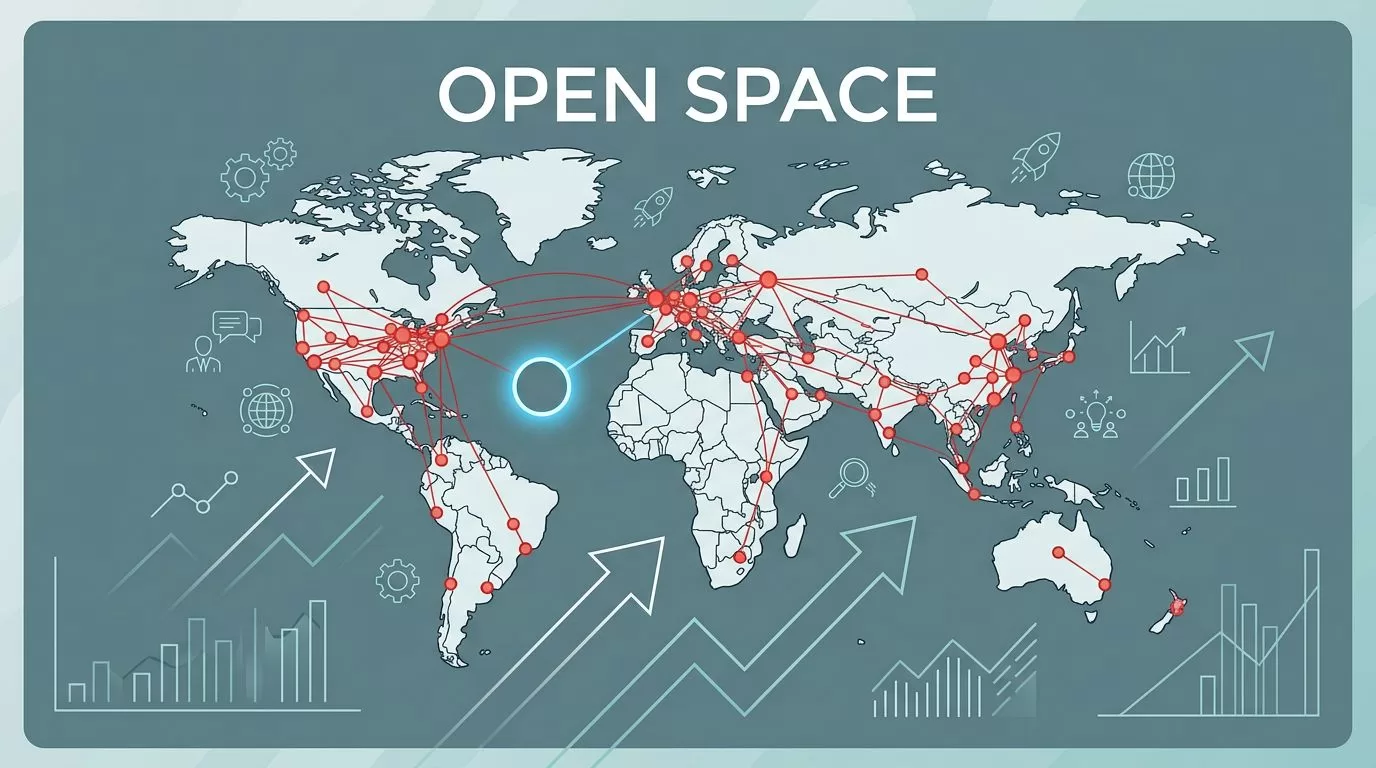
The best markets usually look boring at first. That’s why I stop chasing loud trends and start looking for open space.
When I want a new angle for a SaaS idea, niche site, or content project, I look for uncrowded markets. I want enough demand to matter, but not so much competition that I’m shouting into a packed room. Exploding Topics gives me the first signal, then I test it against real buyer behavior.
Why I care about open space before hot demand
A crowded market can still be profitable, but it’s harder to enter. Ads cost more. Content gets buried. Sales calls start with more skepticism.
Uncrowded markets give me room to move. I can publish faster, test cheaper, and learn before the market hardens. That matters a lot in 2026, because AI tools, automation, and niche B2B software are all speeding up the crowd.
I often begin with spotting early business trends with Exploding Topics. Then I compare those topics with Exploding Topics’ 2026 trend outlook to see whether the signal is part of a bigger shift or just a brief spike.
A rising chart tells me attention is forming. It doesn’t tell me buyers are ready to spend.

My first scan in Exploding Topics
I don’t start by hunting for perfect business ideas. I start by looking for motion. If a topic has a clean, steady slope, I pay attention. If it looks jagged and noisy, I slow down.
Here’s the order I use:
- I open a broad category first, not a brand name.
- I look for multi-month growth, not a one-week burst.
- I check whether the topic splits into practical use cases.
- I ask who would pay, and why they’d pay now.
That last question matters more than the chart. A trend can be interesting and still not be monetizable. If I’m looking at e-commerce, I also compare the signal with Exploding Topics’ e-commerce niche guide. It helps me see whether the idea can become a product, not just a post.
When I’m thinking about broader market patterns, I also keep an eye on fast-growing industries I’m watching in 2026. That keeps me from mistaking a tiny trend for a real market.
How I tell early growth from noise
A spike can be exciting, but I treat it like a flare, not a road map. I want to know whether the trend is early, growing, and still open.
| Signal | What early looks like | What crowded looks like |
|---|---|---|
| Search curve | A steady climb over months | One sharp burst, then flat |
| Search intent | Words like pricing, software, template, or tool | Mostly “what is” or pure curiosity |
| Buyer language | Pain, cost, time, risk, or compliance | Hype, memes, or vague buzz |
| Competition | A few real players, not a flood | Clones, listicles, and copycat offers |
| Use cases | Several clear jobs to solve | One narrow use case with no expansion |
I want at least three of those signals before I take a topic seriously. Four is better. Five usually means the market has a pulse.
I also check whether the topic branches into adjacent needs. For example, AI customer support may lead into QA, compliance, routing, and analytics. That kind of spread often shows a market that’s still forming.
The validation stack I use before I build
Exploding Topics helps me spot the opening. It doesn’t replace validation. I still check the market from a few angles before I spend real time or money.
First, I look at search behavior outside the tool. I compare topic growth with Google Trends, related queries, and the way people describe the pain in forums or communities. If people keep using the same frustrated language, I listen.
Next, I check commercial intent. Are people searching for software, vendors, pricing, alternatives, or integrations? If yes, that’s stronger than simple curiosity. It means money may be close.
Then I study the field itself. I look for real competition, but I also look for gaps. A crowded market isn’t always bad. Sometimes it just means the angle is wrong. A narrower niche, a vertical focus, or a tighter workflow can still win.
Finally, I run a low-cost test. That might be a landing page, a short list of outreach emails, a content cluster, or a small paid campaign. I don’t need proof of success. I need proof of motion.

If I’m building content around the idea, I switch into low-competition keywords via Exploding Topics. That helps me find the early search terms around a rising market, which is often where the easiest wins live.
What looks promising in 2026
In 2026, I’m watching niche AI tools, vertical SaaS, automation for boring workflows, and cybersecurity tasks that small teams still handle by hand. I like markets where the pain repeats and the buyer has a budget.
An AI tool for invoice follow-up is more interesting to me than another general writing app. A compliance workflow tool for operations teams can have a better path than a broad productivity platform. A creator tool can still work too, if it solves one sharp problem and saves time right away.
I also look for markets where buyers are already searching with intent. If the topic has commercial language, clear use cases, and a few serious competitors, I know I’m not staring at a fad. I’m looking at a market that may still have space.
The best sign is simple. People keep asking the same painful question, but the market hasn’t fully answered it yet.
The rule I keep coming back to
Exploding Topics works best when I use it as an early map. It shows me where attention is starting to bend, but I still have to test the ground.
When I pair that signal with search intent, buyer pain, and real competition checks, I get a better read on uncrowded markets. That’s where small teams can still move with speed and clarity. And in a year when everything feels louder, open space is still the rarest advantage.
