How I Spot Emerging Space Tech Early With Exploding Topics
If I wait for space tech to hit the news cycle, I’m already late. By then, the easy signals have turned into loud headlines, and the best openings have started to close. I want the first hint of movement, rising searches, new product...


If I wait for space tech to hit the news cycle, I’m already late. By then, the easy signals have turned into loud headlines, and the best openings have started to close.
I want the first hint of movement, rising searches, new product pages, and the first cluster of companies chasing the same problem. That’s why I use Exploding Topics first, then I test what I find against real market proof.
I start with trend data, not space headlines
I begin where attention is still forming. On Exploding Topics’ technology topics page, I look for terms that rise in a steady line, not a single burst. Then I compare those signals with my 2026 future tech trends guide, because a lone keyword can be noise while a cluster can point to a real shift.


That habit matters in space tech more than almost anywhere else. A launch video can look impressive and still mean little. A search curve that keeps climbing for months feels different, because it often shows budget, hiring, and supplier interest behind the scenes.
I also watch for overlap with wider market movement. If space tech shows up beside fast-growing industries in 2026, I pay closer attention. That overlap tells me the topic may be moving from curiosity to category.
The space tech niches I watch first in 2026
In April 2026, I keep seeing a few space tech niches rise again and again. Satellite mega-constellations still lead the pack, but I care just as much about the layers around them, direct-to-device links, in-orbit computing, in-space servicing, and lunar logistics. Those are the places where business models start to harden.
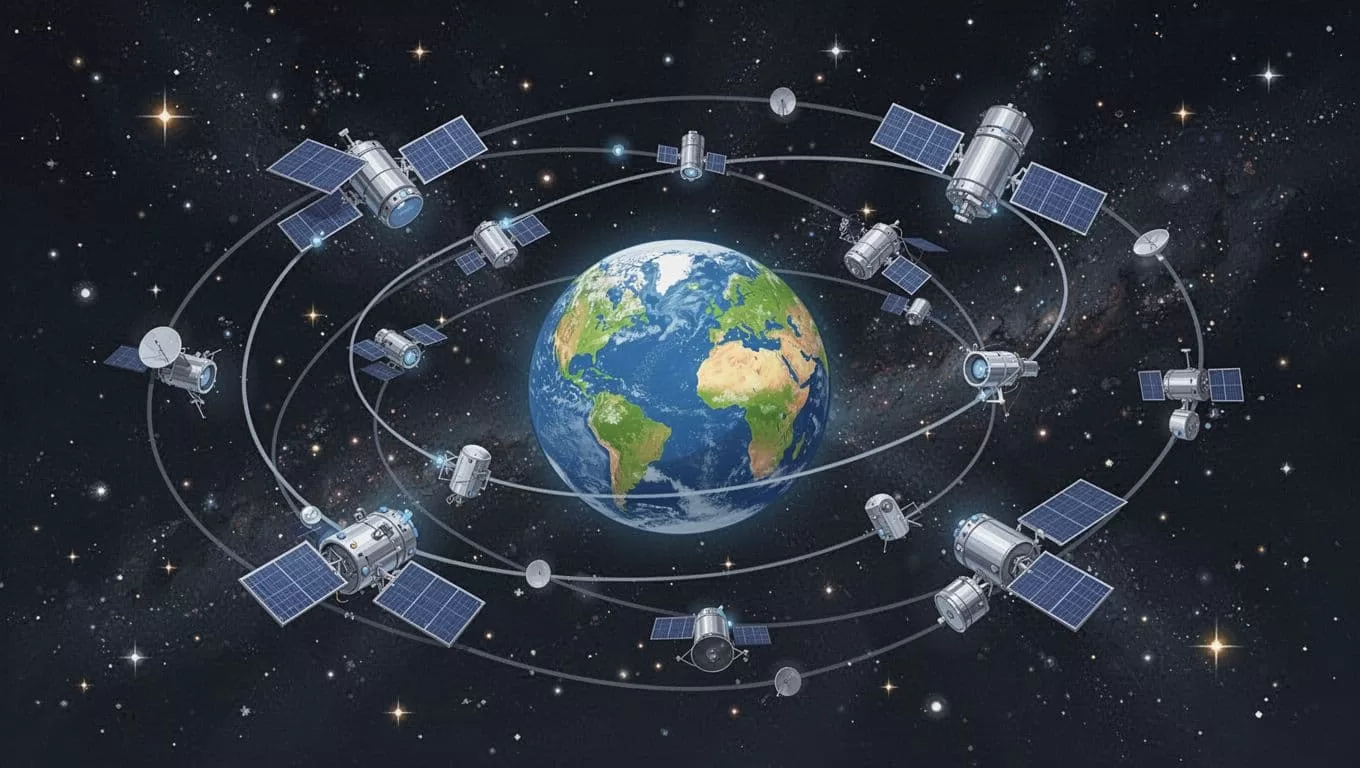
These are the buckets I watch most closely right now.
| Niche | Early signal I watch | Why it matters |
|---|---|---|
| Mega-constellations | Launch cadence, ground hiring, subscriber updates | Coverage demand is real |
| Direct-to-device links | Carrier trials, handset tie-ins, spectrum news | It reaches mainstream users |
| In-orbit computing | GPU payloads, cloud partnerships, edge claims | It shows orbital workloads |
| In-space servicing | Docking demos, refuel tests, life-extension deals | It turns satellites into assets |
| Reusable launch and lunar logistics | Lower launch costs, cargo contracts, Artemis support | It reduces access cost |
Starlink’s scale and Kuiper’s 2026 launch start are good examples of why I stay alert. They show how fast a narrow idea can become a serious market. I also keep an eye on OneWeb’s second-generation push, because expansion often matters more than the original launch.
For a broader market read, I cross-check space tech economy in 2026. That helps me see whether the story is really about one company or a larger supply chain. I also keep nuclear propulsion on a separate watchlist, because it still needs long lead times and strong policy support.
How I separate hype from a real market
One signal tells me people noticed. Several signals tell me a market may be forming.
I never trust a space trend because it looks exciting. I trust it when I can see it in more than one place. Search growth is only the first step. After that, I want product pages, hiring, contracts, and outside proof.
I check for pricing pages, demos, integrations, or technical docs. Those details show intent. I also look for job posts, grant awards, launch contracts, patent filings, and agency updates. If a company is building, the trail usually gets longer, not shorter.
I compare that evidence with space technology trends 2026, then I ask a simple question: is this topic getting easier to buy into, or just easier to talk about? That question cuts through a lot of noise.
A viral post can make a topic look hot for a week. A durable trend leaves marks across search, hiring, product work, and budget decisions. I want the second one.
My weekly workflow inside Exploding Topics
I keep my process short, because long research loops turn into stalling. First, I scan the tech topics list and save anything tied to launch, orbit ops, autonomy, materials, connectivity, or lunar support. Then I group those terms into buckets so I’m not fooled by scattered signals.

My weekly routine looks like this:
- I scan for topics with steady movement over several weeks.
- I group them by use case, not by buzzword.
- I check whether there’s a clear buyer behind the idea.
- I validate with outside sources before I treat it as real.
That last step is where I slow down. If I can’t find company proof, market proof, or technical proof, I leave the topic alone. I’d rather miss a noisy spike than spend time on a false market.
This is the same way I approach other early signals, like the ones I track in my guide to future tech trends in 2026. The tool gives me direction. The follow-up tells me whether the direction matters.
Why the quiet signals matter most
Exploding Topics helps me spot emerging space tech before it becomes obvious. That gives me time to watch the shape of the market, not just the headlines around it.
Still, I only move when the trend has weight. I want rising search interest, visible company activity, and signs that buyers are stepping in. When those three line up, I know I’m looking at more than a passing story.
That quiet build is where I find the edge. In space tech, the strongest signals usually start small, then spread far enough to matter.

