
When I scan the fastest growing tech sectors, I don’t start with headlines. I start with search curves, product demand, and where buyers are spending real money.
In April 2026, Exploding Topics’ trending technology topics page still helps me spot early movement, but I never trust a trend on its own. I cross-check it with market reports, startup activity, and the kinds of tools people are already buying. That keeps me focused on sectors with momentum, not noise.
Vertical AI is pulling budget into narrow use cases
Vertical AI keeps rising because general tools aren’t enough for specialized work. I’m seeing the strongest pull in healthcare, finance, legal, and customer support, where each task has its own rules and risks.


Healthcare is the clearest example. More than $2.1 billion flowed into healthcare AI in 2025, and that kind of spending rarely happens by accident. Products like Abridge, Nuance Dragon Medical, and Hippocratic AI show how specific the demand has become.
The growth driver is simple. Teams want tools that understand their field, fit into their workflow, and reduce manual work. The risk is also clear. If the model gets a fact wrong, the cost can be serious. Data privacy, regulation, and integration with legacy systems still slow adoption.
CB Insights’ Tech Trends 2026 report points in the same direction. I see vertical AI moving from interesting demos to budgeted software.
Cybersecurity grows every time new software opens another door
Cybersecurity keeps expanding because every new app, agent, and cloud system adds another attack path. That makes it one of the most durable tech sectors in 2026.

I’m seeing strong demand around identity security, cloud posture management, endpoint defense, and AI-assisted threat detection. CrowdStrike, Palo Alto Networks, Wiz, and Microsoft Defender are all tied to this shift. Buyers want faster alerts, better visibility, and fewer blind spots.
AI helps defenders, but it helps attackers too. Phishing gets more convincing. Malware gets more adaptive. That forces security teams to invest in detection, response, and policy controls.
The challenge here is alert fatigue. If a tool creates too many warnings, teams ignore it. Cost is another issue, because security stacks can grow fast. Still, the spending keeps coming because the risk is too high to ignore.
Deloitte’s TMT Predictions 2026 makes the same point. AI is scaling, but the foundations around it have to be safer.
Robotics is moving from the demo room into real work
Robotics is no longer stuck in lab videos and trade show clips. I’m watching it move into warehouses, factories, agriculture, and logistics.
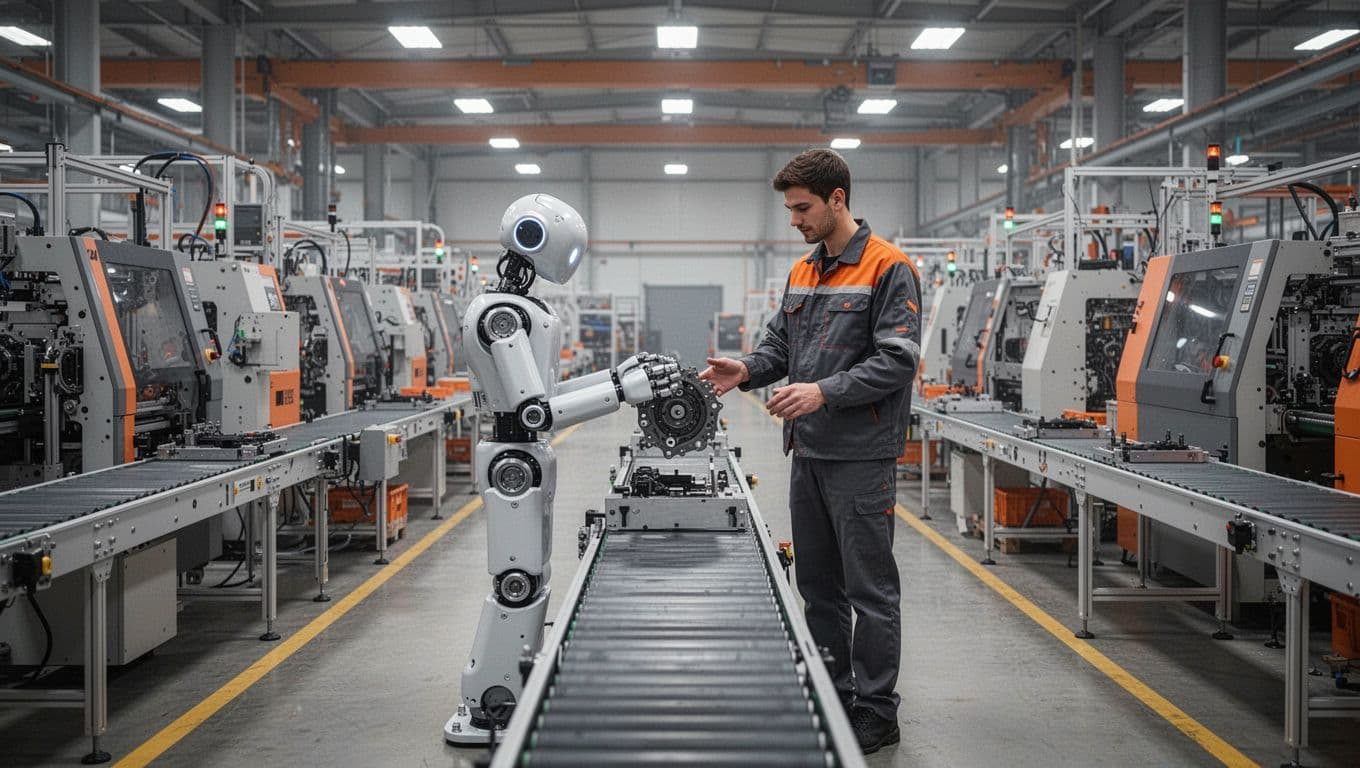
The big driver is labor pressure. Companies want machines that can handle repetitive work, awkward lifting, or tasks in hard-to-fill roles. Boston Dynamics, Figure AI, Amazon Robotics, and Universal Robots all point to a market that’s getting more practical.
Physical AI also matters here. Robots are getting better at sensing, moving, and adapting in messy real-world settings. That opens the door to more than assembly lines. I’m seeing use cases in fulfillment centers, inspection tasks, and even service work.
The risks are heavy upfront cost, maintenance, and safety. Robotics takes time to deploy, and not every environment is ready. However, the companies that solve real labor problems can build sticky products.
Semiconductors stay at the center of AI demand
Every AI model, robot, and cloud workload still needs chips. That keeps semiconductors among the fastest growing tech sectors in 2026.
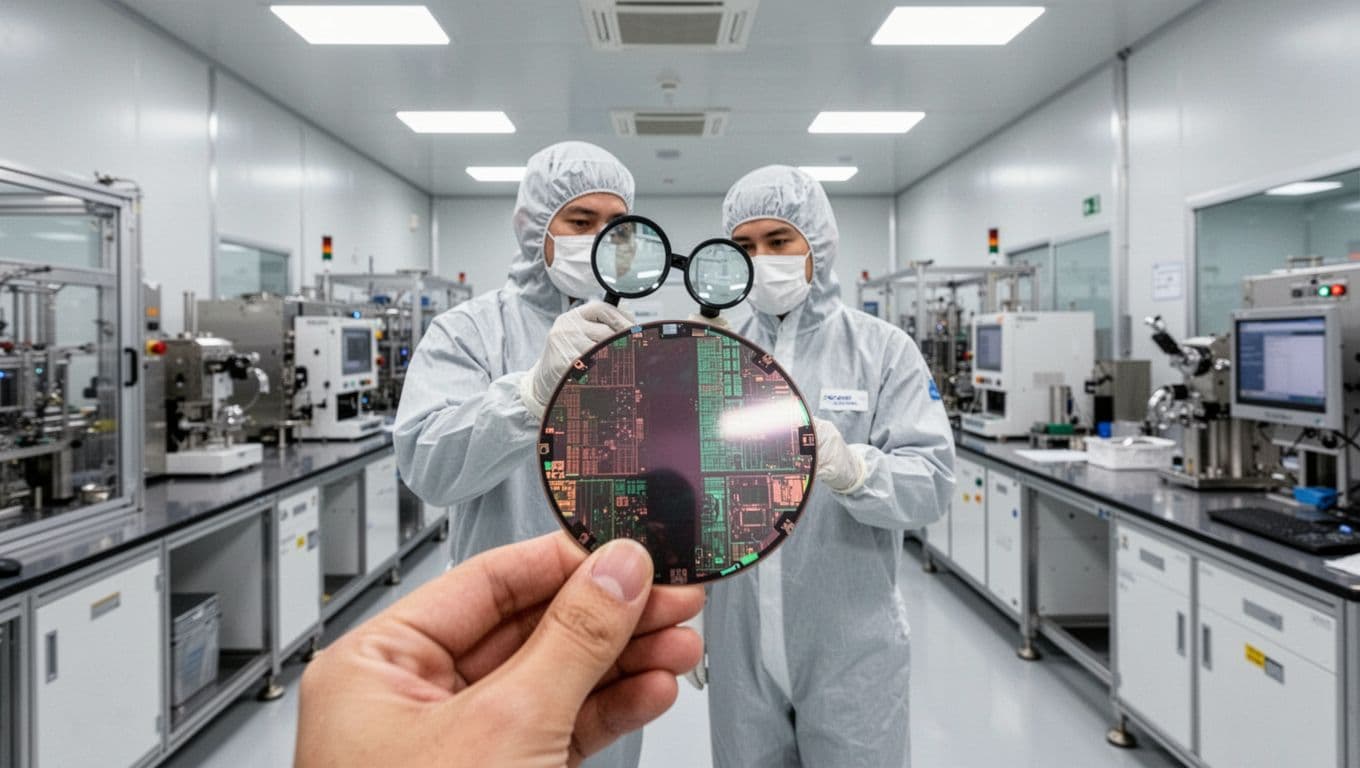
NVIDIA still dominates AI accelerators, while TSMC and ASML sit near the heart of global chip supply. I also watch high-bandwidth memory, advanced packaging, and edge chips because AI is spreading outside the data center.
The growth driver is obvious. More AI use means more compute demand. More compute demand means more chip orders, more fab investment, and more pressure on the supply chain. That spending ripples into equipment, materials, and manufacturing services.
The risks are just as real. Chip plants are expensive. Export controls can shift demand overnight. Supply chains are fragile, and power use is climbing too. Gartner’s top strategic technology trends for 2026 fits this picture well, because AI progress depends on the hardware under it.
Hybrid and sovereign cloud are where AI workloads settle
Cloud is still growing, but the story has changed. In 2026, I’m seeing more interest in hybrid cloud, sovereign cloud, and private infrastructure built for AI.

AWS, Microsoft Azure, Google Cloud, and Oracle all benefit from this shift. So do companies that help with data governance, workload routing, and secure model hosting. Regulated industries want control over where data lives and how it moves.
That need comes from two pressures. First, AI workloads need low latency and high trust. Second, governments and large enterprises want more control over data residency. I see that as a practical response, not a trend for trend’s sake.
The risk is complexity. Hybrid setups can sprawl fast, and cloud bills can get ugly. Still, when companies need privacy and speed, this model makes sense.
How I separate a real sector from a passing spike
I never treat a search spike as proof. I look for the pattern behind it.
I compare trend data with buyer intent, product depth, and company movement. On Exploding Topics, even startup names like apilayer and workai are climbing fast, which tells me demand is still clustering around practical software and AI tools. I also keep a broader watchlist in Fast-Growing Industries in 2026 and check my guide to future tech trends in 2026 when I want a second pass.
A fast chart is useful only when it matches a real job to be done.
That’s the test I keep coming back to. If the use case is clear, the budget usually follows. If the use case is vague, the buzz fades.
The strongest sectors in 2026 all share the same trait, they solve urgent problems with tools people can actually deploy. That’s why I keep watching them.