Future Tech Trends I Spot Months Early With Exploding Topics
If I wait for headlines, I’m already late. The best future tech trends start as small search jumps, odd product launches, and repeated mentions in tight circles. That’s why I use Exploding Topics to catch movement before it beco...
If I wait for headlines, I’m already late. The best future tech trends start as small search jumps, odd product launches, and repeated mentions in tight circles.
That’s why I use Exploding Topics to catch movement before it becomes common knowledge. In April 2026, that matters even more, because AI, robotics, and automation keep spreading into new markets.
Why I start with trend data, not news
News tells me what already got attention. Trend data tells me what is gaining speed now. That difference matters when I want to see future tech trends months early.
I usually start with Exploding Topics’ April 2026 trending topics, then I look for patterns, not isolated spikes. One rising term can be noise. A cluster of related terms can point to a real shift.
I also compare those signals with my own notes on fast-growing industries in 2026. If a topic shows up in both places, I pay closer attention. That overlap often means buyers, builders, and investors are pulling in the same direction.
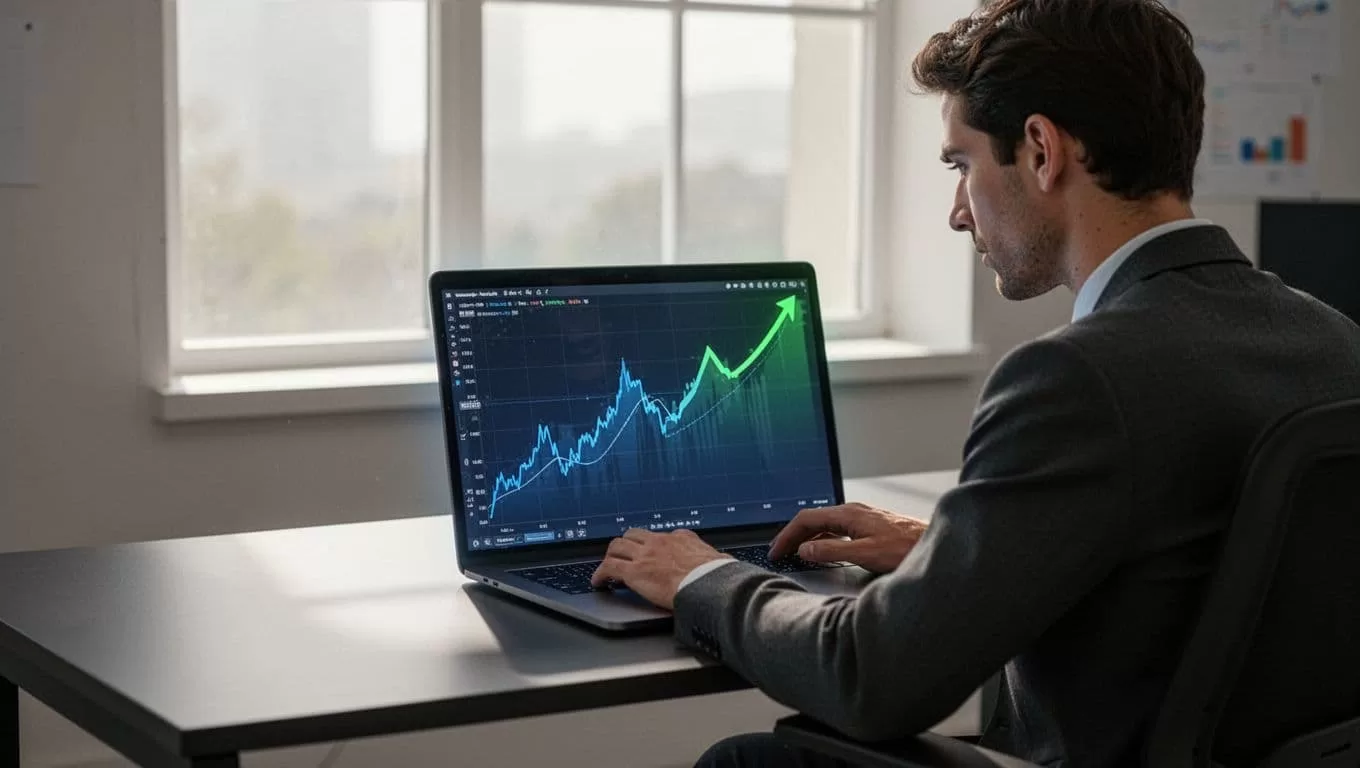
A chart does not need to shout to matter. Sometimes the quiet climb is the one worth watching.
The 2026 tech buckets I keep on my watchlist
In 2026, I keep seeing the same broad buckets rise again and again. AI is still the biggest one, but it’s splitting into useful subcategories. AI agents are moving from novelty to workflow tools. AI coding assistants, eval tools, and model orchestration products are also gaining ground.
For a wider view, I cross-check with Exploding Topics’ AI trend forecast for 2025 and 2026. That helps me separate plain buzz from signals that keep building across months.
Robotics is another area I watch closely. Physical AI, warehouse robots, and fleet automation are no longer sci-fi ideas. They’re tied to labor cost, speed, and safety. When I see search growth around robotics, I ask whether it connects to a real task, not a demo video.
Developer tools matter too. I look for trends around coding copilots, testing tools, vector databases, observability, and AI-ready infrastructure. These often grow under the surface before they get mainstream attention. By the time teams ask for pricing, the market is usually moving.
Cybersecurity still deserves a spot near the top. As AI tools spread, attack paths multiply. That pushes demand toward identity, SaaS protection, model security, and partner risk. Security trends often look less flashy than consumer apps, but they can turn into serious budgets faster.
Climate tech and biotech also show real momentum. Green data centers, grid software, and lower-power hardware keep showing up in trend scans. On the biotech side, drug discovery tools and medical AI are getting more practical. Consumer tech rounds out the list, with ambient devices, satellite-connected wearables, and compact power tools showing where everyday behavior may shift next.
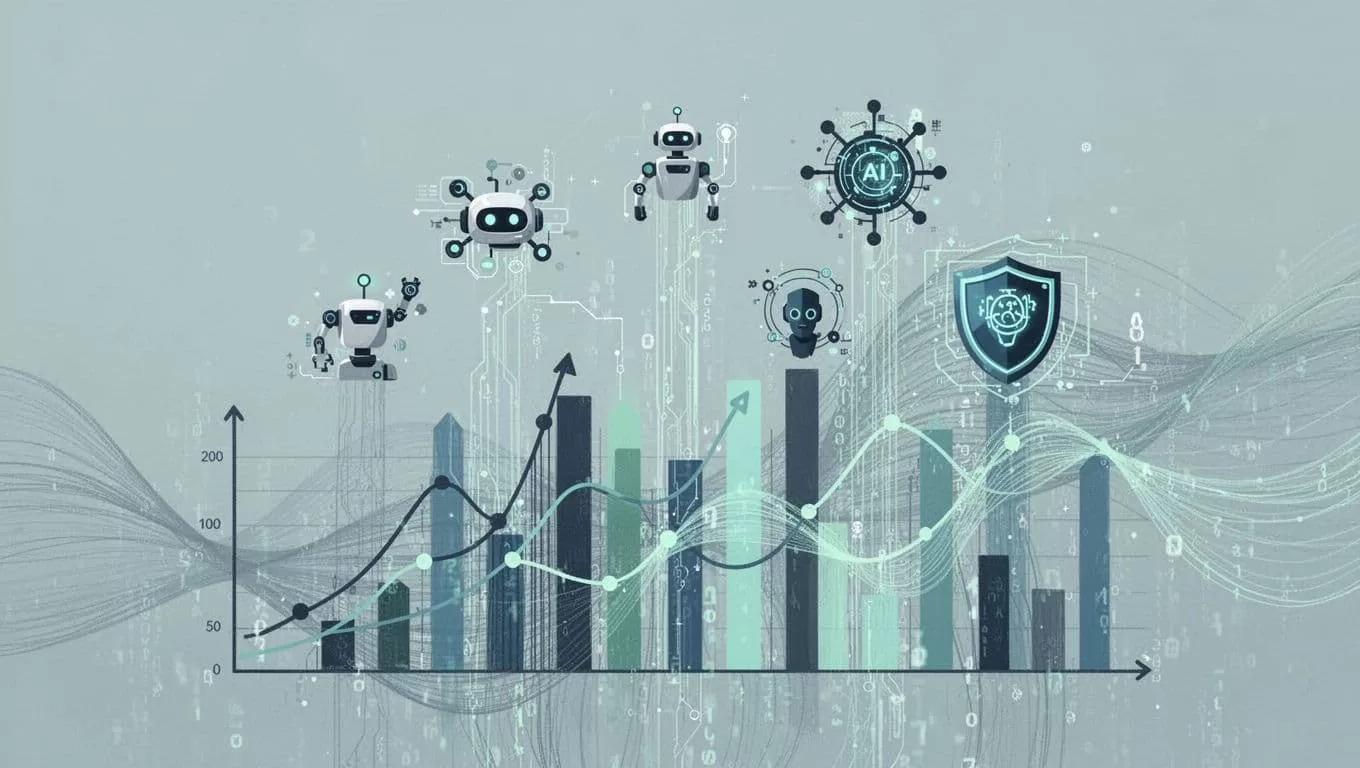
A trend becomes useful when it changes behavior, not when it gets loud.
How I separate hype from a durable trend
A rising chart is only the first clue. I want proof that something is turning into a market, not just a moment.
Here’s the quick test I use:
| Signal | Hype looks like | Durable trend looks like |
|---|---|---|
| Search behavior | One sharp spike | Steady growth over months |
| Buyer intent | Learning and curiosity | Pricing, reviews, integrations |
| Ecosystem | No related products | Tools, jobs, and content clusters |
| Business impact | Fun to watch | Saves time, money, or risk |
The takeaway is simple. One signal tells me people noticed something. Several signals tell me a market may be forming.
Then I run four checks:
- I look for a slow climb, not a single burst.
- I search for money words like pricing, vendor, and integration.
- I check adjacent terms, because real markets grow in clusters.
- I look for hiring, product updates, and startup movement.
When the pattern holds, I switch from trend spotting into emerging tech startup analysis. That’s where the idea gets tested against company behavior, not just search behavior.
I use that step because trends can look big before they prove useful. A topic may be popular for education, not purchase. It may also spread in one region while staying weak elsewhere. So I treat the tool as a compass, not a verdict.
Where trend tools help, and where they stop
Exploding Topics helps me save time. It also helps me avoid staring at crowded headlines after the easy opportunity is gone. That’s valuable when I’m planning content, scouting vendors, or watching software categories.
Still, the tool has limits. It shows direction, but not full market proof. It doesn’t tell me who will buy, how fast budgets will move, or whether a product can hold up in real use.
It also misses some things. Private company traction, closed-door enterprise deals, and slow shifts in regulated sectors can stay hidden longer. That’s why I never trust one chart on its own.
I keep one rule in mind:
Trend tools point me toward the road, but they don’t drive the car.
So I pair trend data with common sense. I check customer pain, competitor activity, and real product launches. I also watch whether the topic keeps building after the first wave of attention fades.
My bottom line on spotting future tech trends early
Exploding Topics gives me an early read on future tech trends, especially in AI, robotics, developer tools, cybersecurity, climate tech, biotech, and consumer tech. It helps me see where attention is gathering before the crowd settles in.
The real advantage is not speed alone. It’s timing with judgment. When I see the curve, then the buyers, then the ecosystem, I know I’m looking at something worth a closer look.
That’s the edge I want, early signal, careful validation, and no love for fake hype.
