Someli: My Hootsuite AI Alternative for Small Teams
I started looking for a Hootsuite AI alternative when my social workflow began to feel like a pile of half-finished tabs. I wanted one tool that could help me draft, schedule, and keep my brand voice steady without turning every post into a...

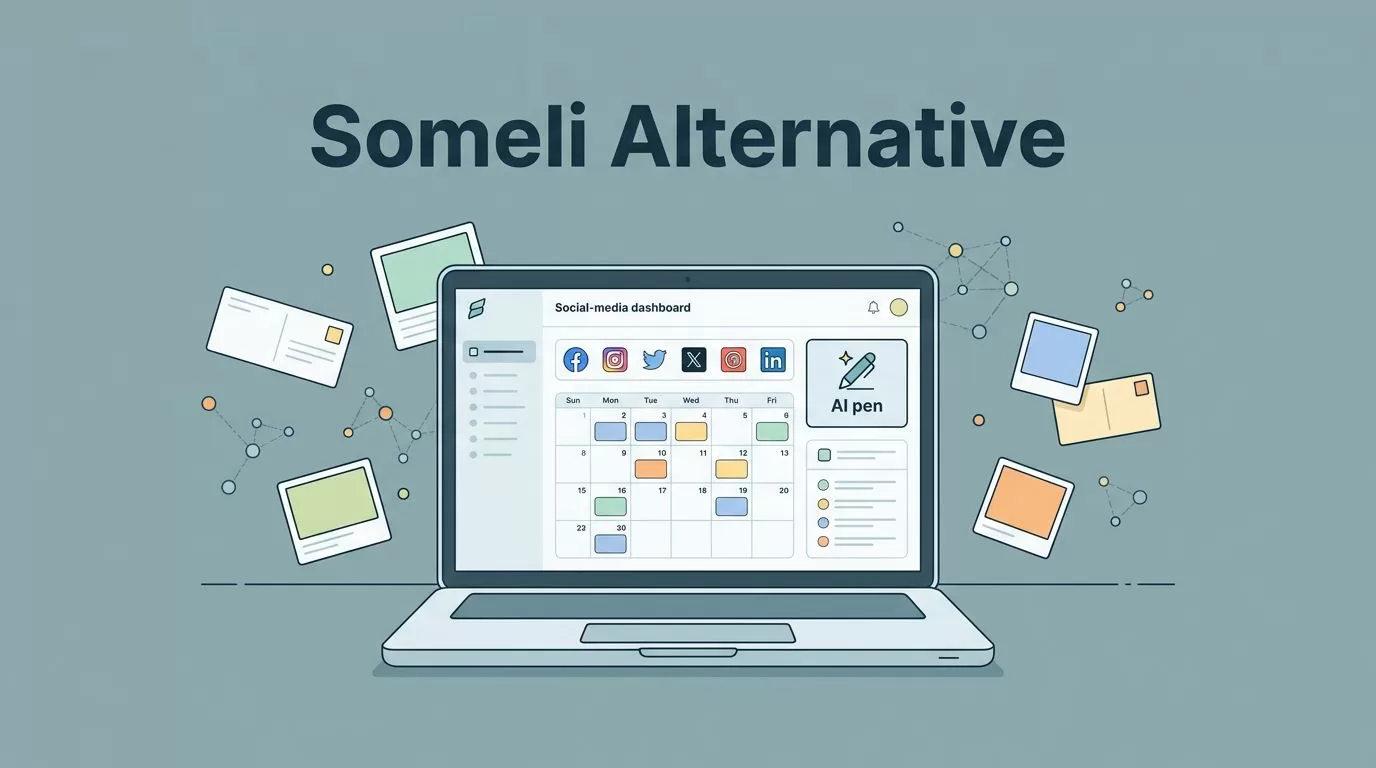
I started looking for a Hootsuite AI alternative when my social workflow began to feel like a pile of half-finished tabs. I wanted one tool that could help me draft, schedule, and keep my brand voice steady without turning every post into a project.
Someli kept rising to the top because it is built around a social media library, branded content, and automatic publishing. That mix matters when I care more about getting posts out than babysitting a content queue.
Why I started looking beyond Hootsuite
Hootsuite has always been a familiar name in social media management, and that familiarity still matters. If I run a larger team, need a mature admin setup, or want a broader platform with years of market presence, I understand why I would keep it on the shortlist.
Still, familiarity is not the same as fit. My real pain point is not posting a little faster, it is getting from idea to publish without redoing the same work three times. I want AI to help me write, organize, and queue content in one pass. I do not want a second tool just to fill gaps in the first one.
That is why the phrase “Hootsuite AI alternative” means something practical to me. I am not chasing a shiny chatbot. I am looking for a system that cuts down the blank-page problem and keeps the calendar moving.


What Someli changes in my workflow
Someli stands for Social Media Library, and that idea shows up in the product. It is built for individuals, small businesses, and busy professionals who want AI to do more of the heavy lifting. The platform learns the business, then builds a tailored content strategy instead of handing me generic captions.
AI content that feels useful, not random
I pay attention to whether a tool can create content that still sounds like me. Someli says it can auto-create posts, reels, and captions, then brand and schedule them automatically. That matters because a useful AI tool should make my voice easier to repeat, not replace it with mush.
When I tested the idea mentally, I kept coming back to the same question. Would I rather start from a blank screen or clean up a decent draft? I always choose the draft.
I covered a similar workflow in my AI social media assistant review, because the value shows up in the first draft, not the final polish. If the content library feels aligned with my brand, I spend less time inventing and more time editing.
Scheduling that keeps the calendar moving
AI creation alone does not solve the job. I still need scheduling, publishing, and enough structure to keep the feed from going quiet for two weeks.
That is where Someli makes more sense to me than a tool that feels split between drafting and planning. I can map out content for the week, keep the style consistent, and publish across channels without bouncing between tools. For the planning side, my social media content calendar guide shows the structure I use when I want a month of posts mapped out quickly.


Someli vs. Hootsuite in practice
I still check Hootsuite’s platform directly, because product details and pricing may change. When I want a broader comparison point, I also look at HubSpot’s business platform, since some teams prefer keeping social inside a wider marketing stack. I always compare current plans before I commit, because value changes fast when features move between tiers.
| Decision area | Someli | Hootsuite |
|---|---|---|
| AI assistance | Builds posts, reels, and captions around my business | Offers AI help inside a broader social suite |
| Content workflow | Feels centered on a content library and automated publishing | Feels broader, with more moving parts |
| Scheduling | Strong fit for branded scheduling and consistent output | Strong fit for established publishing workflows |
| Analytics | Promises actionable intelligence with a lighter feel | Usually better when I want deeper reporting and mature dashboards |
| Collaboration | Makes sense for solo users and small teams | Better when several people need approvals and controls |
| Automation | Focuses on content creation plus publishing | Better when automation reaches across a larger social operation |
| Value for money | Can feel leaner if I want AI plus scheduling in one place | Can make sense if I need a bigger admin layer |
The split is pretty clear to me. Someli is the cleaner choice when I want AI to handle more of the first draft work. Hootsuite still has the edge when my team needs broader control, heavier governance, and a long-established system for many users.
Where Hootsuite still makes more sense
I would not call Hootsuite the wrong choice. I would call it the safer choice for some teams. If I run an agency, juggle several brands, or need a larger approval process, I can see why Hootsuite stays attractive.
Someli looks better when I want speed and simplicity. Hootsuite looks better when I want layers of control. That difference matters because team collaboration can either reduce friction or create it. A small team can feel buried in permissions it never needed. A bigger team can feel exposed without them.
I also think about reporting. Someli is positioned around actionable intelligence, which is useful, but I still want to see how deep the analytics really go for my use case. If I need more formal reporting, I would compare that against a platform built around broader marketing visibility. When social is tied directly to pipeline, I also keep my social selling software rollout in mind, because posts and revenue workflow should not live in separate worlds.
A tool earns its keep when it cuts my drafting time without making my calendar harder to manage.

How I decide if Someli is worth the switch
I do not switch tools because a demo looks polished. I switch when the workflow feels lighter and the output stays strong.
My checklist is simple:
- The AI gives me a usable first draft, not just a slogan generator.
- Scheduling feels faster than my current setup.
- The content sounds close enough to my brand that I only need light edits.
- Team handoff stays simple, with no extra admin burden.
- The price makes sense once I compare it to the time I save.
That last point matters more than people admit. If I need one tool for drafting and another for scheduling, the total cost is not just the subscription fee. It is also the time I spend switching between tools. Someli has a better shot at winning when I want one system to do more of that work for me.
I also check whether the tool fits the size of the operation. For a solo founder or a small team, Someli can feel like the sharper match. For a larger organization, Hootsuite may still justify itself because of process control and team structure.
Conclusion
I came into this comparison looking for a Hootsuite AI alternative that would save time without making my process messy. Someli stands out because it focuses on AI-assisted content creation, branded scheduling, and a lighter planning workflow.
Hootsuite still makes sense when I need a broader, more established platform with stronger team controls. That is why my choice comes down to the shape of the work, not the name on the homepage.
For small teams, Someli looks like the better fit when the goal is simple: publish more consistently, with less friction, and keep the voice intact.

