Hunter.io Integrations for Sales Engagement Teams in 2026
I care less about having every tool in my stack, and more about having the right handoffs. With hunter.io integrations, I can move from company research to verified contacts without turning my workflow into a tangle. For B2B sales, SDR, Rev...
I care less about having every tool in my stack, and more about having the right handoffs. With hunter.io integrations, I can move from company research to verified contacts without turning my workflow into a tangle.
For B2B sales, SDR, RevOps, and growth teams, that matters. Clean data saves reps from dead ends, and it gives automation something useful to work with. I also want a setup that fits the tools I already use, not a setup that needs a rebuild every quarter.
Where Hunter.io fits in my outbound stack
I use Hunter as a data layer, not a full engagement engine. It helps me find emails, verify them, enrich leads, and check domains before I send anything.
As of April 2026, Hunter’s public integration story still centers on Apollo. Apollo’s own Hunter.io integration directory shows how the two tools fit together for prospecting and enrichment. I like that setup when I want email discovery and verification inside a broader outbound system.
For Outreach and Salesloft, I don’t assume a native link exists. I check the current docs first, because features change. Then I build around what’s available today.
If I want a deeper look at the prospecting side, I use my Hunter.io email finder workflow guide as my starting point. It keeps the first step simple, find the right contact before I think about the sequence.

The connection paths I choose, in order
I usually think about hunter.io integrations in three layers. First is the direct or native path. Second is no-code automation. Third is a custom API connection.
I don’t pick the fanciest route. I pick the route that fails the least often.
Here’s how I sort those options in practice:
| Connection path | Best for | My rule |
|---|---|---|
| Native or direct integration | Teams already inside Apollo | Use it when the data handoff stays inside one system |
| No-code automation | Fast pilots and small RevOps teams | Use it when I need speed and low setup risk |
| Custom API connection | Complex routing and tighter control | Use it when I need logging, rules, or custom enrichment logic |
That table keeps me honest. A native link is great, but only if it covers the job I need. No-code tools are faster to test, and they’re handy when I want to connect Hunter to Outreach without a long dev cycle. If I need a quick bridge to Outreach, I test an Outreach integration via Integrately before I write custom code.
For a broader look at platform choice, this 2026 sales engagement platform comparison helps me sanity-check where my sequencer belongs. Apollo, Outreach, and Salesloft each solve a different problem, so I don’t expect Hunter to replace them.
The workflows I run every week
My best results come from simple workflows that keep reps moving and bounces low. I start with a company list, then I let Hunter do the contact work.
- I pull named accounts from my CRM or target list.
- I use domain search or the email finder to surface likely contacts.
- I verify the addresses before they enter a sequence.
- I enrich the record with useful fields, then route it to the right tool.
That last step matters more than people think. A verified lead is only useful if it lands in the right place. I’ve used this pattern for outbound, reactivation, and account-based follow-up. It also keeps SDRs from wasting time on bad records.
When I need the verification part broken down, I keep my Hunter.io verification workflow guide open. It helps me separate valid, risky, and unusable contacts before they hit a campaign.
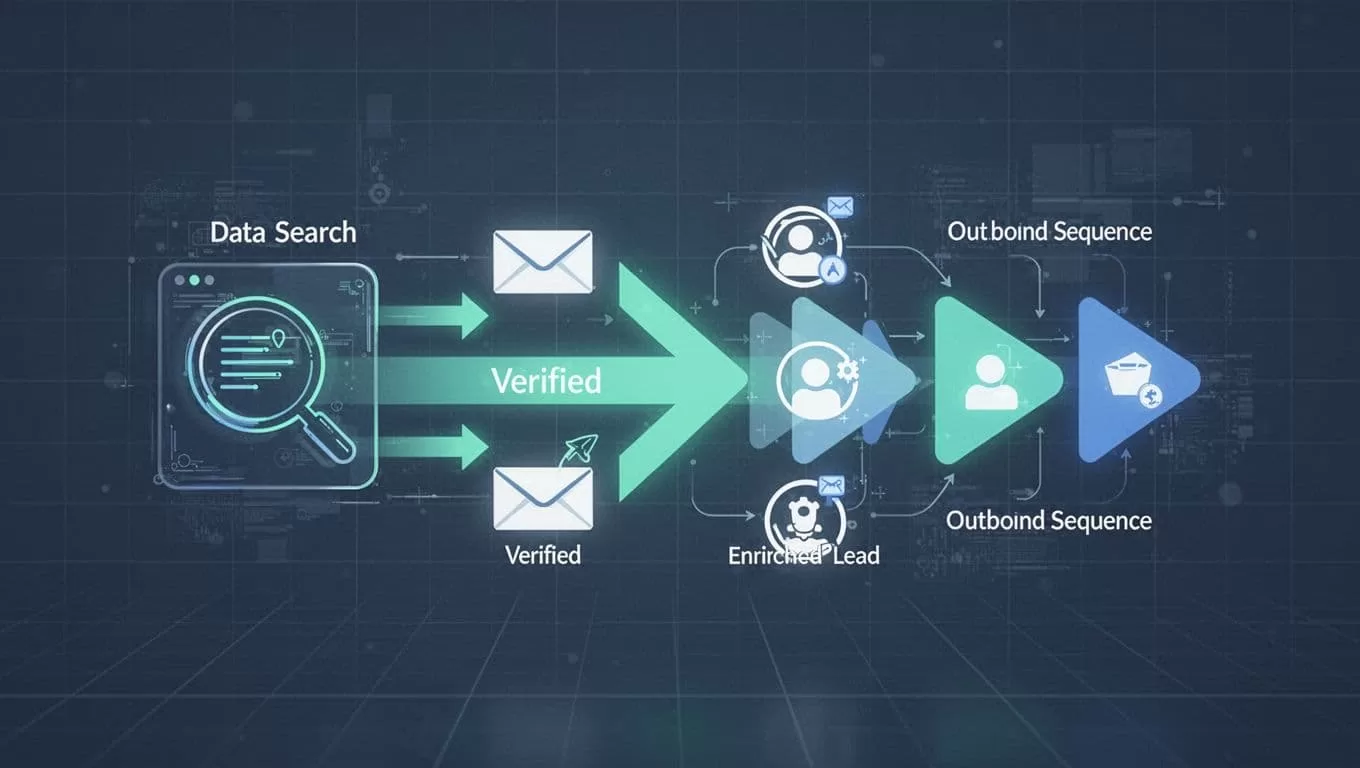
I also like this approach because it fits both manual and automated work. A rep can pull a few contacts by hand. A RevOps team can push the same logic through an API or a no-code tool. The goal stays the same, clean data in, useful outreach out.
If bounce control is already a problem, I pair this with my Hunter.io bounce-rate reduction tutorial. That keeps bad emails out of the sender path before they hurt deliverability.
The mistakes that waste credits and damage delivery
The biggest mistake I see is verifying too late. Teams build a list, load it into a sequencer, and hope for the best. By then, the damage is already close.
I also see people treat catch-all domains like a green light. They’re not. They need more caution, slower volume, and tighter targeting. If I’m unsure, I review the record before I send.
Another common issue is syncing every contact into every system. That turns the stack into a noise machine. Instead, I route only the contacts that match the campaign, the persona, and the send rules.
I also re-verify old lists. People change jobs. Domains change hands. Data gets stale faster than most teams expect. When I keep a regular check on those records, my outbound stays cleaner and my reports make more sense.
If I’m using Hunter as a free checker for spot jobs, I keep the scope small. If I’m using it in a real workflow, I verify first and send second. That order saves credits and protects reputation.
The bottom line
The best hunter.io integrations are the ones that keep my outbound stack honest. Hunter does its best work as the data source before the sequence, not the sequence itself.
If I’m on Apollo, the direct path makes sense. If I’m on Outreach or Salesloft, I usually start with no-code or API-based handoffs. Either way, I want the same thing, cleaner leads, lower bounce risk, and less time spent fixing bad records.
That’s the real win in April 2026. I’m not chasing more tools. I’m building a tighter path from company name to send-ready contact.
