How I Turn Meeting Transcripts Into Action Items
When a meeting ends, the transcript can feel like a room after a storm. The words are there, but the work is buried under side comments, half-finished thoughts, and polite agreement. I don’t treat a transcript like a finished record....
When a meeting ends, the transcript can feel like a room after a storm. The words are there, but the work is buried under side comments, half-finished thoughts, and polite agreement.
I don’t treat a transcript like a finished record. I treat it as raw material for meeting action items. My goal is simple, turn talk into tasks before the next meeting wipes the slate clean.
I start by spotting the lines that sound like commitments
I look for phrases that carry motion. “I’ll,” “we need to,” “can you,” and “let’s” usually point to work that still needs a home.
A messy transcript might look like this:
“I can send the draft on Friday.”
“Someone should update the pricing page.”
“We need to check the numbers before launch.”
Those lines are not action items yet. They are loose commitments, and loose commitments get forgotten.
If the transcript itself is weak, I fix the source first. I compare capture options like Otter AI vs Fireflies for meeting notes before I blame the follow-up process. A clean transcript gives me a better starting point, but I still have to do the sorting.
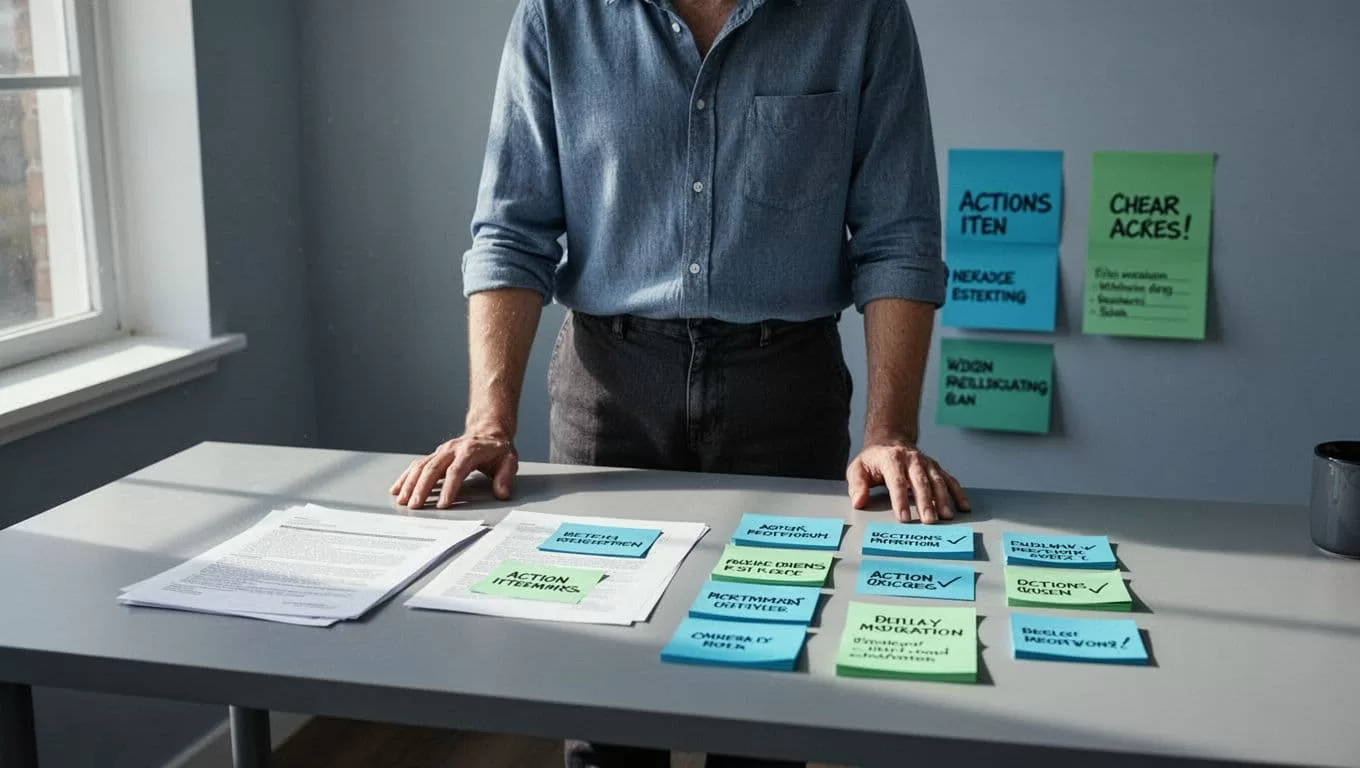
The real trick is context. A promise is only useful when I know who said it, why it matters, and what happens next.
My step-by-step pass over the transcript
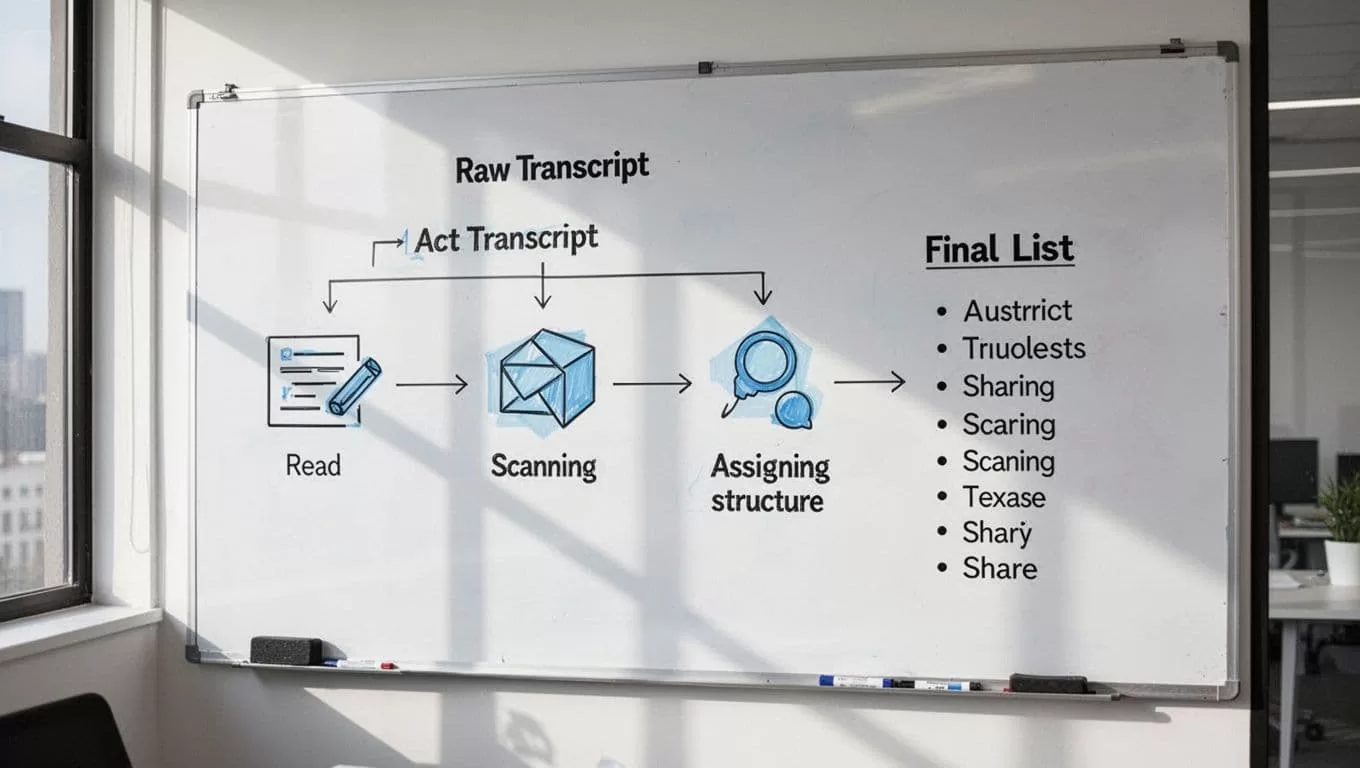
I use the same order every time, whether I work by hand or with AI. The tool can help me sort faster, but I still make the final call.
- I skim for decisions, promises, and open questions.
- I mark anything with a verb and a missing owner.
- I rewrite each line into one task with context and a deadline.
- I check whether someone can act on it without reading the whole transcript again.
That last step matters a lot. A good task should stand on its own. If it needs a replay of the meeting, it is still too vague.
For a quick automation guide, I sometimes compare my process with how to extract action items from meeting notes automatically. The best systems still follow the same logic I use by hand. They find the task, assign it, and attach enough detail to make it useful.
If I can’t assign it in one breath, it isn’t ready.
After that first pass, I clean the wording. I remove guesses, filler, and soft language. “Maybe someone can” becomes a real next step, or it gets left out.
I turn rough transcript lines into clean tasks
This is where the transcript starts paying rent. I take a messy line and rewrite it so the next person can move.
Here’s a simple example:
- “I can probably send the pricing sheet Friday.”
- “Someone should tell support about the new plan.”
- “We need the churn numbers before next week.”
My version looks more like this:
- Alex will send the updated pricing sheet by Friday afternoon, so sales can use it in the next customer call.
- Maya will brief support on the new plan by Wednesday, so the team can answer questions before rollout.
- Jordan will pull last quarter’s churn numbers by Monday morning, so finance can review them before the board prep.
The difference is small on the page, but huge in practice. Each item now has a task, an owner, a deadline, a bit of context, and a clear next step.
I also watch for vague group language. “We should revisit this” is not enough unless I can say who revisits it and when. If I can’t do that, I leave it out of the task list and keep it in the notes.
For teams that want a more technical view, extracting action items using NLP shows the same pattern in software terms. The names change, but the logic stays plain.
The four parts I refuse to skip
I check every action item against the same four parts. If one is missing, the task usually falls apart later.
| Part | What I look for | Weak version | Strong version |
|---|---|---|---|
| Task | A clear verb and outcome | “Follow up on pricing” | “Send the revised pricing sheet” |
| Owner | One person who moves it forward | “Team to review” | “Jordan to review and approve” |
| Deadline | A real date or time | “Soon” | “By Thursday at 3 p.m.” |
| Context | Why the task matters | “Update the deck” | “Update the deck for Monday’s investor call” |
| Next step | The first move after the meeting | “Look into it” | “Book 20 minutes with finance and confirm the numbers” |
The table above keeps me honest. It also saves me from turning one meeting into ten tiny mysteries.
I don’t need perfect polish. I need usable direction. A task can be short, but it can’t be vague.
My final check before I share the list
Before I send anything, I scan for duplicates, weak verbs, and missed owners. I also ask a simple question: could someone finish this without asking me for more context?
If the answer is no, I tighten the wording again. If the transcript does not support a detail, I don’t invent it. I mark it as open or I leave it in the meeting notes.
That habit keeps my list clean and keeps trust high. People read action items when they know the items are real.
Meeting transcripts will always be messy. That is fine. My job is to pull out the few lines that matter and turn them into meeting action items someone can actually finish. When I do that well, the transcript stops being a pile of words and starts acting like a work plan.
