Build a Mida A/B Testing Framework for Reliable Decisions
An A/B test can show that one page performs better. It can’t fix unclear goals, broken tracking, or weak traffic data. Your results are only as reliable as the system behind the experiment. Mida A/B testing gives growth teams a practi...

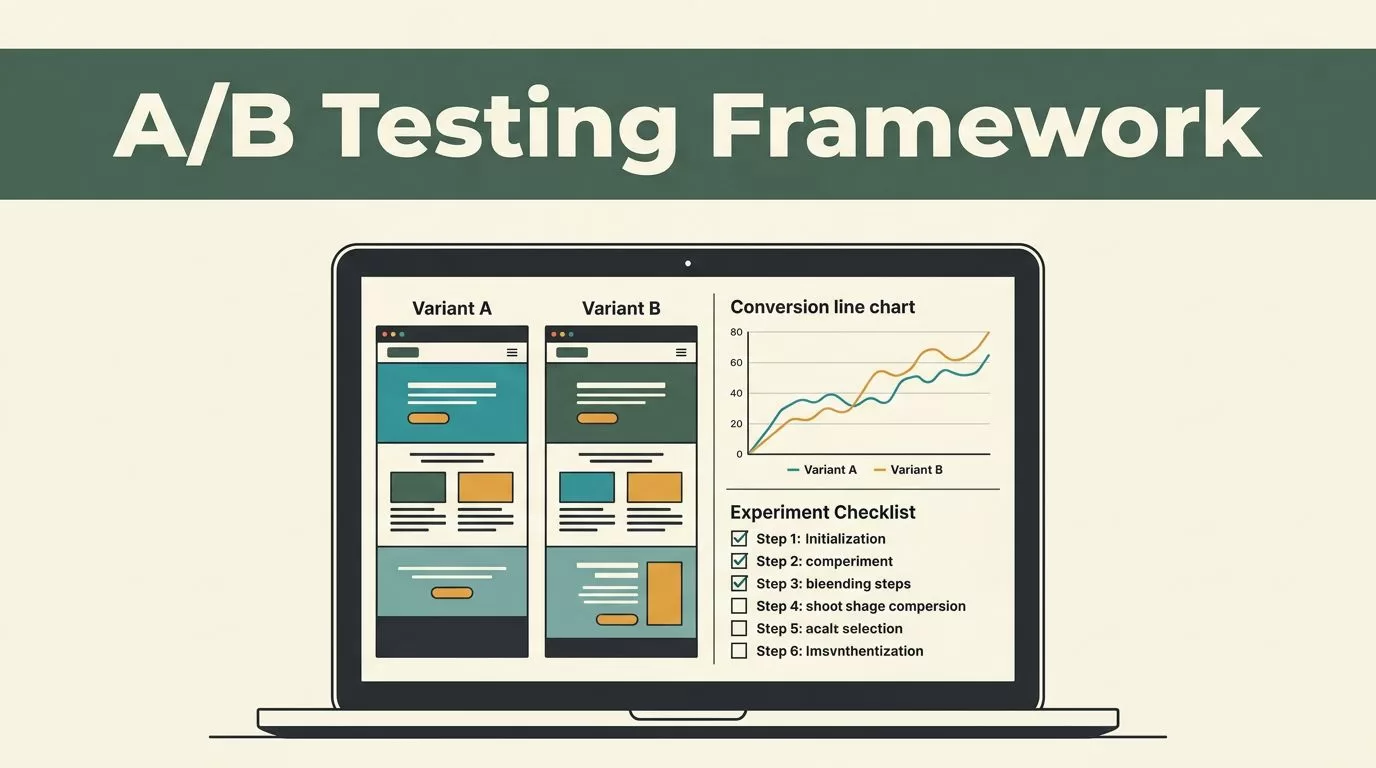
An A/B test can show that one page performs better. It can’t fix unclear goals, broken tracking, or weak traffic data. Your results are only as reliable as the system behind the experiment.
Mida A/B testing gives growth teams a practical place to connect website changes with conversion data. The work starts before you create a variation. Define the decision, configure the data, run one controlled test, and record what happens.
Key Takeaways
- Start every Mida experiment with one primary conversion goal and clear guardrail metrics.
- Install and verify Mida tracking before sending traffic to a test.
- Test one meaningful change at a time across headlines, CTAs, pricing pages, and checkout flows.
- Treat Mida’s report as evidence, not automatic proof of a permanent winner.
- Store every result in an experiment log so future tests build on past decisions.
Define the Measurement Contract Before You Build
A good testing framework starts with a short measurement contract. This document keeps marketing, product, design, and engineering aligned before the first visitor sees a variation.
Write down the page, audience, change, hypothesis, primary metric, secondary metrics, and decision rule. Keep the format consistent across every Mida experiment.
Your hypothesis should connect a user problem to a measurable action. For example:
If we replace a feature-focused headline with an outcome-focused headline, more qualified visitors will start a trial.
The primary metric should measure the action that matters most. Use completed signup, activated trial, booked demo, paid checkout, or completed purchase when those events are available. Page views and button clicks can help diagnose performance, but they shouldn’t decide the winner alone.
Add guardrail metrics before launch. A variation that produces more signups but fewer activated accounts may be worse for the business. Useful guardrails include:
- Trial activation rate
- Revenue per visitor
- Refund or cancellation rate
- Checkout completion
- Page load performance
- Form error rate
Mida can help you connect experiment performance with tracked goals and website behavior. Before configuring a test, review the Mida experimentation platform and confirm which goal, audience, and reporting options are available in your workspace and plan.
Don’t set a decision rule that says, “Stop when the graph looks good.” Set a practical minimum runtime and traffic requirement. Your rule might require two business cycles, enough conversions for a useful comparison, and no major tracking or site errors.
This approach follows the same basic logic described in established A/B testing guidance. The platform can calculate results. Your team still has to decide what result is trustworthy and useful.
Install Mida and Verify Every Data Point
Add Mida to the site before you create an experiment. Use the tracking installation method supported by your setup, such as the site script, a tag manager, or an available platform integration.
If you use Google Tag Manager, publish the container only after testing the tag on the correct pages. If your site is a single-page application, check route changes separately. A pageview event that fires only on the first load can produce incomplete results.
Run a data quality check with a test visitor. Confirm that Mida receives the page view, identifies the correct URL, assigns the visitor to the intended experiment, and records the conversion after the action is complete. Don’t assume a visible variation means the data is correct.
Check these cases before launch:
- Visit the page as a new visitor and return as a repeat visitor.
- Complete the primary conversion on desktop and mobile.
- Test rejected and accepted cookie consent states.
- Submit forms with both valid and invalid data.
- Check redirects, payment pages, and cross-domain steps.
- Confirm that internal traffic and staff accounts are excluded when required.
Use Mida’s event and goal reporting to compare the browser action with the recorded conversion. For teams that also use GA4, Google’s event implementation documentation provides a useful reference for naming and sending website actions.
Keep event names stable. Don’t create separate names for the same action because one test uses a red button and another uses a green button. The event should describe the user action, not the variation.
Also check page flicker. If the original page appears before Mida applies a variation, visitors may see a jump or form shift. That can affect both user experience and test results. Fix the loading order before you interpret performance.
Create Focused Mida Experiments
Once tracking passes, create the experiment in Mida. Give it a name that explains the page and change. “Pricing headline, outcome copy, Q3” is more useful than “Test 14.”
Select the target page or URL rule. Define the audience carefully. Start with all eligible visitors unless the hypothesis concerns a specific segment, such as new visitors, paid traffic, or visitors from a particular country.
Set the control as the current page. Add one variation that changes the element covered by the hypothesis. Use Mida’s available experiment builder or visual editing workflow for simple page changes. Use the supported code or deployment method when the change affects application logic, server-side content, or a checkout process.
Keep the first experiment narrow. A headline test should not also change the navigation, pricing, form length, and button copy. When several changes move together, you won’t know which change caused the result.
Use this structure when planning common website tests:
| Test area | Hypothesis | Primary metric | Guardrail |
|---|---|---|---|
| Homepage headline | A clear customer outcome will increase qualified trial starts | Completed trial starts | Trial activation |
| CTA label | Specific action language will increase form starts | Form start rate | Completed submissions |
| Pricing page | Better plan comparison will reduce hesitation | Paid checkout starts | Revenue per visitor |
| Checkout flow | Removing an unnecessary field will improve completion | Completed purchases | Payment errors |
For a headline test, keep the page layout unchanged. Compare copy such as “Manage invoices in one place” with a more direct outcome statement that matches the product’s actual value. Don’t promise a result the product doesn’t deliver.
For a CTA test, compare action language that matches the next step. “Start free trial” and “Create your workspace” may attract different expectations. Track completed signups, not only clicks.
Pricing tests need extra control. Don’t change prices, plan names, feature limits, and page layout in one basic experiment. A pricing change can affect revenue, sales conversations, upgrades, and cancellations. Choose the business metric before launch.
Checkout tests need technical validation. A higher completion rate is not useful if payment failures increase or orders fail to reach the backend. Connect the Mida result with confirmed order data before making a rollout decision.
Set traffic allocation before launch. A 50/50 split is a practical starting point for a standard A/B test. Use a smaller allocation for a risky variation only when you have a clear reason and a way to monitor harm.
Run the Test Without Chasing Early Results
Launch the experiment after QA, then let the pre-defined test window run. Don’t stop after a few hours because one variation has a large lead. Early results move quickly when the sample is small.
Short tests can produce unstable outcomes. Low-conversion pages need more time than high-volume signup pages. Traffic quality also changes by weekday, campaign, device, geography, and purchase cycle.
Mida may display statistical indicators, conversion rates, lift, or confidence information in its experiment report. Use those values with the sample size, runtime, and business context. A high percentage from a small number of conversions doesn’t create statistical certainty.
Don’t change the audience, allocation, primary goal, or page during the test. If you make a major change, record it and treat the affected period separately. Otherwise, the report combines different test conditions.
Review the report in this order:
- Confirm that traffic reached the correct control and variation.
- Check visitor and conversion counts for both groups.
- Review the primary metric first.
- Check guardrails for negative effects.
- Compare results by device and key acquisition source.
- Investigate unusual drops, spikes, or tracking gaps.
Use segments for diagnosis, not for endless winner hunting. If desktop visitors improve while mobile visitors decline, investigate the page experience and report the split. Don’t keep slicing data until one small segment produces a favorable result.
A useful outcome has three possible forms. The variation wins against the primary metric without damaging guardrails. The control remains stronger. Or the test is inconclusive and needs better evidence, a clearer change, or more traffic.
An inconclusive result isn’t wasted work. It tells you that the tested change didn’t produce a measurable difference under those conditions. Record that result instead of forcing a rollout.
Turn Mida Results Into an Operating System
A testing framework needs memory. Create an experiment log outside the report interface, using a spreadsheet, database, or project tool your team already maintains.
Store the experiment name, owner, page, audience, hypothesis, launch date, stop date, allocation, primary metric, result, decision, and follow-up. Include links to the page version and relevant Mida report.
Use a consistent naming system. A practical format is:
TEAM-PAGE-ELEMENT-NUMBER
For example, GROWTH-PRICING-CTA-004 identifies the team, page, element, and sequence.
Separate three decisions in the log:
- Ship: The variation met the decision rule and passed guardrails.
- Keep control: The original performed better or the variation created a business risk.
- Learn and retest: The evidence was inconclusive or exposed a new question.
After shipping a winner, monitor the live page. An experiment result applies to the tested audience and period. It doesn’t guarantee the same effect across every campaign, season, device, or customer type.
Build the next test from the evidence. If the CTA increased form starts but not completed submissions, examine the form. If the pricing page improved checkout starts but reduced completed purchases, inspect payment or plan selection steps.
Conclusion
A reliable Mida A/B testing framework is a repeatable process, not a collection of isolated experiments. Define the decision, verify tracking, control the change, run the test long enough to collect useful evidence, and record the outcome.
The strongest result isn’t always a winning variation. Sometimes it’s a clear reason to keep the control or investigate the next step. Good testing turns website changes into documented decisions, one controlled experiment at a time.

