Referral Attribution Software With Rewardful: A Practical Adoption Plan
A referral program can create hundreds of clicks and still produce payout disputes, missing customer records, and unusable reporting. Referral attribution software fixes that only when its rules match your billing flow. Rewardful gives SaaS...
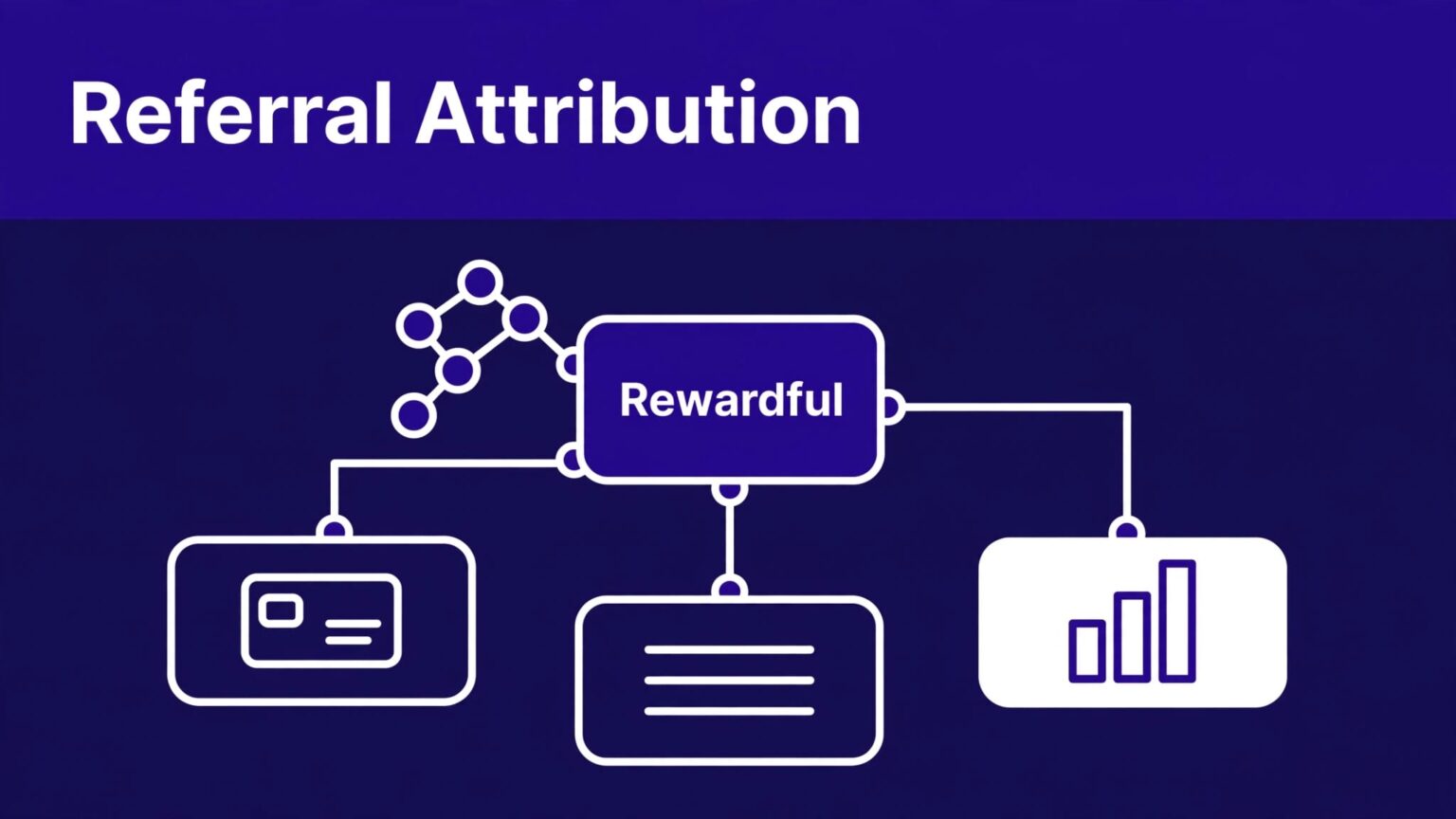
A referral program can create hundreds of clicks and still produce payout disputes, missing customer records, and unusable reporting. Referral attribution software fixes that only when its rules match your billing flow.
Rewardful gives SaaS teams a way to track affiliate and customer referral activity without building attribution logic inside Stripe. The work is still yours. You need clear campaigns, tested checkout paths, and a report your team can reconcile.
Start by defining what a valid referral looks like in your business.
DEFINE THE RESULT BEFORE YOU CONNECT A TOOL
Referral attribution answers one operational question: which partner or customer should receive credit for a paying customer?
That sounds simple until a buyer visits through one affiliate link, returns through another channel, upgrades later, then asks for a refund. A sound program decides how credit works before it starts collecting traffic.
Rewardful is built for SaaS affiliate and referral programs. Its SaaS affiliate platform connects referral activity to subscription revenue instead of treating clicks as the final result.
Separate activity from accepted revenue
A click shows interest. A new referral record shows that tracking fired. Neither confirms that the customer paid or that the commission should be released.
Keep these stages separate in your operating report:
- Clicks show whether people use partner links.
- Attributed customers show whether the referral record reached the billing path.
- Paid invoices show collected subscription revenue.
- Pending commissions are held until your refund policy clears.
- Due and paid commissions show what your team can process or has already paid.
A program that creates 50 commission records but needs hours of correction work is not working. Measure accepted, paid customer records, not dashboard activity.
Set rules that people can understand
Write the rules before you recruit affiliates. State the commission rate, whether it applies to collected revenue, whether it recurs, and when it stops.
Also define self-referrals, internal purchases, coupon-site traffic, trademark bidding, fake accounts, and incentive traffic. Attribution software tracks a billing relationship. It does not replace your policy or your review process.
A commission is an accounting commitment, not a marketing metric. Treat it with the same care as a customer refund or invoice adjustment.
HOW REFERRAL ATTRIBUTION SOFTWARE WORKS
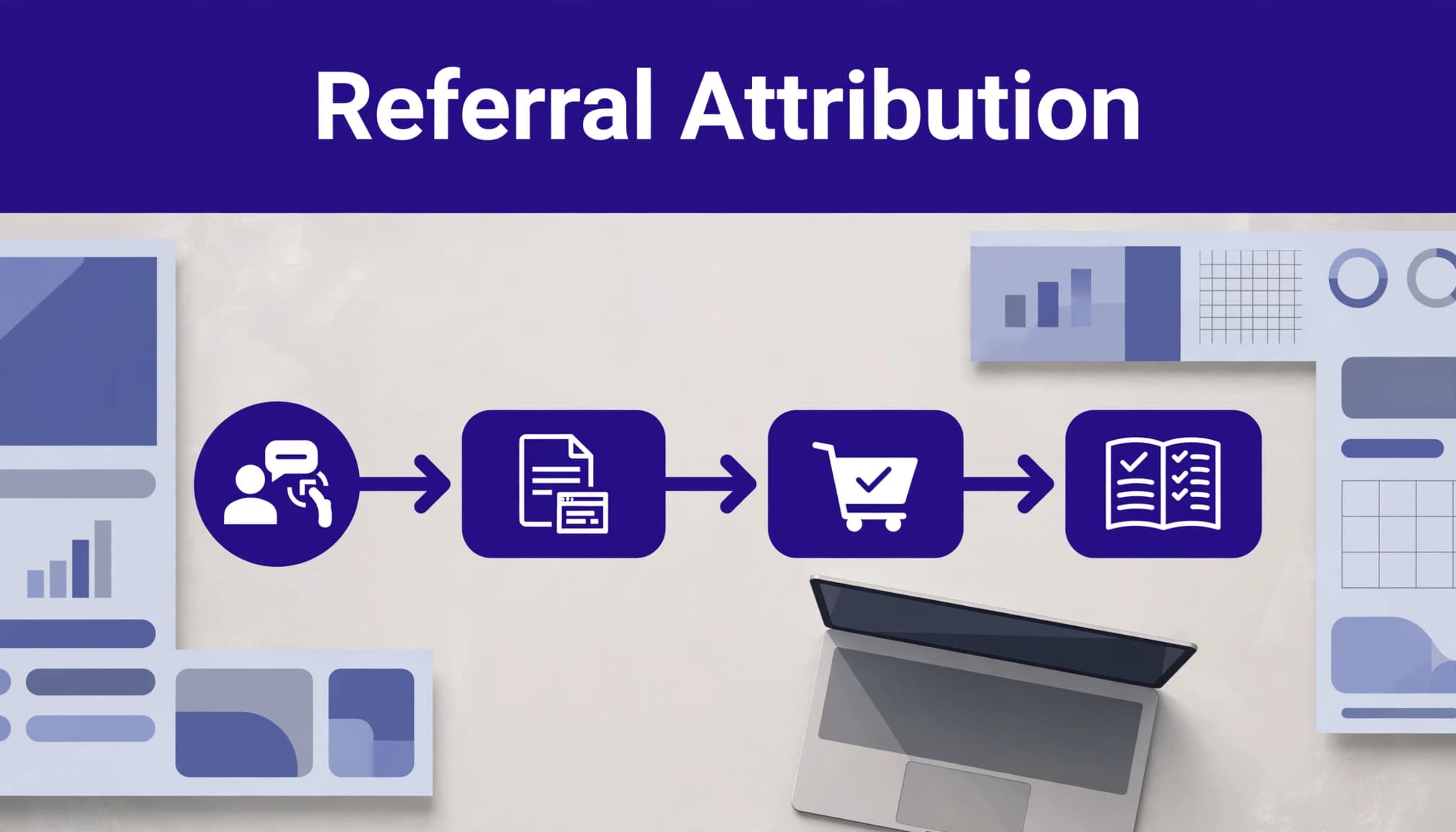
A referral system needs four connected events: a partner link, a visitor record, a customer record, and a billing event. Break any connection and your report becomes hard to trust.
Rewardful uses campaign settings to control how a referral is credited and how commissions are calculated. With Stripe, billing events can update the commission record as customers pay, renew, upgrade, downgrade, or receive refunds.
Choose first-touch or last-touch credit
Rewardful supports first-touch and last-touch attribution. First-touch gives credit to the first affiliate link a visitor uses. Last-touch gives credit to the most recent affiliate link before conversion.
Use first-touch when partners create early demand through reviews, podcasts, or educational content. Use last-touch when your program rewards the partner that closes the sale.
Neither option is universally better. The wrong choice creates disputes because your partner terms and your dashboard tell different stories.
Once the visitor converts, Rewardful permanently associates that customer with the credited affiliate. Test that rule against your actual buying journey before you launch.
Connect attribution to the payment source
For a Stripe-based SaaS, the Rewardful Stripe integration is the practical starting point. Connect the account, then verify that a test signup, checkout, and paid invoice appear in the expected records.
Rewardful also lists a Paddle Classic integration. Do not assume that means every Paddle product or billing setup works the same way. Confirm your current processor, checkout method, and subscription flow before you select a platform.
CHECK IF REWARDFUL FITS YOUR PROGRAM
Rewardful is a good fit when your company sells subscriptions, bills through Stripe or Paddle Classic, and wants an affiliate or customer referral program without custom attribution infrastructure.
It is less suitable when you need complex multi-touch rules, marketplace-level partner management, or native support for a billing processor that Rewardful does not list. Start with the billing system, not a feature comparison chart.
Use it for a focused SaaS offer
The cleanest first campaign has one product, one audience, one commission rule, and one payment path. For example, a B2B SaaS company might pay a percentage of collected subscription revenue for a defined number of months.
Avoid launching separate offers for every plan, region, and partner type on day one. More campaigns create more exceptions. You need baseline data before you add complexity.
Match the plan to real referral revenue
Rewardful’s published plans start at $49 per month for Starter, $99 for Growth, and $149+ for Enterprise. The pricing model uses affiliate-generated revenue bands, with Starter listed up to $7,500 per month and Growth up to $15,000 per month.
Review the current Rewardful plans and revenue bands before committing. Pricing, plan limits, and included features can change.
Core plans are advertised with no transaction fee. That does not make your program free. You still carry commission expense, staff review time, payout fees, refunds, and tax administration.
CONFIGURE THE CAMPAIGN RULES FIRST
Do not invite partners while campaign settings are still open questions. A published commission rate is a promise. Changing it later can damage trust and create manual cleanup.
Build the first campaign around the economics of a retained customer, not a headline percentage that looks attractive in recruitment posts.
Set commission limits and holding periods
Rewardful lets you set percentage-based or fixed commissions. You can also choose recurring or one-time rewards, a maximum commission period, a maximum number of commissions per customer, a pending period, and a minimum payout threshold.
Use the pending period to match your real refund risk. If your product has a 30-day refund window, an immediate payout rule creates unnecessary recovery work.
Set a maximum commission period if recurring revenue is part of the offer. A lifetime promise may work for a few strategic partners. It is often harder to forecast and reconcile at scale.
Test the real buyer path
Create test cases before you open applications. Use a valid affiliate link, sign up as a new customer, complete a payment, and then check the attribution and commission record.
Repeat the test with a refund. If your product supports upgrades, downgrades, trials, coupons, or sales-assisted invoices, test those too.
Keep a small test log with the referral link, campaign, customer email, invoice date, expected result, actual result, and reviewer. When a dispute appears later, you will have a known-good comparison point.
LAUNCH REWARDFUL IN A CONTROLLED BATCH
A referral program should begin with a small group of approved partners. Use people whose channels, audience, and traffic sources you can review. Ten well-matched partners give you better information than 500 unknown signups.
Do not open a public application page until the billing and reporting checks pass.

Use this practical adoption checklist
- Define your eligible products, commission basis, attribution type, and refund policy.
- Connect Stripe or confirm your Paddle Classic workflow before building campaigns.
- Create one campaign with a clear rate, commission duration, holding period, and payout threshold.
- Run test signups, paid invoices, renewals, and refunds through the full customer path.
- Invite a limited group of partners and give them written promotion rules.
- Review referred-customer records against your billing data every week.
- Expand only after attribution, reversals, and payouts match your expected results.
This controlled launch protects your partners and your finance team. It also gives marketing a clean baseline for conversion and retention.
Keep a recovery path
Checkout pages change. Tracking scripts can be removed. A new pricing page can send visitors through an untested route.
Set an alert process for sudden drops in attributed customers, missing tracking activity, duplicate claims, and failed billing syncs. Keep the last trusted commission export in a shared location.
When something breaks, stop expanding the program. Compare the affected referral record with the payment processor, fix the campaign or checkout issue, then retest before releasing more payouts.
MEASURE THE REFERRALS YOUR TEAM ACCEPTS
Referral attribution software earns its cost when it reduces manual work and produces reliable payout data. It does not earn its cost because a dashboard shows more clicks.
Review a small sample each week. Compare the affiliate, customer, paid invoice, commission amount, and refund status against Stripe.
Track quality and commercial results
Your report should separate marketing signals from financial results. Use a fixed date range for every metric.
| Measure | What it tells you |
|---|---|
| Attributed paid customers | Whether referral records reach paid billing events |
| Refund and reversal rate | Whether partner traffic produces durable customers |
| Retained referred revenue | The subscription value after the first payment |
| Due commissions | The amount ready for payout |
| Paid commissions | Actual program cash outflow |
| Review and correction time | The human cost of operating the program |
A high click count with weak paid conversion is a traffic-quality issue. A high refund rate may point to misleading promotion, poor audience fit, or an offer that attracts the wrong buyer.
Keep original records intact when a commission changes. Add an adjustment record with the date, amount, reason, and related payout. Do not overwrite the old figure and lose the audit trail.
HANDLE PAYOUTS, FRAUD, AND PARTNER TERMS
Rewardful’s standard payout workflow does not send money for you. Your team reviews due commissions and pays affiliates through the selected process. Rewardful documents payout options that include PayPal and Wise, while Managed Payouts is an optional service with an added 3% processing fee.
Read the current commission payout workflow before you set payment expectations with partners.
Give affiliates operating terms
Affiliates need more than a percentage. They need a clear answer to when they earn and when they get paid.
Your written terms should cover:
- What counts as a qualified customer and eligible revenue.
- The attribution rule and any applicable referral window.
- The commission rate, duration, and payout threshold.
- The pending period and refund-related reversals.
- Prohibited traffic methods and self-referral rules.
- The payout schedule, payment method, and tax information you require.
Clear terms reduce support tickets. They also make it easier to decline a disputed commission using the same rules for every partner.
Review risk before money leaves
Flag unusual patterns before each payout. Look for repeated customer details, short-lived subscriptions, sharp refund rates, suspiciously high conversion rates, and purchases that appear linked to the affiliate.
Do not accuse a partner based on one unusual record. Check the customer, invoice, refund status, and promotion method first. Then document the outcome in the affiliate record.
FINAL RECOMMENDATION
Rewardful is a practical choice for a SaaS team that uses Stripe or Paddle Classic and needs referral attribution tied to subscription billing. Its value comes from clear campaigns, tested customer paths, and disciplined payout reviews.
Start with one campaign and a small approved partner group. Reconcile every attributed customer against billing data before you scale. Reliable referral records matter more than referral clicks.
