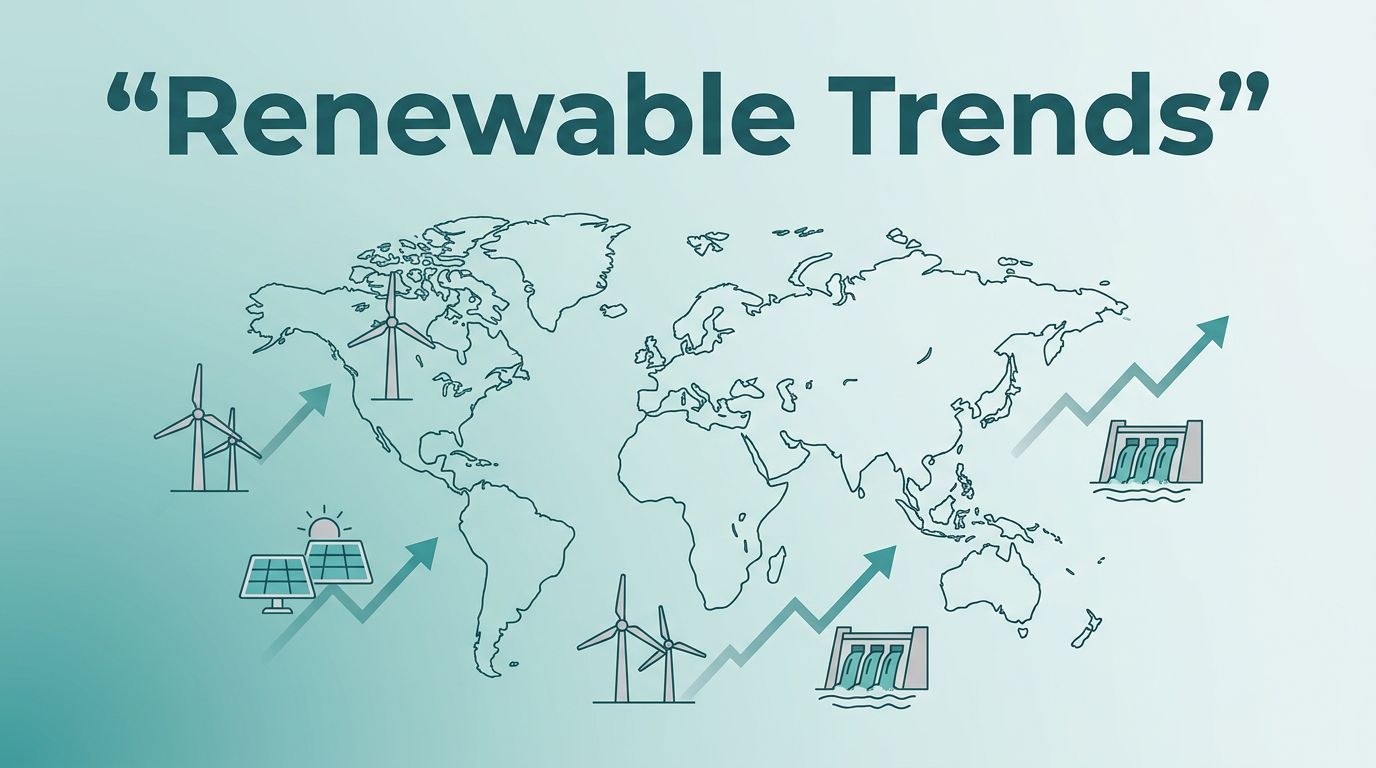
Renewable energy moves fast, but most headlines move faster than the market. I use Exploding Topics to catch early signals before they turn into crowded conversations.
That matters because a spike in attention can mean three different things, a real project pipeline, a policy push, or pure hype. I want the first two, and I cross-check everything before I trust it. If I’m watching the right signals, I can spot real renewable energy trends before they become obvious.
How I use Exploding Topics to filter real signals from noise
I start on Exploding Topics’ Trending Eco Topics (April 2026) page, then I look for terms that keep climbing instead of jumping once. A clean slope matters more than a one-day spike.
I use the same discipline I use for tracking emerging investment trends. The shape of demand often repeats across sectors, so I care about momentum, not just curiosity.
I also compare what I see with the broader Top Trending Topics (April 2026) page. That helps me tell the difference between a niche energy buzzword and a topic that’s starting to pull wider attention.
If a topic sits next to solar, batteries, grid software, or industrial power, I pay closer attention. Those clusters usually point to budgets, not chatter. I also look for links to policy, utility work, or hardware orders. When those show up together, I stop thinking like a browser and start thinking like an analyst.

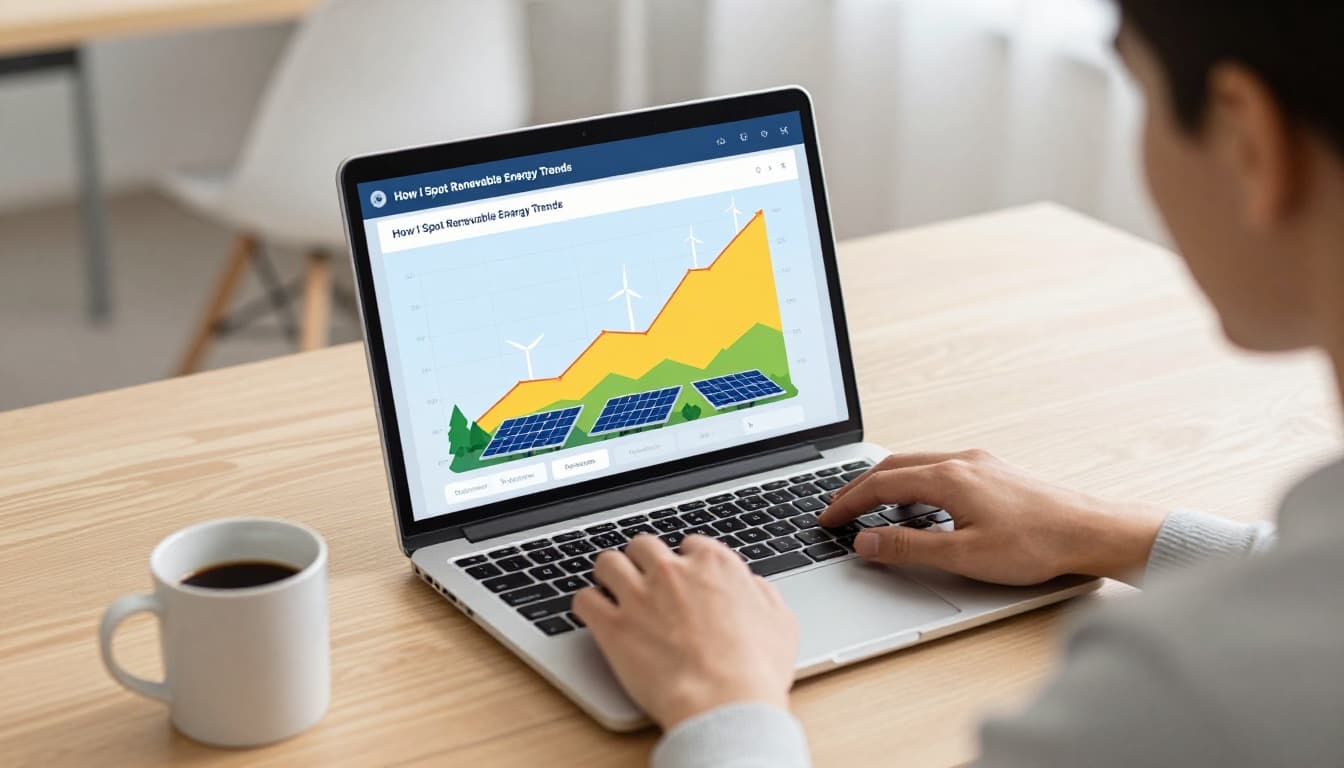
The renewable energy tech I keep watching in 2026
These are the themes I keep seeing in 2026, and each one plays a different role in the power system.
| Trend | Why I care | What I watch |
|---|---|---|
| Solar plus battery storage | It turns daytime output into steadier power | Utility contracts, interconnection, and project starts |
| Grid software and virtual power plants | It helps balance demand spikes | Utility adoption and dispatch results |
| Wind repowering | It gets more output from existing sites | Permits, turbine orders, and build activity |
| Green hydrogen, geothermal, carbon management, EV charging | It solves harder-to-electrify use cases | Offtake deals, drilling results, and fleet demand |
The table makes one thing clear. The strongest trends sit near infrastructure, not hype. Solar and storage are already part of the daily buildout. Grid software matters because operators need more control as demand rises. Wind repowering looks less flashy, but it can add output without starting from zero.
I also keep separate notes on green hydrogen, geothermal, carbon management, and EV charging infrastructure. Each one can grow, but I want proof before I call it mainstream. Green hydrogen still needs cheaper scale. Geothermal needs the right geology and drilling economics. Carbon management needs real buyers. EV charging grows fastest where fleets, depots, and workplaces have a clear use case.
The U.S. Energy Information Administration’s April 2026 outlook still points to large solar additions, which tells me the core market is healthy. That kind of source keeps me from confusing attention with adoption.
What feels durable, and what still looks fragile
I separate renewable energy trends into two buckets. Durable trends have project finance, interconnection requests, or purchase orders behind them. Fragile ones have social buzz and a press release.
The strongest 2026 signal is still solar paired with storage. Battery storage has moved from nice-to-have to core grid gear. That shift makes sense, because the grid now has to manage more solar, more electrification, and more pressure from AI data centers. Wind is also improving after a rough stretch, but I still watch whether that recovery keeps showing up in actual builds.
If I can’t find a project, a permit, or a buyer, I treat the trend as a maybe, not a move.
I also like a second pass through Carbon Brief’s 2 April 2026 briefing. It helps me separate broad climate news from the items that are moving capital. That matters, because not every exciting pilot turns into a market.
I get skeptical when I see a new battery chemistry, a floating solar concept, or a hydrogen demo with no follow-up. Those ideas may matter later, but I want repeat signals first. One headline can be noise. Three months of rising interest, plus real spending, is different.
My weekly workflow for building a clean watchlist
I keep the process simple.
- I scan Exploding Topics and note anything rising for more than a few weeks.
- I check the same topic against utility news, EIA data, and policy coverage.
- I tag each item as generation, storage, grid, fuel, or charging.
- I revisit monthly and drop anything that fades or stalls.
That routine keeps me focused on the right layer of the market. I’m not trying to predict every winner. I’m trying to spot which renewable technologies are moving from curiosity to commitment.
The cleanest signals leave a paper trail
When I use Exploding Topics well, I don’t chase every bright headline. I build a short list of renewable energy trends that already have a path into the real world.
That list changes, but the rule doesn’t. The cleanest signals leave traces in permits, purchases, and power plans. Solar and storage look strongest right now. The rest deserve attention only when the evidence gets louder than the buzz.