Rewardful Coupon Tracking for Paddle Affiliates
A coupon can reduce the price without proving which affiliate earned the sale. If the checkout does not carry affiliate identity, your discount data and commission data will disagree. Rewardful coupon tracking works when your payment proces...

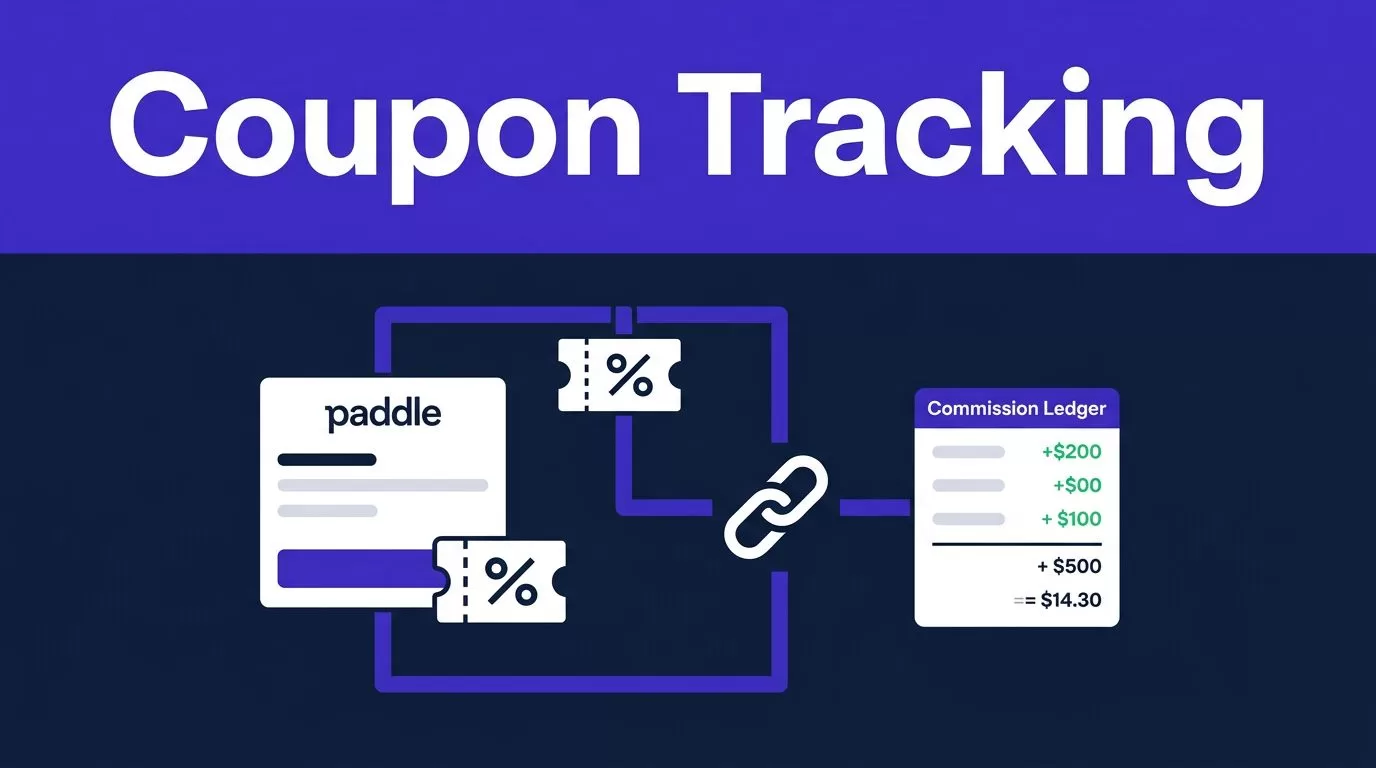
A coupon can reduce the price without proving which affiliate earned the sale. If the checkout does not carry affiliate identity, your discount data and commission data will disagree.
Rewardful coupon tracking works when your payment processor, campaign rules, checkout data, and payout record all use the same attribution logic. Paddle adds one important constraint: Rewardful supports Paddle Classic, not Paddle Billing.
Set the tracking path before you publish a single affiliate code.
Start With the Processor Reality
Do not treat Stripe promotion codes and Paddle coupons as the same setup. They solve similar pricing problems, but the attribution method differs.
Paddle Classic needs referral data at checkout
Rewardful’s Paddle integration is for Paddle Classic only. A Paddle Billing account needs a different affiliate setup.
For Paddle Classic, link-based attribution is the reliable starting point. A visitor lands through an affiliate link. Rewardful stores the referral identifier in window.Rewardful.referral. Your Paddle Checkout call passes that identifier in its custom passthrough data.
The coupon changes the checkout price. The referral ID tells Rewardful who should receive credit.
A coupon entered at Paddle checkout is not proof of attribution by itself. Test that the referral value reaches Paddle, that Paddle sends the transaction event, and that Rewardful creates the expected referral and commission.
Stripe promotion codes are a separate route
Rewardful calls coupon-based tracking “promotion codes” and “affiliate discounts.” Its promotion-code tracking guide describes checkout-level attribution without a prior web visit or browser cookie.
That flow is useful when affiliates promote on podcasts, in newsletters, at events, or inside closed communities. A buyer can enter the code at checkout and still receive the affiliate’s discount.
Do not copy Stripe promotion-code settings into a Paddle Classic campaign and assume they will work. Use the Paddle passthrough method for tracked links. Run a controlled coupon-only test before you promise affiliates that their Paddle code has standalone attribution.
How Rewardful coupon tracking works
Coupon attribution and link attribution answer different questions. Most SaaS programs need both.
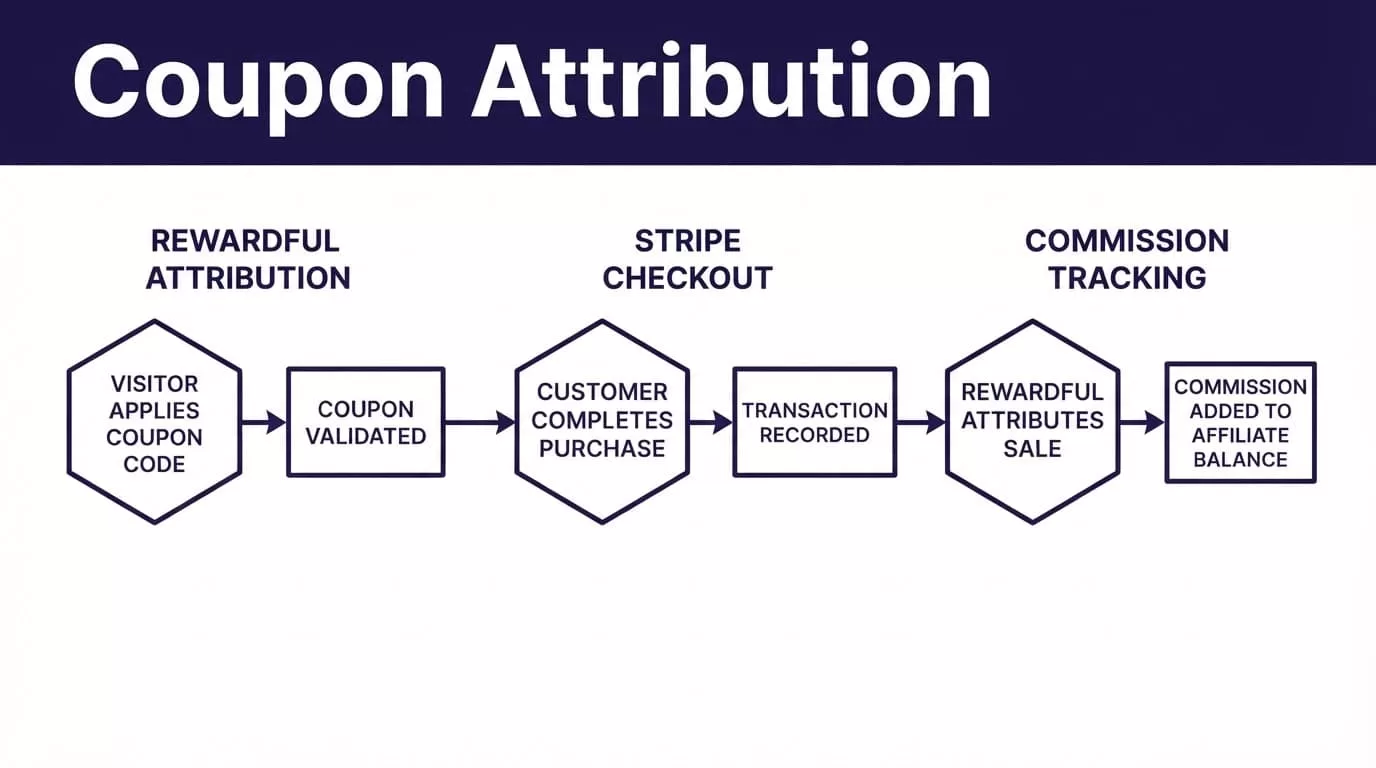
Coupon attribution assigns credit at checkout
A unique promotion code identifies the affiliate when the customer redeems it. The customer does not need to click a tracked link first.
This is a good fit for creators who say a code in video content. It also helps when a prospect sees an offer on mobile but completes checkout later on desktop.
The weakness is code sharing. A code can move through coupon sites, group chats, browser extensions, and old blog posts. Every eligible redemption may still credit the original affiliate.
Use one affiliate-specific code when you need affiliate-level reporting. A generic public code can discount a sale, but it cannot identify the promoter.
Link attribution captures the customer journey
Affiliate links capture the visit before checkout. They are better for landing-page reporting, paid placements, and content performance analysis.
With Paddle Classic, the tracked link also provides the referral ID that your checkout must pass through. This makes the link the attribution record, while the coupon remains a discount rule.
A coupon test that applies a discount but creates no referral record is a failed attribution test.
You can offer links and codes in the same campaign. Decide which one wins when both appear in one purchase, then document that rule for affiliates and finance.
Configure Stripe Promotion Codes With Care
Use the Stripe promotion-code route only for a connected Stripe campaign. Rewardful documents that these coupons can be created in its system without requiring affiliate links, subject to your connected Stripe setup and campaign configuration.
Open the campaign, select Edit campaign, then open Advanced settings. The current area is called Affiliate Discounts and Promo codes.
Set the discount terms before creating codes
Define the coupon name, discount rate, discount duration, and discount type. These are commercial rules, not decoration.
A 20% discount for three months has a different margin impact than 20% off forever. Model the discounted subscription revenue before you choose a recurring commission percentage.
Rewardful can use the discount as a coupon-only referral method, a link-based method, or both. The Stripe coupon permissions overview confirms that coupons can track referrals without affiliate links.
Turn on the option for promo-code use. You can also generate a unique code when each affiliate joins the campaign.
Restrict codes that should not spread
Use the new-customer restriction when the offer is for net-new paid accounts. This limits existing customers from applying a creator’s code to a renewal or upgrade.
Do not enable promotion codes casually. Rewardful states that, once enabled and saved, they cannot be disabled. Removing the coupon from the campaign deactivates current codes and stops new code generation.
Write down the code name, discount terms, date checked, campaign, and commission policy. Your team needs a fixed record when pricing changes later.
Set Attribution and Commission Rules Before Launch
A code is only one part of the payout rule. You also need a clear answer for conflicts, renewals, refunds, and cancelled payments.
Decide what happens when affiliates overlap
Rewardful campaign settings offer first-touch and last-touch attribution for visitors who interact with more than one affiliate link. Its broader guidance also describes customer assignment as generally first-come, first-served.
Read the live setting in your campaign. Then test it.
Use one affiliate link, then another affiliate link, then complete checkout with a promo code. Compare the winner with your published policy. After a customer converts, Rewardful permanently associates that customer with the assigned affiliate.
Record your link attribution window as part of the campaign terms. Do not borrow a generic cookie duration from another program. A coupon redemption does not need the same browser window as a tracked click.
Define the commission base and reversal policy
State whether commission applies to revenue before the discount, after the discount, or after refunds. Do not leave that decision in a private Slack message.
For subscription programs, Rewardful can generate recurring commissions when a referred customer renews. Stripe sends billing events to Rewardful after you connect the account, as explained in its documentation on how Rewardful uses Stripe data.
Use a refund window that fits your business. Many SaaS teams use 30 days, but that is a policy choice. Pending commissions move to Due after the selected window. A full refund removes the commission. A partial refund adjusts it.
Rewardful’s Stripe Payment Links guidance also confirms that commissions adjust for billing changes. For Paddle Classic, test refunds, failed renewals, cancellations, and partial credits in your own checkout flow. Do not assume Stripe behavior applies unchanged.
Test One Complete Affiliate Transaction
A dashboard setting is not a launch test. Use one controlled transaction per expected path and record the result.


Run a small, realistic test matrix
Use test mode where your payment setup supports it. If you need a live test, use a small controlled transaction and follow your refund policy.
- Open a clean browser and redeem an affiliate code with no affiliate link.
- Click Affiliate A’s link, apply Affiliate A’s code, and complete checkout.
- Click Affiliate A’s link, then Affiliate B’s link, and verify the configured attribution winner.
- Redeem a code as an existing customer if your offer is limited to new customers.
- Test a failed payment and confirm no commission becomes payable.
- Test the first renewal for a recurring commission campaign.
- Process a full refund and a partial refund where your processor supports both.
- Check the referral, conversion, pending commission, Due commission, and payout record.
For Paddle Classic, inspect the checkout passthrough payload before payment. Confirm it contains the expected referral identifier. Then wait for the Paddle event to reach Rewardful before marking the test complete.
Log the expected affiliate, discount amount, processor customer ID, invoice or transaction ID, campaign, and final commission status. This makes missing attribution visible before it becomes an affiliate dispute.
Keep a Deterministic Earnings Record
Clicks are activity. A redeemed code is activity. A paid, approved commission is the record that matters.
Track approved earnings, not dashboard optimism
Keep one row for each affiliate transaction or billing event. Preserve the original values. Store corrections and reviewer decisions in separate fields.
| Field | What to record |
|---|---|
| Source | Affiliate, content URL, channel, and code or link token |
| Payment | Stripe or Paddle customer ID, invoice or transaction ID, and date |
| Terms | Campaign, discount, commission rate, and date checked |
| Status | Pending, Due, paid, refunded, cancelled, or reversed |
| Review | Payout date, payment reference, exception owner, and notes |
Calculate affiliate earnings as approved percentage commissions plus approved fixed rewards, minus reversals. Do not estimate payout liability from a high-click month.
When a tracked customer is missing in a Stripe campaign, Rewardful offers a documented process to manually attribute a referred customer. Treat manual attribution as an exception. Keep the evidence and approval note with the record.
Publish promotion and disclosure rules
Tell affiliates where they can share codes. Decide whether coupon directories, browser extensions, paid search, brand bidding, cashback sites, and email promotions are allowed.
Require a clear affiliate disclosure near the recommendation where local law or platform rules require it. A short statement that the creator may earn a commission is better than a hidden disclosure page.
Also state that codes can be deactivated for expired offers, misleading claims, unauthorized distribution, or policy breaches. Affiliates need the rules before they invest in content.
If your setup spans Paddle Classic, Stripe, recurring billing, and finance approval, Book A Call before you publish the first code.
Final Checks Before You Invite Affiliates
Paddle affiliate coupons need more than a discount field. Your checkout must pass the referral ID, your campaign must define who earns credit, and your team must verify the result through a completed payment and refund test.
Rewardful coupon tracking is dependable when every expected transaction has an audit trail. Keep the original transaction record, test conflicts before launch, and pay only commissions that have cleared your approval rules.

