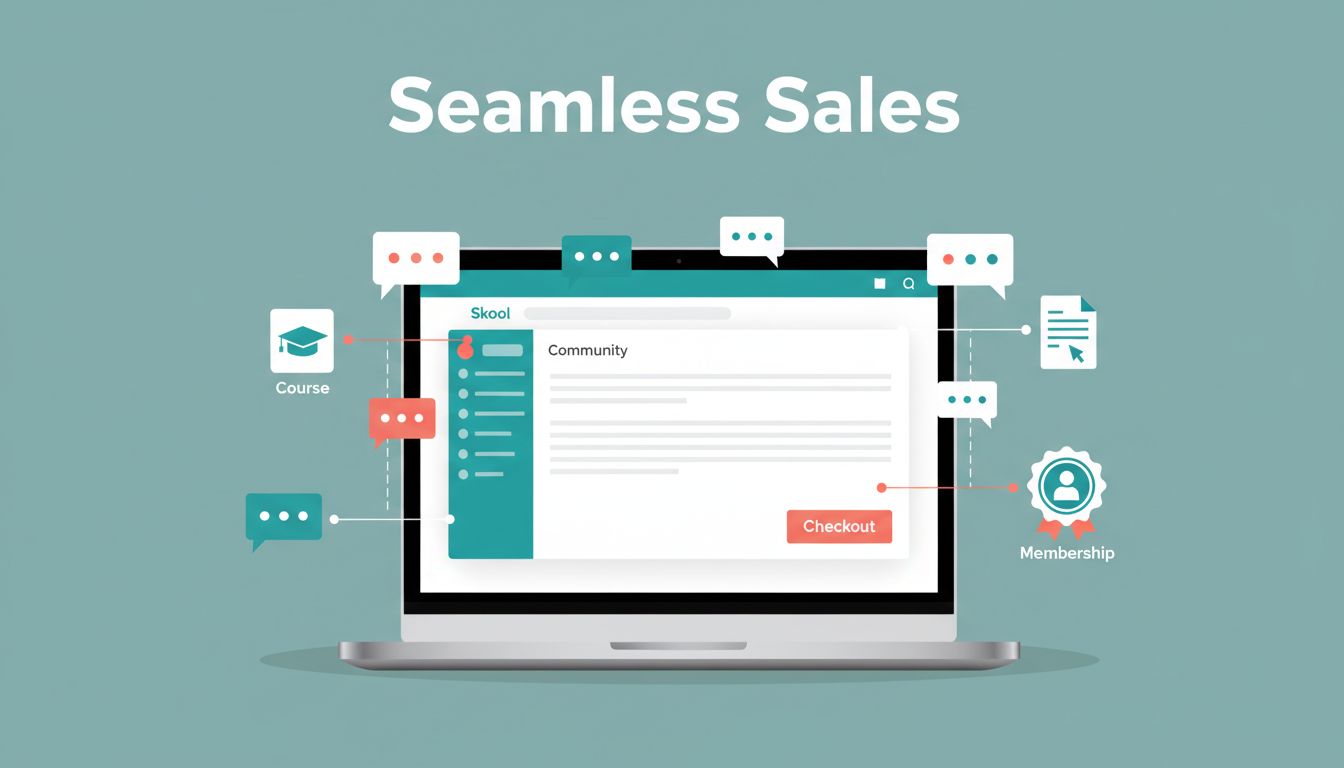
Sending buyers out of your community to buy feels like asking dinner guests to eat next door. When I sell digital products on Skool, I want the sale to happen where the trust already lives.
That’s why Skool works best for creators, coaches, and community builders who want one place for content, conversation, and checkout. The catch is simple, I don’t treat it like a storefront. I treat it like a paid room with a clear promise.
Why Skool works best as a community checkout
Skool is strongest when the product and the community feed each other. If I’m selling a course, a workshop, a template pack, or a membership, the buyer doesn’t only get files. They get context, support, and momentum.
As of March 2026, Skool lets me charge one-time fees, monthly or yearly subscriptions, and free trials inside the platform. I can put paid or free content in the Classroom, then unlock it by time, level, or manual approval. That setup is great for courses, memberships, workshop replays, and resource libraries that grow over time.

Still, I don’t think Skool is the best fit for every product. If I want a polished digital download store, heavy brand control, deep funnel logic, or advanced email automation, Skool starts to feel tight. It also limits me to one group per plan, and the lower Hobby plan has fewer tracking options, including no ad pixels. Public pricing in March 2026 starts at $9 per month for Hobby and $99 per month for the full plan.
Skool sells access, progress, and belonging better than it sells loose files.
That’s why I validate demand before I build. If I’m not sure what people want, I like to spot trending business ideas first, then shape a tighter offer around the problem people already talk about. For a broader platform comparison, I also like Heights Platform’s take on Skool for digital downloads.
My simple offer setup for Skool sales
The biggest mistake I see is stuffing Skool with random assets. A pile of PDFs feels like a junk drawer. A focused promise feels like a product.
So I start with one result. For example, I might sell a mini-course that helps freelancers land one client in 14 days. Then I add templates, a live workshop, and community feedback around that outcome. The files support the result, not the other way around.
Here’s how I usually package digital products inside Skool:
| Product | Best Skool format | Best payment style |
|---|---|---|
| Course | Classroom modules with comments | One-time |
| Templates | Bonus vault tied to a lesson or workshop | One-time or recurring |
| Downloads | Resource library unlocked after onboarding | Recurring |
| Workshop | Live calendar event plus replay | One-time or upsell |
| Membership | Weekly coaching, archive, and community access | Monthly or yearly |
The takeaway is simple: when I bundle the product with help, buyers see more value and stay longer.

I also keep the path to purchase short. A free community can warm people up, then a paid course or membership becomes the next step. That model shows up in communities like Digital Sales School, where the offer is clear and the community supports the sale.
If I sell into business niches, I want the offer to match a live need. That’s where I’ll track ecommerce niches with Exploding Topics or study the market before I record a single lesson. A course, template pack, or workshop lands better when the pain is already hot.
How I lift conversions and keep members paying
Conversions on Skool usually rise when buyers can feel the first win fast. So I design the opening like a runway, not a maze.
My first lesson is always quick and useful. If I’m selling templates, I show how to use one in ten minutes. If I’m selling a workshop, I give the replay and action sheet right away. If I’m selling a membership, I point new members to one thread, one lesson, and one next step. Too many choices kill motion.
Live events help even more. Skool’s calendar gives me a built-in reason to gather people, answer objections, and make the product feel alive. A workshop can sell the next offer. A Q&A can save a member from canceling. A hot-seat session can turn quiet lurkers into paying members.
Gamification can help, too, but I use it with care. I don’t lock the core result behind points. Instead, I unlock bonus templates, office hours, or advanced lessons. That keeps the main promise simple while still rewarding action.
Retention comes down to rhythm. I’d rather post one sharp lesson a week than dump fifty videos on day one. People stay when they feel progress, not when they feel buried. That means fresh examples, visible wins, and regular prompts to use what they bought.
There are limits, of course. Skool isn’t a full email machine, and its branding options are lean. My workaround is to keep the offer clean inside Skool, then use outside tools only when I truly need more follow-up or reporting. I also avoid splitting offers into multiple groups too early, because one-group-per-plan can turn a simple business into a hallway of locked doors.
My take
When I sell through Skool, I’m not selling a file cabinet. I’m selling a place where people can buy, learn, ask, and move.
That’s the real edge. If I keep the promise tight, the first win fast, and the community active, Skool can turn a digital product into a business that keeps paying.
Pick one offer, tie it to one result, and build the room people want to stay in.