Upgrade Your Solo Founder Marketing Stack With Someli
A solo founder’s marketing stack can turn into five tabs, three logins, and one tired brain before lunch. I know the feeling, because every extra tool asks for time I do not have. That is why I pay close attention to Someli. It is bui...

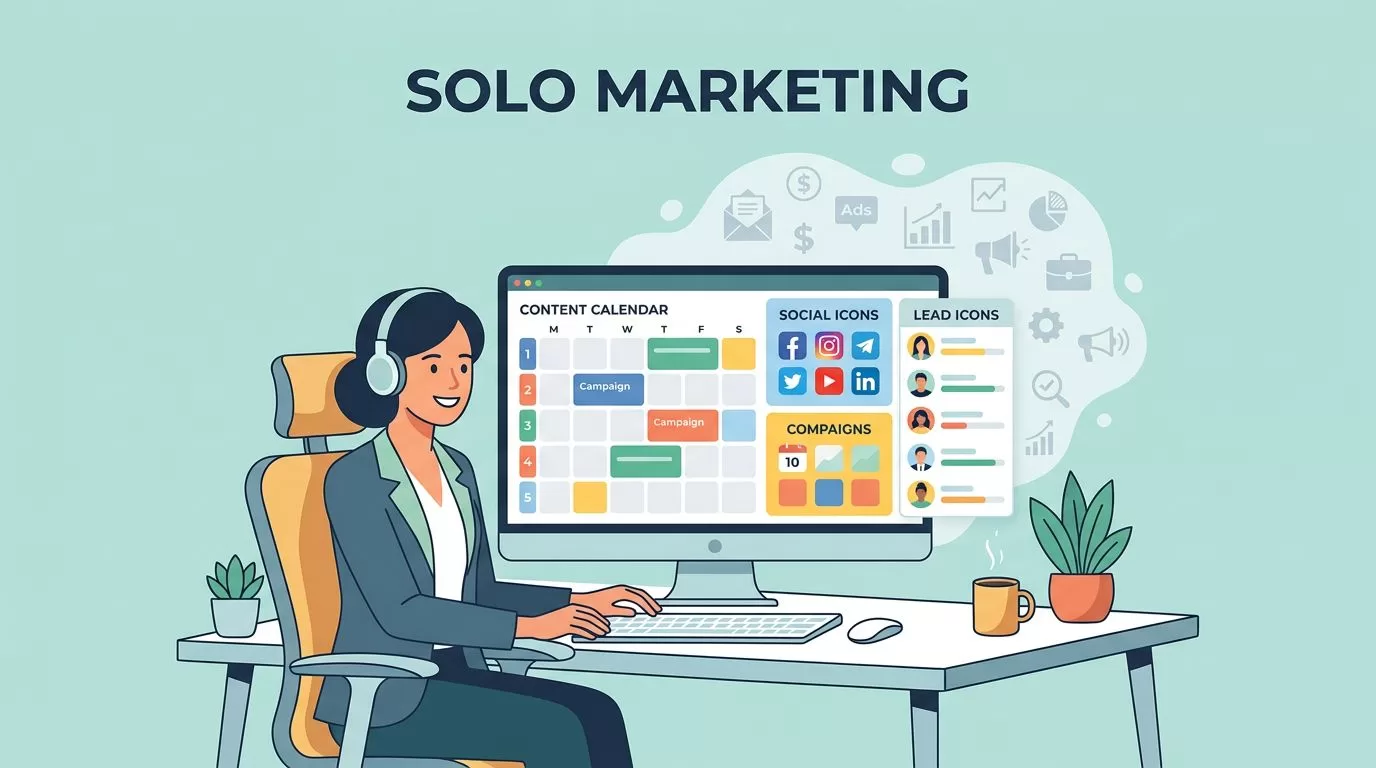
A solo founder’s marketing stack can turn into five tabs, three logins, and one tired brain before lunch. I know the feeling, because every extra tool asks for time I do not have.
That is why I pay close attention to Someli. It is built for the kind of one-person operation that needs content, publishing, and lead handling to move together, not in separate piles. I keep the rise of the one-person company in mind too, because my software has to match how I actually work. For a useful look at that shift, I like the rise of the one-person company.
Here is how I think about Someli when I want to shrink the stack without shrinking output.
Key Takeaways
- Someli can pull content creation, scheduling, and basic lead handling into one place, which matters when I am the whole marketing team.
- Its AI setup helps me build a content plan, create posts, repurpose material, and publish across major social channels.
- I still keep separate tools for heavier paid media or more complex automation, because one platform should not do every job badly.
- The best solo founder stack is the one I can review quickly, publish from easily, and measure without opening six dashboards.
The Reality of a Solo Founder Marketing Stack
When I run marketing alone, the problem is rarely ideas. The problem is handoffs. One tool holds notes, another stores drafts, a third schedules posts, and a fourth keeps lead data. By the time I move between them, I have already lost momentum.
That is why the one-person business model changes the buying decision. I do not need a stack that looks impressive on paper. I need one that keeps my attention on product, customers, and distribution.


I also care about the hidden cost of tool sprawl. Every extra app brings another login, another bill, and another set of settings to remember. For a solo founder, that is not small friction. It is the difference between posting consistently and telling myself I will “catch up” next week.
What Someli Handles in One Place
Someli.ai is a social media automation platform, and its own site frames it around helping businesses grow reach without hiring a full marketing team. I view it as a social media library first, because that idea fits the product better than a generic scheduler. At the time of writing, Someli’s site lists an individual plan at $99/month on Someli’s product site.
The useful part is not the label. It is the stack it replaces. Someli builds around an AI persona and strategy layer, so I do not start from a blank page. It looks at the business, the audience, and the goal, then suggests the content mix I need. That mix can include educational posts, engagement posts, and sales posts, which is exactly the balance I want when I am trying to stay visible without sounding repetitive.
It also handles more than text. I can turn longer material into short-form content, then push that content across channels. That matters because a blog post, a video, or a customer story should not die after one publish button. I want one good idea to become several useful assets.
For me, the strongest pieces are these:
- Content creation without starting from zero
- Templates and branding that keep the output recognizable
- Reels and short videos for quick distribution
- One-click publishing to Facebook, Instagram, LinkedIn, and TikTok
- Lead capture and CRM so interest does not vanish into an inbox
- Calendar and analytics so I can see what gets traction
I use this mindset in my Someli social media automation setup, because the real win is not the first draft. It is the part where I stop babysitting every post.
How I Shrink Tool Sprawl Without Losing Reach
When I consolidate my stack, I do not try to merge everything at once. I start with the tasks I repeat every week. Posting, repurposing, and basic lead follow-up usually come first.
The table below is the way I compare a scattered setup with a Someli-centered one.
| Need | Too Many Tools | Someli-Centered Stack |
|---|---|---|
| Drafting content | AI writer plus separate doc workflow | Content ideas and drafts in one place |
| Publishing | Scheduler, reminders, and manual posting | One workflow across main social channels |
| Branding | Separate design tool and template folder | Brand elements stay tied to the content flow |
| Lead handling | Form submissions go to email first | Leads can enter a built-in CRM path |
| Review | Multiple dashboards and reports | One calendar and analytics view |
That kind of setup does not remove judgment from the process. It removes drag. I still review the output. I still check tone, offers, and timing. However, I spend less time stitching tools together and more time deciding what to publish next.

That matters because solo founders do not need more moving parts. We need a clean loop, one idea in, one approval, one publish, one check on results. If I can keep that rhythm, I can stay consistent without burning a whole afternoon.
Where Someli Fits Best, and Where I Keep Other Tools
Someli fits best when I want a small team feel without hiring one. It works well when I need regular social content, a decent visual identity, and a place to catch leads without duct tape.
I want one tool to decide what to publish, where to publish it, and what happens after the click.
That is where Someli makes sense for me. It is strongest when the work is content-led and distribution-driven. It is also a better fit when I want to feed long-form material into shorter posts, then keep the whole process moving in the same workspace.
I still keep other tools in play when the job gets more specialized. If I need deeper routing or more custom lead logic, I use lead capture workflows in Zapier alongside it. If paid search becomes part of the plan, I also keep Google Ads automation alternatives in mind, because ad operations deserve their own lane.

I also like Someli for its built-in review loop. A solo founder rarely needs a giant approval chain. I need something I can inspect quickly, adjust, and move forward with. That is a better fit for weekly publishing than a system that turns every campaign into a project.
My Checklist Before I Commit
Before I let any platform into my solo founder marketing stack, I ask a few plain questions.
| Question | What I want to see |
|---|---|
| Does it save time every week? | I want fewer manual steps, not just a nicer dashboard. |
| Does it replace more than one tool? | It should handle content, publishing, or lead follow-up. |
| Can I approve the output quickly? | I need fast review, because my time is the bottleneck. |
| Does it fit my budget? | The plan should cost less than the tools it replaces. |
| Can it grow with me? | I want room for collaboration later, even if I am solo now. |
Someli does well against that checklist when the business is content-heavy and the founder needs to move fast. It is especially appealing if I want to combine publishing, branding, and lead capture without building a fragile stack around them.
Conclusion
The best solo founder stack is the one that keeps me publishing without turning me into an operator for my own tools. Someli makes sense when I want the core marketing work in one place, with less tab-hopping and fewer loose ends.
I still keep specialist tools for specialist jobs, but I do not want my daily marketing to feel like assembly work. If I can create, publish, and track inside a tighter loop, I stay consistent, and consistency is what compounds.

