Master Visitor Routing with a Reliable Traffic Splitting Tool
You want your conversion experiments to produce actionable data. If your visitor assignment logic is sloppy, your test results are worthless. Every growth marketer and conversion rate optimization specialist knows that poor traffic distribu...

You want your conversion experiments to produce actionable data. If your visitor assignment logic is sloppy, your test results are worthless. Every growth marketer and conversion rate optimization specialist knows that poor traffic distribution ruins an A/B test before it starts.
When you use a reliable traffic splitting tool, you ensure that every visitor lands on the correct variation without bucket leakage or skew. Platforms like Mida handle these allocation mechanics at scale so your team can focus on the core hypothesis rather than debugging tracking code. You need precise control over your variant buckets if you want reliable outcomes.
Key Takeaways
- Divide incoming visitors randomly between your control and variants to maintain statistical integrity across every active test.
- Check your variant traffic counts daily to catch tracking breaks, targeting rule errors, or uneven sample allocations early.
- Pair your traffic split data with conversion rate goals, session recordings, and qualitative feedback before declaring a winner.
- Run tests long enough to capture normal traffic cycles and complete business rhythms instead of stopping at the first positive spike.
Configuring Your First Split Test
Setting up an experiment requires a clean operational plan before you write any code. You don’t just pick a page and hope for the best. Start with a sharp hypothesis that names the change, the target action, and the specific reason for the expected lift.
Once your hypothesis is locked in, build your control and your test variations inside your workspace. Mida simplifies this setup by letting you inject variants or route traffic seamlessly. Whether you run standard A/B setups or more complex multivariate experiments, your traffic splitting tool must maintain consistent cookie tracking so returning visitors never bounce between different page versions.
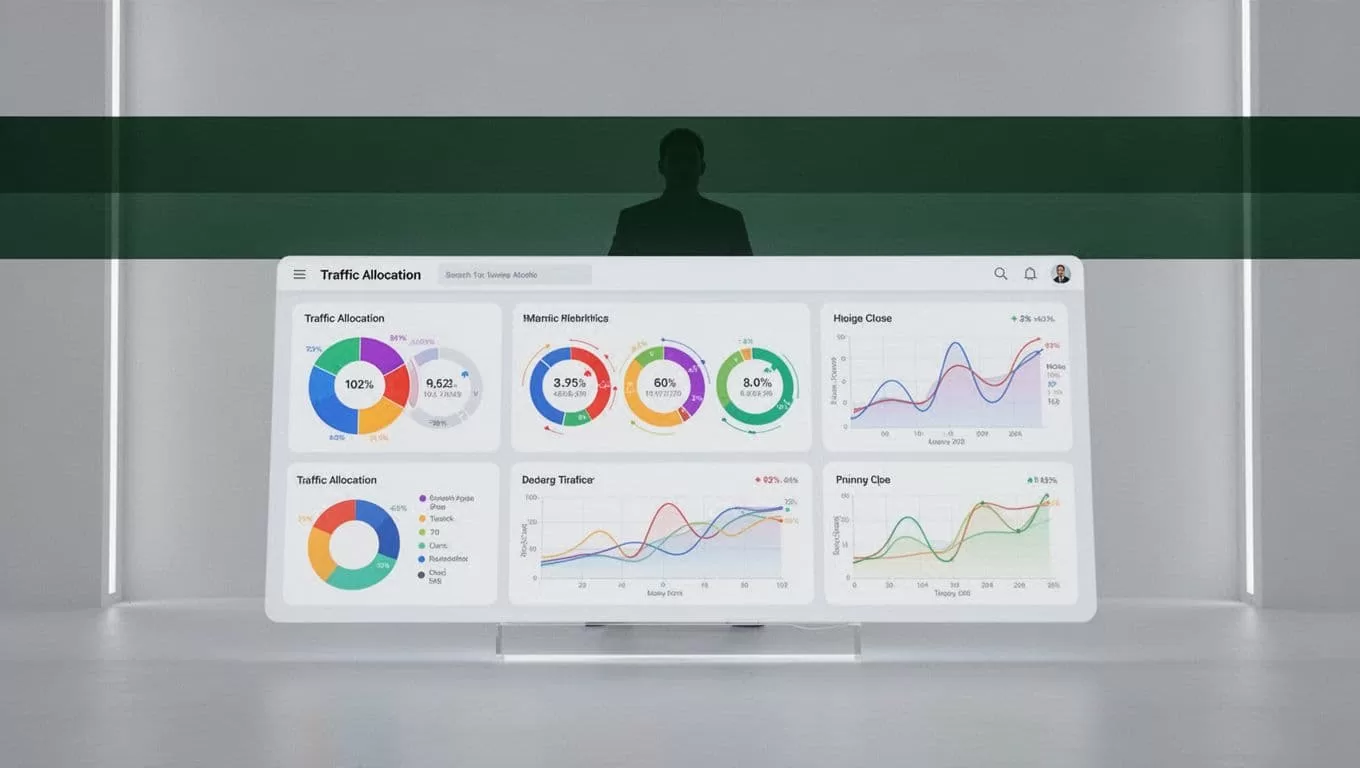
You can explore more about platform mechanics in the official Mida A/B testing platform documentation. Clean allocation parameters prevent cross-contamination between user sessions and keep your analytics reliable.
Managing Traffic Allocation and Split Ratios
Your allocation strategy dictates how fast your experiment reaches statistical significance. For a standard test, a clean fifty-fifty split between the control and a single variant is standard practice. If you test multiple variations at once, you adjust your routing rules to match your sample volume.
A test cannot produce a reliable comparison if one variation receives most of the traffic due to a misconfigured allocation rule.
Always verify that your split ratios remain stable over time. If a fifty-fifty test shows a massive traffic gap after a few thousand visitors, stop and inspect your targeting rules or script placement. For deeper insights on how different routing architectures handle page variations, review split URL redirection tests to see when redirection is preferable to on-line element injection.
Reading Split Test Data with Business Context
Raw conversion rates can trick you if you evaluate them in isolation. A variation might show a higher click rate while driving lower-quality leads into your CRM. You need to examine absolute numbers alongside percentage lifts and segment your data by device type and traffic source.
Cross-check your dashboard metrics against external data sources like your CRM or billing system. If your split test increases form submissions, check whether those leads actually convert into qualified opportunities down the funnel. Treat early results as directional indicators rather than absolute proof. Let your experiment run through a full business cycle to account for weekend dips and weekday spikes.
Avoiding Common Traffic Splitting Pitfalls
Even experienced marketers make mistakes that invalidate their optimization data. One frequent error is changing experiment parameters while the test is actively running. Altering your headline, traffic allocation, or conversion goal mid-test creates a brand new experiment environment and ruins your historical baseline.
Another mistake is checking your dashboard every hour and stopping the test the moment a variant crosses your significance threshold. This habit inflates your false-positive risk and turns random noise into a false winner. Define your sample size and confidence rules before you launch. If you want to understand how different methodology choices impact your conclusions, read more about industry definitions of split tests to clarify your terminology and testing scope.
Final Thoughts
Reliable experimentation is the foundation of predictable website growth. When you rely on precise traffic splitting tools, you eliminate data drift and protect your optimization budget from false conclusions. Set up your allocation rules carefully, let your experiments gather enough data, and base your final rollout decisions on verified business outcomes.
