If I want a podcast host to feel safe, I look for control first. Who owns the RSS feed? Who can reach private episodes? What happens if I need to move?
Transistor.fm answers those questions in a clean way. It keeps the platform focused, while still giving me private podcast delivery, account protection, and ownership of distribution.
For creators and small media brands, that mix matters more than flashy extras. I want a host that keeps my show stable, my audience list usable, and my access rules clear. Here is how I judge it.
What I look for in a secure host
When I compare Transistor podcast hosting with heavier platforms, I care less about bells and more about control. I want my show to keep working if I add a team member, launch a private feed, or change my distribution plan later.
Security starts with account access, but it does not end there. I also want clean separation between public and private content, a clear export path, and a setup that does not bury me in extra tools. That is where Transistor feels useful to me.
I can host multiple podcasts on one account, which helps when I manage a personal show and a client show at the same time. That matters because it keeps everything in one place without forcing me to mix audiences. For a small team, that alone cuts down on mistakes.
The biggest win is simple ownership. I still control the RSS feed, so I am not stuck waiting on a platform to release my content. That gives me more freedom if I ever need to move.
Security details that matter in practice
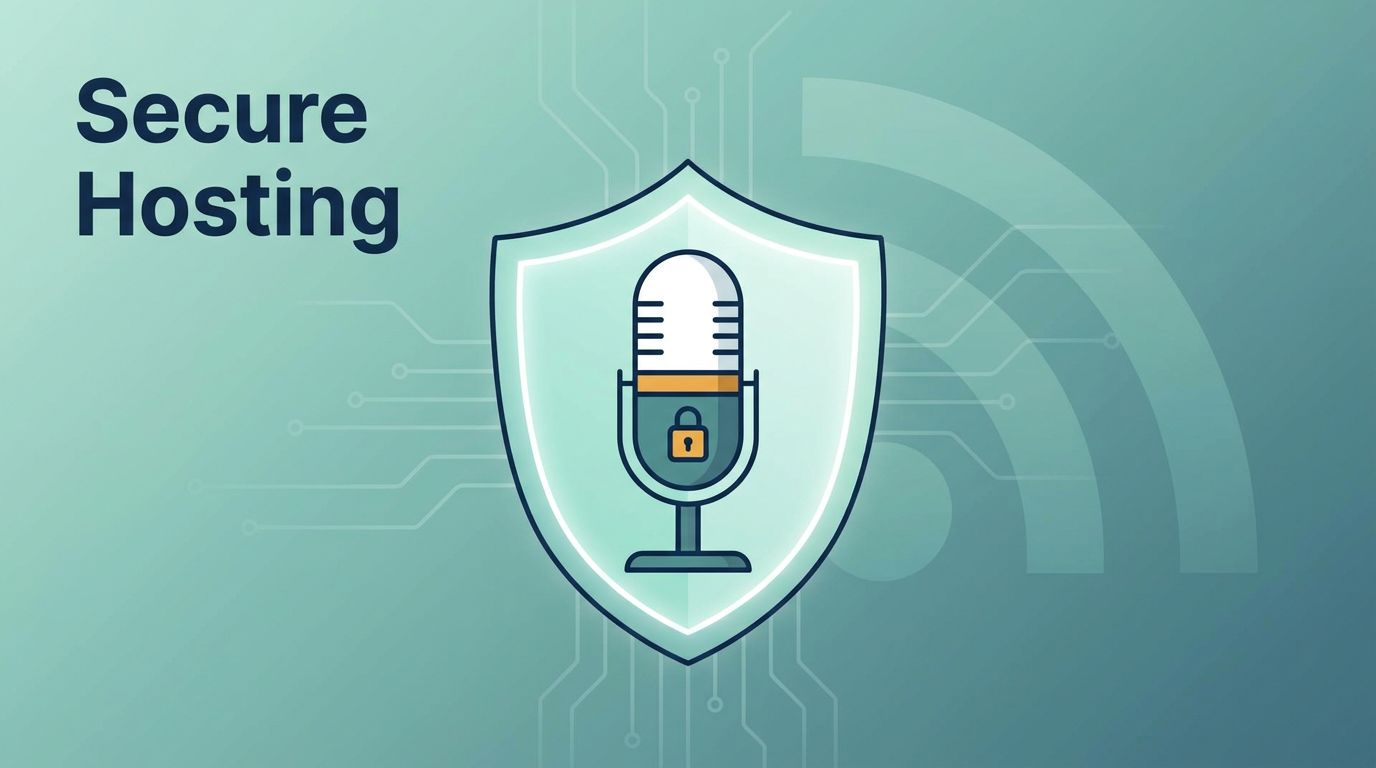
Transistor publishes its security details plainly. The company says it uses two-factor authentication where possible, TLS for communication, and BCrypt for password handling. It also says its database access is limited to application servers in the same network. That does not sound flashy, and that is the point. It sounds like a platform that takes basic defenses seriously.

Private shows are where the security story gets more useful. Transistor’s private podcast setup uses unique RSS feed links for authorized listeners. In plain terms, I can share access with the right people without making the feed public.
I also like that Transistor hides my email address in RSS feeds by default, with ownership verification still available when needed. That helps reduce spam and keeps my account details cleaner. For a creator, that is a small but practical safeguard.
As of March 2026, Transistor also lists private podcasts with Ghost CMS, Spotify access for private podcasts, episode note templates, and video podcasting in beta. The current feature set shows a platform that keeps adding options without asking me to give up control.
Private podcast security works best when the feed link is treated like a credential, not a marketing URL.
That said, I would still be careful with any members-only show. If I need complex approval chains or enterprise compliance paperwork, I would compare Transistor with a more enterprise-focused host before I commit.
Keeping distribution under my control
A secure podcast host should help me distribute content without owning my audience. That is why RSS ownership matters so much to me. If the platform can send my show to Apple Podcasts, Spotify, YouTube, Overcast, Pocket Casts, and other apps, that is helpful. If it also lets me keep the feed in my hands, that is better.
The main difference is control. Distribution is about reach. Ownership is about what happens if the rules change. I want both, but I never want to trade away ownership for convenience.
Transistor’s podcast hosting features page makes that model clear. I can upload episodes, edit a custom podcast website, and manage distribution from one account. That means I do not need a separate pile of plugins and services just to publish a show.

I also like that Transistor supports video podcasting, since many creators now publish in both audio and video form. If I can keep those formats under one roof, I have fewer places for access problems to show up. For me, that is a real operational advantage.
In practice, independence means I can leave if I need to. I can export my content, keep my files, and move without rebuilding my whole distribution chain. That is a calmer way to run a media brand.
Pricing and the teams it fits
Transistor’s pricing stays easy to read. That matters, because security and control do not help much if the plan structure is a mess.
| Plan | Monthly price | Best fit |
|---|---|---|
| Starter | $19 | Solo creators, early private shows, and smaller test projects |
| Professional | $49 | Growing podcasts that need more private subscribers and extras |
| Business | $99 | Small networks, larger teams, and brands that want more room |
All plans include unlimited podcasts, team members, support, analytics, API access, and websites. That makes the value easier to judge, because I am not paying extra just to manage a second show.
The limits still matter, though. Starter includes 50 private subscribers and 20,000 downloads per month. Professional raises that to 500 private subscribers and 100,000 downloads. Business goes higher again, with 3,000 private subscribers and 250,000 downloads.
For me, that means Transistor fits best when I run a creator brand, a small media team, or a company podcast that needs private delivery. If I need huge scale or a very complex permission model, I would look harder before I buy.
Conclusion
Transistor.fm gives me something I want in podcast hosting, a steady balance of independence and control. It handles private access, protects account details, and keeps distribution tied to my own RSS feed.
That is why it stands out for small media brands and creators who care about ownership. If I want my show to travel widely, but I still want the keys in my pocket, Transistor is a strong place to start.