Start a Travelpayouts Affiliate Business: 90-Day Plan
Travel pages can attract readers for months before they produce a booking. A Travelpayouts affiliate business gives those readers a path to book flights, hotels, and other travel services, but it doesn’t create income on day one. You...
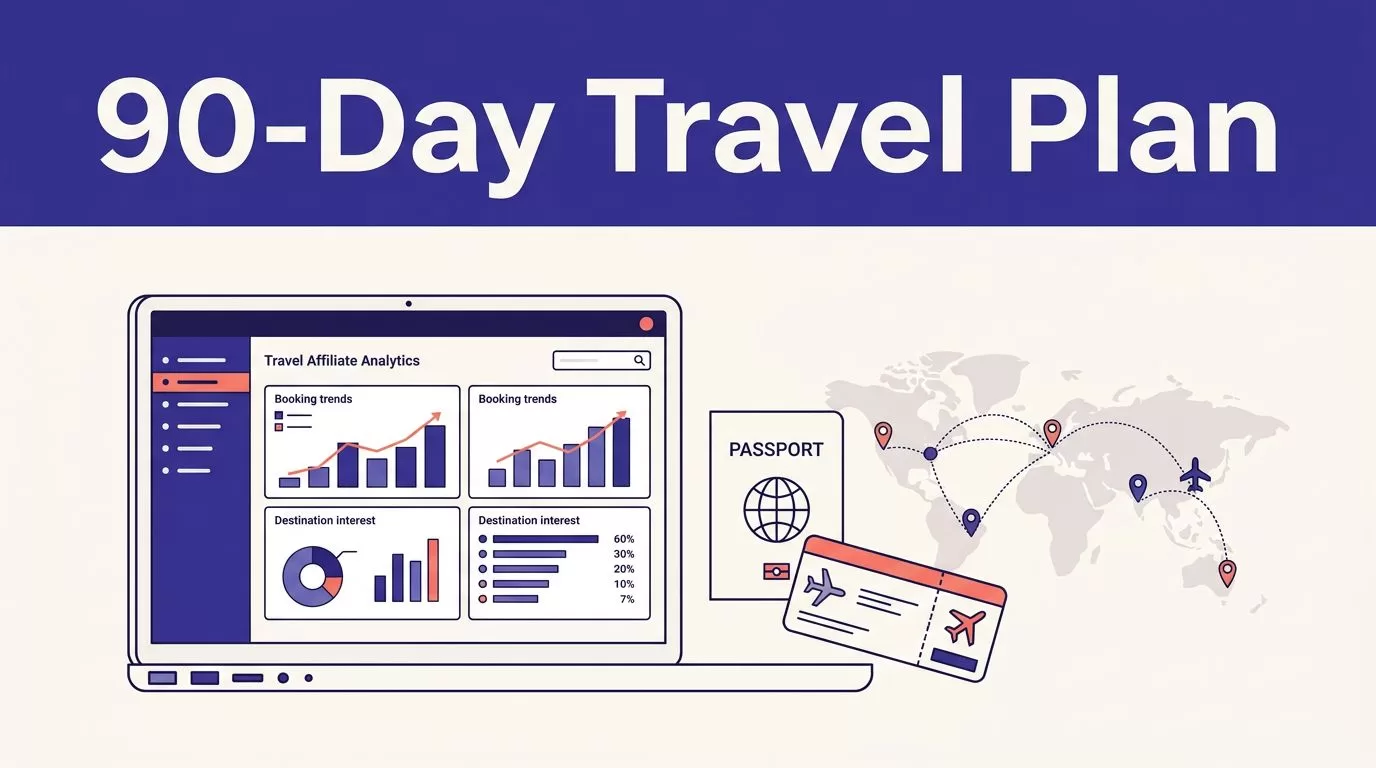
Travel pages can attract readers for months before they produce a booking. A Travelpayouts affiliate business gives those readers a path to book flights, hotels, and other travel services, but it doesn’t create income on day one.
You need a defined audience, useful booking content, working tracking links, and a routine for checking results. Start small, verify every program rule, and build pages around decisions people are ready to make.
DEFINE THE BUSINESS BEFORE YOU OPEN LINKS
Travelpayouts is an affiliate platform, not a travel agency license or a booking desk. You promote a travel brand. The traveler clicks your tracked link, completes a booking with that provider, and the provider handles payment, confirmation, changes, and support.
Travelpayouts says its platform connects publishers with travel brands and gives partners tools such as links, widgets, and banners. Its own affiliate marketing guide is a useful starting point if you are new to the model.
You sell referrals, not reservations
Your job is to help a traveler make a better decision before they book. That may mean comparing neighborhoods, explaining an airport transfer, listing hotels near a venue, or showing flight options for a route.
Do not present yourself as the company that sells the trip if you only refer the traveler elsewhere. Don’t collect booking payments. Don’t promise refunds or changes on a provider’s behalf.
If you also offer trip-planning services, separate that work from affiliate content. State what the planning service includes, what it costs, and where the traveler completes a booking.
Build around a real business model
A working affiliate operation has four connected parts:
- You publish content that answers a travel booking question.
- You send the reader to a relevant provider through a tracked link.
- The provider validates the booking under its rules.
- You review confirmed earnings, reversals, clicks, and content performance.
A click is not revenue. A booking can be canceled, rejected, or credited under a different condition. Confirmed earnings are the number that matters.
PICK A MARKET WITH REAL BOOKING INTENT
“Travel” is too broad for a new site or channel. You will compete with large publishers, booking platforms, and thousands of generic destination guides.
Pick a traveler type, a destination group, and a booking problem. This gives your content a clear job.
Do not target every traveler
A narrow starting market is easier to research and easier to monetize. Good examples include:
- Remote workers looking for month-long stays in Lisbon, Medellin, or Chiang Mai.
- Families choosing airport hotels and early-morning flight options.
- Conference visitors who need places to stay near convention centers.
- UK travelers planning short European city breaks.
- Digital nomads who need practical arrival, hotel, and transport information.
“Best hotels in Rome” is hard to rank and hard to make useful. “Where to stay in Rome near Termini for a 6 a.m. flight” has a clearer reader, problem, and booking action.
Choose topics where a booking belongs
Travel content needs an honest link between the question and the offer. A reader searching for a walking tour of Prague may need an activity booking. A reader comparing neighborhoods in Tokyo may need a hotel. A traveler checking flight routes may need a flight search tool.
Use keyword research, search suggestions, Google Search Console data, comments, and travel forums to find recurring questions. Then group content by booking stage:
| Reader stage | Useful content | Likely next action |
|---|---|---|
| Planning | Destination and route guides | Compare transport or flights |
| Narrowing options | Hotel area and property comparisons | Check rooms and rates |
| Ready to book | Airport hotel, flight route, or activity pages | Click to a provider |
Avoid building a content calendar around places you want to write about. Build it around travel decisions people already make.
SET UP YOUR TRAVELPAYOUTS AFFILIATE BUSINESS
Registration is free, and the Travelpayouts partnership platform says partners can promote offers through websites, blogs, YouTube channels, newsletters, and similar projects.
Create your account, then add the actual property where you will publish. Use your live website domain, channel URL, or newsletter name. Don’t submit a placeholder site and forget to update it later.
Create a clean operating record
Set up one spreadsheet or database before publishing your first link. Track these fields:
- Project URL and audience market.
- Brand or program name.
- Offer type and destination coverage.
- Commission model and current terms capture date.
- Affiliate link, content URL, and link placement.
- Status, such as Draft, Live, Needs Review, or Retired.
- Confirmed earnings, reversals, and last review date.
This record stops old links and expired claims from sitting unnoticed on live pages. Save a screenshot or PDF of major program conditions when you join. Store that version separately from your notes and later updates.
Read program rules before promotion
Travelpayouts includes multiple advertiser programs. Default access and program availability do not mean every offer has the same commission, cookie period, traffic rules, or approval process.
Read the current Travelpayouts network terms and each program’s conditions inside your account. Check whether the program allows your countries, content format, traffic source, email list, paid ads, discount wording, and social promotion.
Travelpayouts describes partner-ID and cookie-based tracking. Its general terms reference up to 30 days of attribution, but individual brands can use different conditions. Verify the live rule before you write about it.
BUILD A PUBLISHING ASSET YOU CONTROL
A social account can send traffic, but you do not control the platform, reach, or account status. Build a website or newsletter hub that you own, then use YouTube, TikTok, Instagram, Pinterest, or Telegram to distribute your work.
Your site does not need twenty categories. It needs a clear audience promise, fast pages, and useful booking content.
Start with a practical content stack
Use a simple setup:
- A domain that is easy to spell and connected to your niche.
- WordPress, Ghost, or another CMS you can update without a developer.
- Google Search Console and a privacy-conscious analytics setup.
- An email tool for destination alerts, trip-planning checklists, or new guides.
- A link inventory that records every affiliate placement.
If you use WordPress, review these affiliate-ready WordPress theme options before installing a design that looks good but loads poorly on mobile.

Photo by Gustavo Fring
Make the site useful before it is commercial
Publish a homepage that says who you help and what trips you cover. Add an About page, Contact page, Privacy Policy, affiliate disclosure, and editorial policy.
A reader should know whether you write about solo travel, family trips, budget city breaks, luxury stays, or business travel within seconds. Vague travel brands attract vague visitors. Vague visitors rarely convert.
MATCH EACH PROGRAM TO A BUYER TASK
Do not apply to every available offer and paste links across your site. That makes content harder to maintain and gives readers too many weak choices.
Choose programs that match your audience’s actual trip decisions. Travelpayouts materials name brands such as Booking.com, Agoda, and TripAdvisor, but program availability and conditions can change. Check the live dashboard before you build pages around a brand.
Pick offers based on the page’s purpose
Use each offer type where it fits the reader’s next decision.
| Offer category | Best page type | Check before publishing |
|---|---|---|
| Flights | Route comparisons and airport guides | Attribution rule, eligible routes, fare claims |
| Hotels | Neighborhood, venue, and airport stay guides | Commission basis, cancellation treatment, geo coverage |
| Activities | Itineraries and attraction planning pages | Availability, booking window, prohibited wording |
Hotel pages often give new publishers a clearer path than broad destination posts. A page about family hotels near Disneyland Paris, for example, solves a lodging decision with high booking intent.
Before selecting a hotel partner, compare its market coverage, supported locations, payout conditions, and visitor fit. This hotel affiliate program selection guide offers a useful framework for making that comparison.
Do not chase headline commission rates
A larger percentage does not always produce more revenue. A program may have limited inventory, weak destination coverage, a short cookie period, or conditions that do not fit your traffic.
Choose the offer that helps the reader complete the trip. A relevant link on a high-intent page beats a high commission rate placed where nobody needs it.
A travel offer is only useful when the page answers the question that led the reader there.
WRITE TRAVEL CONTENT THAT SENDS QUALIFIED CLICKS
Your content should reduce uncertainty. It should not repeat generic facts readers can find in a booking search box.
Write pages that answer practical questions: Which airport is closer? Which neighborhood is quieter? Is the hotel walkable with luggage? Does the flight time make the transfer realistic? What should a family check before booking?
Build commercial pages around decisions
A useful hotel guide can include travel time, nearby stations, room-size concerns, noise, check-in timing, family suitability, accessibility information, and seasonal tradeoffs.
A useful flight page can explain airports, direct versus connecting routes, baggage limits, arrival times, local transit, and time-zone issues. Use providers for live fares and availability. Don’t publish a fixed price unless you can keep it current.
Write the answer first. Add the booking link where it helps the reader act. A page stuffed with buttons looks like an ad. A page with one well-placed option feels useful.
Use a repeatable page structure
Create a template for your first 10 pages:
- State who the page helps and the trip situation.
- Give a direct recommendation with the reason.
- Compare two or three realistic options.
- Explain limitations, including location, price range, or timing.
- Place booking links next to the relevant option.
- Add practical details the booking page may not explain.
For example, a page on hotels near London Heathrow should separate overnight layovers, Terminal 5 departures, family rooms, and hotels with shuttle access. That is more useful than a list of ten properties with no context.
DEPLOY LINKS, DISCLOSURES, AND TRACKING
A link can look correct and still fail because it points to the wrong destination, loses its partner ID, or breaks on mobile. Test each new program link before you send traffic to it.
Use deep links when the program allows them. A reader who clicks a hotel recommendation should land on that hotel or a close search result, not a generic homepage.
Test every placement before publishing
Use this process for new links:
- Open the link in a private browser window.
- Confirm the landing page matches the page recommendation.
- Check that the provider page loads on mobile.
- Record the content URL, provider URL, and test date in your link inventory.
Do not create fake bookings to test attribution unless the program permits it. Use the dashboard reports and program guidance instead.
Add UTM parameters to your own analytics only when the affiliate program permits them. Never edit a tracking URL in a way that removes or corrupts the partner ID.
Put disclosures where readers can see them
Affiliate links are commercial links. Tell readers before they act on them.
Use clear language near the first affiliate link on the page. Repeat it in relevant email campaigns, video descriptions, and social posts when those formats contain referral links.
Disclosure: We may earn a commission when you book through qualifying links in this guide.
Do not hide the disclosure in a footer or call it a “partner link” without explanation. Also avoid unsupported claims such as “lowest price,” “best deal,” or “free cancellation” unless the live provider terms support them.
If you advise travelers one-to-one, check local travel-seller, consumer-protection, tax, and disclosure rules before taking payments or arranging bookings.
RUN A 90-DAY LAUNCH AND REVIEW CYCLE
A new Travelpayouts affiliate business needs a small test, not a giant content backlog. Publish enough focused pages to learn which topics attract the right readers.
Use the first 90 days to validate your audience, offers, content process, and reporting routine.
Work through a controlled launch plan
| Period | Main work | Output |
|---|---|---|
| Days 1-14 | Define niche, open accounts, check terms, set up tracking | One project, three programs, link inventory |
| Days 15-45 | Publish high-intent guides and supporting articles | Six to ten useful pages |
| Days 46-90 | Update winners, add comparisons, build email capture | Better pages and a repeatable system |
Review every live page after major provider changes, seasonal shifts, or poor conversion data. If a hotel closes, a route changes, or a program ends, remove or replace the link.
Measure accepted results, not activity
Do not judge the business by published posts, outbound clicks, or dashboard sessions alone. Track the results that survive validation.
Review monthly:
- Organic sessions from the countries you target.
- Outbound link clicks by page and provider.
- Click-through rate from content to booking partner.
- Confirmed commission, pending earnings, and reversals.
- Revenue per 100 visitors.
- Time spent updating pages and fixing broken links.
Use a simple formula: confirmed commission divided by total visitors, then multiplied by 100. This shows which pages produce real economic value.
Payout methods, minimum amounts, fees, and monthly timing can change. Travelpayouts has published examples such as a $50 PayPal minimum and a $400 USD or EUR bank-transfer minimum, but your account’s Finance area is the final source for current payment rules. Check bank fees, currency conversion costs, tax obligations, and program conditions before forecasting cash flow.
FINAL THOUGHTS
A Travelpayouts affiliate business works when it helps a traveler make a booking decision with less confusion. It does not work when links are added without audience research, current terms, tracking checks, or useful content.
Start with one traveler type and one booking problem. Publish pages that solve that problem, record every offer condition, and measure confirmed earnings instead of vanity activity.
