Fund Travel Content With the Travelpayouts Affiliate Program
A useful destination guide can keep paying for the research behind your next guide. That only happens when readers find an offer that matches the trip they are already planning. The Travelpayouts affiliate program gives travel publishers on...
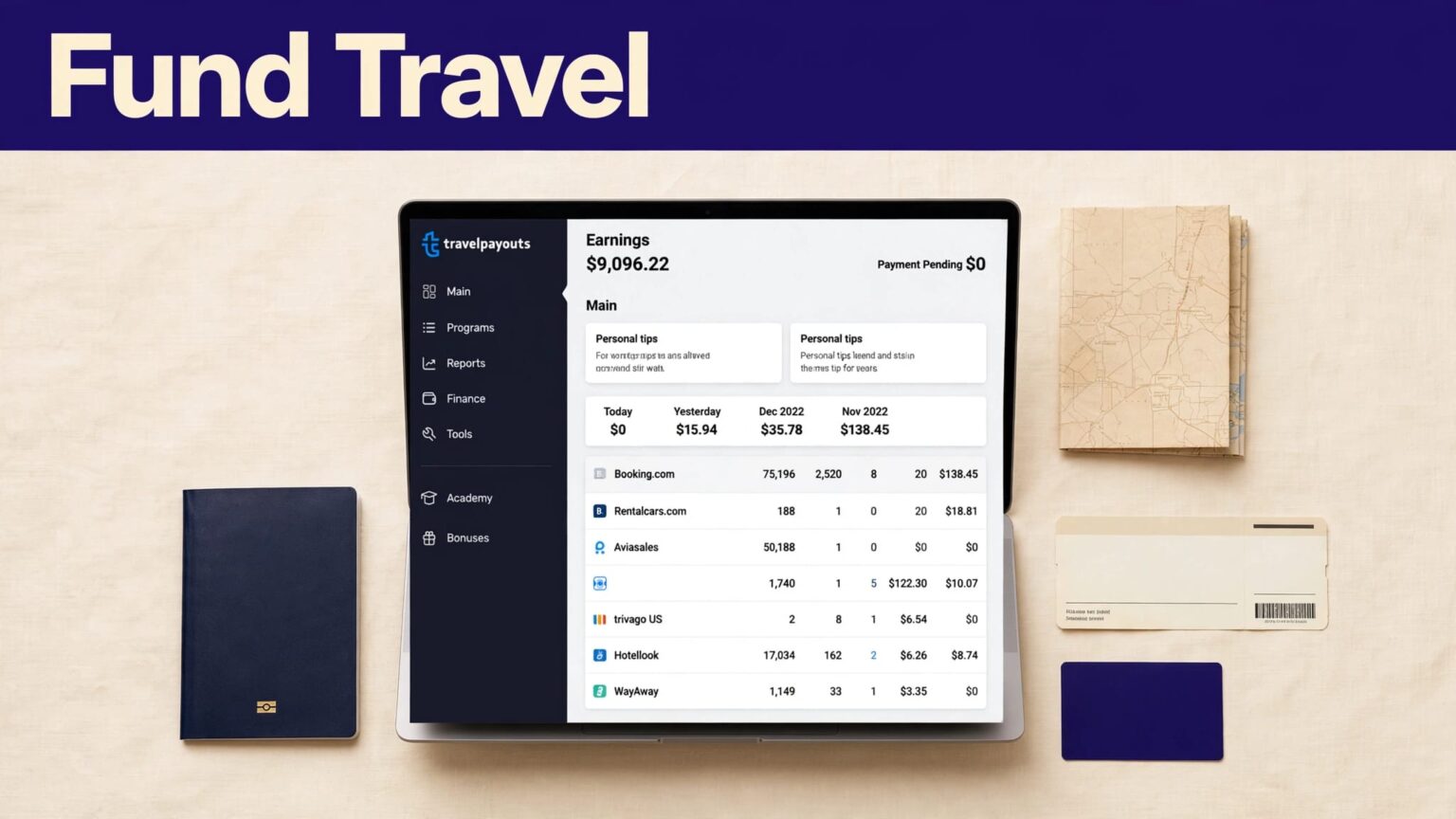
A useful destination guide can keep paying for the research behind your next guide. That only happens when readers find an offer that matches the trip they are already planning.
The Travelpayouts affiliate program gives travel publishers one account for promoting flights, accommodation, tours, insurance, car rentals, and other travel services. It won’t turn weak traffic into revenue. Results depend on audience size, search intent, content quality, product fit, and the rate at which readers complete bookings.
Start by treating affiliate offers as part of your publishing system, not an extra link added after publication.
BUILD CONTENT AROUND REAL TRIP DECISIONS
Travel content works when it reduces a decision. A reader searching “where to stay in Lisbon” needs accommodation options. A reader looking for a 48-hour itinerary may need a tour, airport transfer, or attraction ticket.
Don’t start with the affiliate program. Start with the reader’s next action.
Match the page to booking intent
High-intent pages answer a narrow question close to a purchase. Think hotel neighborhood guides, airport transfer pages, train versus flight comparisons, or destination-specific packing lists that include insurance context.
Broader content still has a place. A story about hiking in Madeira can build readership and email subscribers. It may not be the right place for five booking links.
Use a simple filter before adding an offer:
- Does the offer solve a problem the page already addresses?
- Can the reader understand why the link is here?
- Does the destination, date range, or traveler type affect the recommendation?
- Would you keep the link if it paid nothing?
If the answer is no, remove it. A bad offer lowers reader trust and can weaken the page’s usefulness.
Build durable pages before short-lived posts
A short-form social post can generate a burst of clicks. A well-maintained guide can produce qualified traffic for years. Prioritize pages that answer repeat travel questions, then support them with newsletters, videos, and social content.
For example, a “Where to Stay in Tokyo” guide can link to relevant accommodation searches. A connected page on airport transfers can solve another part of the same trip. Each page has a clear job.
This structure gives you more than isolated commissions. It builds an editorial library that readers can return to when they plan the next trip.
USE THE TRAVELPAYOUTS AFFILIATE PROGRAM AS YOUR OFFER LAYER
The Travelpayouts partnership platform is free to join and is built for websites, blogs, YouTube channels, newsletters, and similar publisher channels. It brings travel brands and promotional tools into one account.
The catalog can include brands such as Booking.com, Tripadvisor, and GetYourGuide, alongside flight, hotel, insurance, rental-car, and activity offers. Brand availability and terms can change, so check the live program page before building a campaign around one advertiser.
Know what changes by advertiser
There is no single commission rule across the network. Each travel brand sets its own reward terms, qualifying actions, cookie duration, and payout conditions.
Travelpayouts says its cookie duration is 30 days for most brands, although some programs use different periods. Don’t publish a cookie claim on your site unless you have checked the current program details.
The same rule applies to earnings. A percentage shown in a dashboard is not a promise of income. A booking can cancel, fail advertiser validation, or reverse later.
A high click count can hide weak booking intent. Track approved rewards after reversals, not clicks alone.
Read the current Travelpayouts network terms before you publish. The terms govern permissible use of tools, reporting, and participation in the network.
CHOOSE TRAVEL OFFERS BY PAGE INTENT
A flight search link doesn’t belong in every travel article. The best fit depends on what the reader needs at that moment.
Use this page-to-offer map when planning new content.
| Content type | Reader’s immediate job | Offer that may fit |
|---|---|---|
| Airport guide | Get from the airport to the city | Transfer, car rental, or hotel search |
| Where-to-stay guide | Compare areas and properties | Accommodation deep link |
| Three-day itinerary | Book activities by day | Tour or attraction offer |
| Travel insurance guide | Compare coverage before departure | Insurance program |
| Flight comparison page | Search dates and routes | Flight search tool |
The offer should follow the recommendation. Don’t write a generic hotel paragraph only to make room for a hotel link.
Use deep links for destination pages
A deep link sends the reader to a relevant page, hotel, activity, or search result instead of a brand homepage. That reduces the work between reading your guide and taking action.
Travelpayouts explains how to create and use affiliate links for partner pages. Use the destination URL that best matches the page promise.
A “best hotels near Rome Termini” article should not send people to a generic global accommodation homepage. Link to a Rome search where possible. Check the destination page on desktop and mobile before publishing.
Keep recommendations editorially honest
Don’t call an option “best” unless your research supports it. State who it fits instead.
“Best for a late arrival” is more useful than “best overall.” “Works well for families who want a kitchen” tells readers why the property or area belongs in the guide.
This approach also protects your content when prices, room inventory, routes, or schedules change. You are recommending based on a trip need, not pretending an offer is permanent.
The Travelpayouts affiliate program works better when the content makes the decision clear before the reader reaches the link.
ADD TRACKING BEFORE YOU PUBLISH
Every affiliate placement needs a record. If you can’t identify the page, channel, offer, and campaign later, you can’t improve it.
Travelpayouts adds a unique Partner ID to its affiliate tools. You can use SubIDs to separate placements and view performance by article, newsletter, video, or paid campaign.
Use a naming system that survives growth
Create short SubIDs that a future team member can understand. Keep them consistent.
For example:
tokyo-hotels-2026for a Tokyo accommodation guidenl-japan-octfor an October Japan newsletteryt-rome-airportfor a Rome airport YouTube descriptionig-bio-europefor a social profile link
Avoid vague labels such as test1, newlink, or summer. They become useless when you have 50 pages and multiple traffic sources.
Travelpayouts provides guidance for bloggers and site owners on using deep links, widgets, and other publisher tools. Start with text links on a small number of high-intent pages. Add widgets only when they support the page instead of slowing it down or distracting the reader.
Test the complete reader path
Click every link after publication. Check that it opens the intended brand page, carries the correct destination, and works on mobile.
Then test the content path:
- Read the paragraph before the link as if you were planning the trip.
- Confirm the anchor text describes the destination.
- Check the landing page for language, currency, and destination relevance.
- Record the URL, program, SubID, and date checked in your tracking sheet.
Don’t assume an old link is still correct. Travel brands redesign pages, remove inventory, change routes, and update terms.
MEASURE APPROVED REVENUE, NOT ACTIVITY
Clicks are a diagnostic metric. They tell you whether readers notice and use an offer. They don’t tell you whether the offer funds your work.
A reliable reporting system separates clicks, pending rewards, approved rewards, reversals, and paid commissions. Keep these states separate.
Create a fixed earnings record
Use a spreadsheet, Airtable base, or database with one record for each content asset and offer. Include:
- Content URL and traffic source
- Travelpayouts program and offer name
- Reward rule and the date you checked it
- Clicks, pending rewards, approved rewards, and reversals
- SubID, booking period, payout date, and payment method
- Update notes when a link or program changes
Use a simple formula:
Net affiliate earnings = approved percentage rewards + approved fixed rewards – reversals
Keep past records intact. If an advertiser changes terms, add a new dated entry instead of overwriting the old rate. You need a usable history when a monthly report looks different from the previous one.
Find the weak point before changing content
A page with traffic but no clicks may need a clearer recommendation or better link placement. A page with clicks but few approved rewards may have weak product fit, a poor landing page match, or visitors who are only researching.
Don’t rewrite every page at once. Test one controlled change. Move the link after the relevant recommendation. Replace a generic anchor with a destination-specific one. Add a comparison table if the reader needs help choosing.
Travelpayouts states that payouts are automatic and monthly once you meet the required minimum. Publisher materials place the usual payment period between the 11th and 20th. Check the current threshold and available payout method inside your account before relying on a payment date for editorial budgeting.
PROTECT READER TRUST WITH DISCLOSURES
Affiliate disclosure is part of the reader experience. Put it where people will see it before or near the first affiliate link.
A footer-only statement is not enough for a reader arriving directly from search. A short plain-language disclosure works better.
Use direct disclosure language
Place wording like this near the relevant links:
This page contains affiliate links. If you book through them, we may earn a commission at no extra cost to you.
Adjust the language to match your real arrangement. Don’t say you used a service if you did not. Don’t claim the reader pays no extra cost unless that is accurate for the offer.
The FTC says creators must disclose material relationships with brands. Review the agency’s disclosure guidance for influencers if your content reaches U.S. consumers. Creators outside the U.S. should also check the advertising and consumer rules that apply where they operate.
Review old pages on a schedule
Set a recurring review date for affiliate-heavy content. Check links, disclosures, dates, program terms, and factual travel details.
A quarterly review works for many evergreen guides. Pages about visa rules, airline routes, seasonal closures, price-sensitive travel, or time-limited promotions may need more frequent checks.
Maintain a change log with the page URL, reviewer, date, changes made, and reason. This stops an old assumption from becoming a permanent publishing error.
SET A REALISTIC CONTENT FUNDING TARGET
Don’t set a revenue target based on a creator’s screenshot or an advertiser’s headline commission rate. Build a target from your own traffic and approved conversion data.
Start with one content cluster. For example, publish and maintain five pages around a destination where you have real expertise. Track qualified organic visits, email clicks, affiliate clicks, approved rewards, and time spent updating the pages.
Then calculate whether the cluster pays for a defined cost. That might be a research trip, freelance editing, photography, or email software.
If it doesn’t cover the cost yet, identify the constraint. You may need better traffic, stronger search intent, clearer offers, or fewer pages with weak commercial fit. More links are rarely the first answer.
FINAL THOUGHTS
The Travelpayouts affiliate program can help fund travel publishing when it connects useful trip advice with relevant booking options. It is not a substitute for trusted research, clear writing, or qualified traffic.
Build pages around real travel decisions. Track approved revenue with dated records. Review offers and disclosures before they become stale.
The goal is useful travel content that can support more useful travel content.
