How I Track Trending B2B Services With Exploding Topics
If I wait until a B2B service trend feels obvious, I’m already late. The better move is to catch the curve while it still looks thin, messy, and easy to miss. That’s where Exploding Topics helps me most. I use it to spot early d...


If I wait until a B2B service trend feels obvious, I’m already late. The better move is to catch the curve while it still looks thin, messy, and easy to miss.
That’s where Exploding Topics helps me most. I use it to spot early demand, then I validate the signal with buyer intent, competition, and monetization potential before I build content or services around it.
I look for movement, not noise
When I scan Exploding Topics, I don’t chase the biggest spike. I look for a steady rise that keeps showing up across related terms. That usually tells me the market is warming up instead of screaming for a weekend.
In April 2026, I’m seeing strong motion around AI-powered tools, cybersecurity and compliance, automation platforms, and modular integrations. That lines up with Top Trending Topics (April 2026) and the broader Exploding Topics B2B trends roundup. Those pages help me confirm whether a topic is gaining traction or just having a loud week.


I also pay attention to context. A rising trend means more when it touches a real business pain, like saving time, reducing risk, or helping a team close more deals. If I can connect the trend to a budget line, it deserves a closer look.
A rising chart is a clue, not proof.
That simple rule saves me from building around hype. It also keeps my research grounded in what buyers actually pay for.
B2B services I would watch in 2026
I don’t treat every trend as a product idea. Sometimes the better play is a service package, a consulting offer, or a content angle that matches the demand.
These are the B2B services I would watch most closely in 2026:
- AI RevOps support: I’d watch for services that help sales and marketing teams automate routing, scoring, and reporting.
- Cybersecurity compliance consulting: Buyers want help with policies, audits, vendor checks, and proof of control.
- First-party data enrichment: Teams need cleaner customer records as third-party data gets less useful.
- Workflow automation setup: Many companies want help connecting tools without rebuilding their stack.
- API integration services: Smaller teams often need custom links between systems, not a giant all-in-one platform.
- AI support operations: I see demand for service layers around chat support, knowledge bases, and escalation rules.
Each of these solves a dull but expensive problem. That matters. B2B buyers rarely pay for excitement. They pay for less friction, fewer mistakes, and better visibility.
If I want to turn one of these into a content plan, I shape it with my Exploding Topics keyword brief process. That keeps the idea specific enough to publish and useful enough to rank.
I validate the trend before I build around it
Exploding Topics gives me the signal. I still need evidence that the market can support a real offer.
I check four things: demand signals, buyer intent, competition, and monetization potential. If one of those is weak, I slow down. If all four line up, I move.
Here’s the framework I use:
| Signal | What I look for | Good sign | Weak sign |
|---|---|---|---|
| Demand signals | Search growth, social chatter, tool adoption | Steady climb over time | One sharp spike |
| Buyer intent | People comparing tools or asking for help | Commercial searches and problem-based queries | Pure curiosity |
| Competition | Number of direct offers and content pieces | Room to stand out | Crowded, vague field |
| Monetization potential | Ease of pricing the service | Clear ROI and repeat need | Hard to explain value |
The table keeps me honest. If demand is rising but intent is fuzzy, I don’t rush. If intent is strong but competition is brutal, I look for a narrower niche. If buyers want the service and I can price it cleanly, I know I have something worth testing.
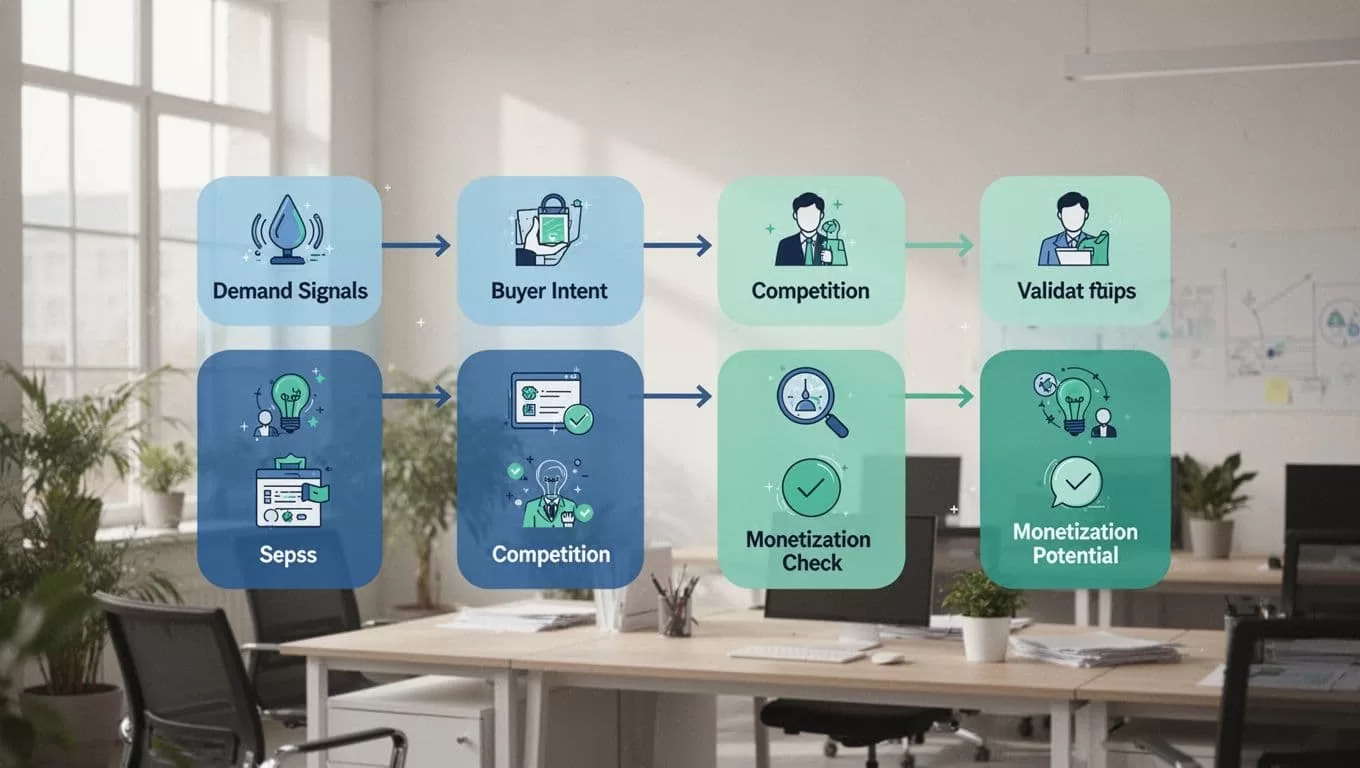
Timing matters too. When a trend is rising but still early, I keep my test small and my feedback loop fast. If I want a better sense of launch timing, I pair this research with my seasonal launch timing guide.
I turn the signal into content, offers, and leads
Once I trust a trend, I ask how it should shape the rest of my work. The answer usually falls into three buckets.
First, I use it for content strategy. A growing B2B service trend gives me titles, FAQs, comparison posts, and service explainers. It also helps me write about the problem in the buyer’s own language.
Second, I use it for service development. If I see demand around AI support or data enrichment, I can package a smaller offer, test it with a pilot client, and refine the scope before I scale it.
Third, I use it for lead generation. Trend-based topics often point me toward the right accounts, titles, and use cases. When I need cleaner contact discovery for outreach, I rely on my Hunter.io review for B2B contact discovery. That helps me turn broad market interest into a real list of people I can reach.
I also use trend data as market research. It tells me which pain points are getting louder, which services are getting crowded, and which buyers may be ready for a better offer. That keeps me from guessing in the dark.
I watch for proof that a trend can pay
A trend only matters if someone will pay for it. So I ask simple questions before I spend time on it.
- Can I name the buyer in one sentence?
- Can I tie the service to a business result?
- Can I price it in a way that makes sense?
- Can I explain why now is the right time?
If the answer is yes, I keep going. If the answer is no, I move on without regret. There will always be another signal.
Tracking trending B2B services with Exploding Topics works best when I treat it like an early warning system. I don’t need perfection. I need a strong enough signal to test, validate, and package into something buyers care about.
The fastest wins come when I catch the trend early, verify the demand, and build for a real business problem. That’s when a rising line on a chart turns into content, service revenue, and better leads.

