Trending Health Products in 2026: What I Track Early
Updated September 2026. The health product trends worth watching are sleep technology, wearable monitoring, muscle-health products, personalized nutrition, gut-health products, AI wellness tools, at-home testing, and recovery devices. Popul...

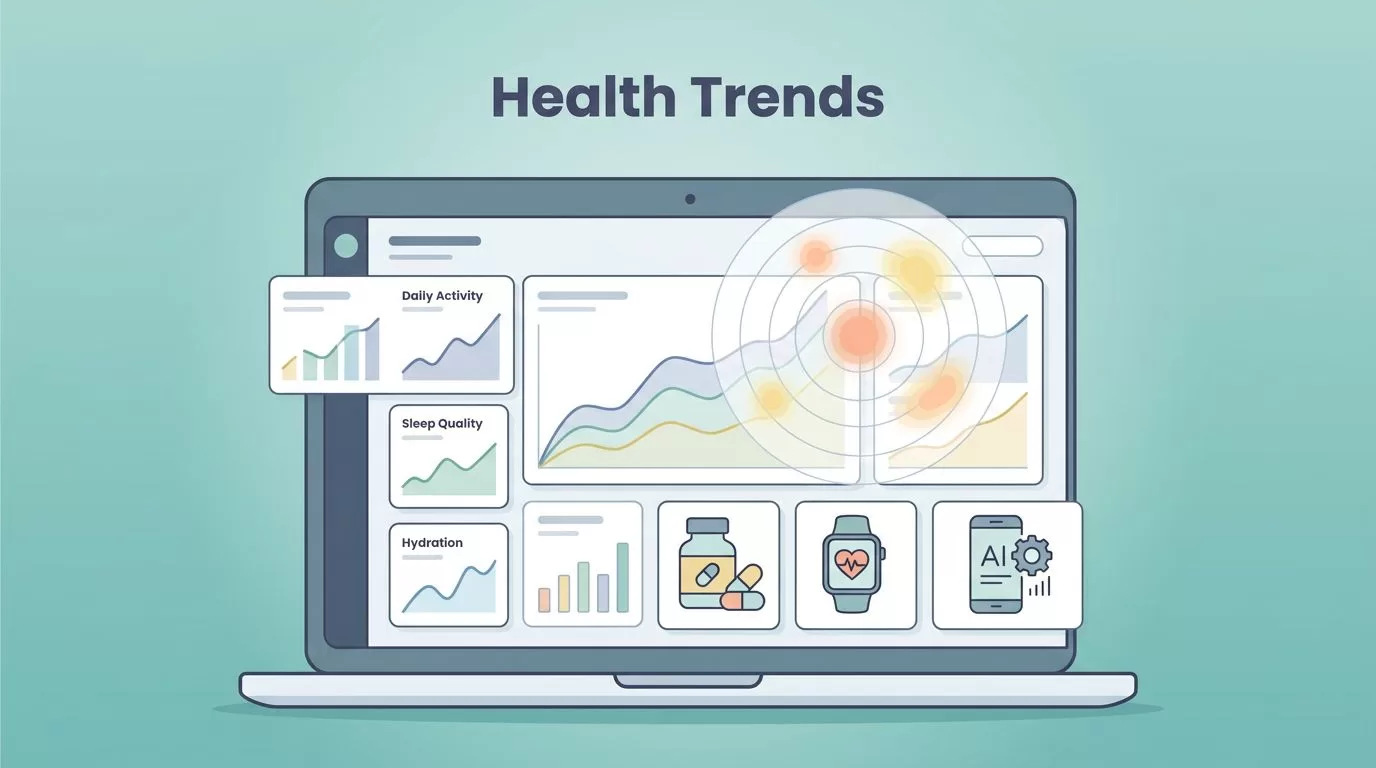
Updated September 2026. The health product trends worth watching are sleep technology, wearable monitoring, muscle-health products, personalized nutrition, gut-health products, AI wellness tools, at-home testing, and recovery devices. Popularity alone does not prove a product works, is safe, or deserves inventory. I use trend data as a starting point, then check buyer intent, evidence, reviews, pricing, compliance, and repeat use.
This guide is for ecommerce sellers, content marketers, founders, and affiliates who want to find trending health products before a category becomes crowded. It is not medical advice. A wellness product can offer real convenience without being a treatment, diagnosis, or cure.
Health product trends I am watching in 2026
Consumers are spending more time managing health routines at home. Wearables, AI tools, and voluntary testing make health data easier to see. That shift creates product opportunities, but it also raises the standard for claims and customer education. The following categories have clear consumer use cases. Each needs a different commercial approach.
| Trend | Examples | Evidence level | Main risk | Commercial model |
|---|---|---|---|---|
| Sleep technology | Smart rings, trackers, bedding, apps | Mixed by product and claim | Users may treat data as a diagnosis | Hardware, accessories, subscriptions |
| Muscle health | Creatine, resistance tools, recovery gear | Stronger for defined training uses | Supplement quality and unsuitable claims | Refills, bundles, education |
| Personalized hydration | Electrolyte powders and refill packs | Depends on formula and use case | Overstated performance claims | Repeat purchases and subscriptions |
| Gut health | Probiotic, prebiotic, and fiber products | Mixed and product-specific | Broad claims that outpace evidence | Refills, content, subscriptions |
| Red light devices | Masks, panels, handheld products | Mixed by device and intended use | Disease or treatment claims | Hardware and accessories |
| At-home testing | Wellness panels and collection kits | Varies by test and validation | Privacy and result interpretation | Tests and follow-up services |
Use the table as a screening tool, not a buying list. Evidence refers to the general use case, not every product sold in that category. A seller still needs to check the specific formula, device, instructions, market, and wording.
1. Sleep technology and recovery tools
Sleep remains a simple, high-interest problem. Buyers want easier routines, a more comfortable sleep space, and a clearer view of their habits. Smart rings, watches, bedside sensors, temperature-focused bedding, sleep masks, and coaching apps all fit this category.
The useful angle is routine support. A tracker may help someone notice regular sleep patterns, but it does not diagnose a sleep disorder. A pillow, light-blocking mask, or cooling product can improve comfort, but it should not be marketed as a medical treatment. The commercial opportunity is strongest when the product solves one clear problem, such as charging friction, comfort, portability, or a confusing setup.
2. Wearable health monitoring
Wearables have moved beyond step counts. Buyers now use rings, watches, sensors, and apps to follow sleep, activity, heart-rate trends, and recovery routines. This can create demand for accessories, setup guides, data coaching, and software subscriptions. It can also create a heavy support burden when buyers expect a consumer tool to answer a medical question.
Keep the line between tracking and diagnosis clear. A product that records a wellness metric is not automatically a medical device. Claims about diagnosing, treating, preventing, or mitigating disease can trigger different rules. The FDA’s home-use device guidance is a helpful starting point for products that sit close to medical use.
3. Muscle health, creatine, and resistance training
Muscle health is no longer only a bodybuilding topic. More buyers connect strength training with mobility, healthy aging, sports performance, and recovery. Product options include resistance bands, compact strength equipment, protein products, creatine, and recovery accessories.
Creatine has a clearer research base for specific exercise and performance uses than many trend-driven supplements. That does not make every creatine offer equal. Buyers still care about ingredient transparency, taste, serving size, third-party testing, price per serving, and subscription flexibility. Avoid claims that turn a sports nutrition product into a cure for disease or a promise for every customer.
4. Personalized nutrition and hydration
Personalized nutrition includes meal-planning apps, nutrition coaching, electrolyte mixes, protein drinks, refill packs, and plans built around stated goals. The buying pattern is attractive because many products are used often. A low-friction reorder or bundle can matter more than a complicated personalization quiz.
Start with a narrow job. A hydration powder may be convenient for travel, workouts, or people who prefer flavored water. It is not automatically necessary for every person or proof of a health outcome. Check the ingredient panel, serving instructions, flavor complaints, shipping weight, and repeat-order behavior before you decide the category has real potential.
5. Gut health and microbiome products
Gut health keeps drawing attention through probiotics, prebiotics, fiber products, fermented foods, and microbiome testing. This category can support strong educational content because buyers want simple answers. It also has high claim risk. Benefits can depend on the ingredient, strain, dose, person, and stated use. Broad promises about immunity, weight, mood, or disease are not a safe shortcut.
For sellers, look for practical gaps instead: clearer labeling, better flavor, flexible refills, sensible packaging, transparent pricing, and honest education. A personalized microbiome report does not automatically create a useful treatment decision. If a product produces personal health data, review privacy practices and the support available when a buyer has questions.
6. AI-assisted wellness tools
AI wellness tools can help people plan workouts, track habits, prepare meals, or summarize routine data. The real value is not the word AI. It is whether the tool saves time and gives useful, understandable guidance. Apps that pair a device or journal with coaching, reminders, and progress views may have more recurring value than an app that only produces generic tips.
Be careful with symptom checkers, medication guidance, and tools that interpret test results. Explain what the app does, what data it collects, and what it cannot do. Do not present automated guidance as professional medical care. Subscription pricing, cancellation friction, privacy, and retention are the major business checks in this category.
7. At-home testing and advanced health data
At-home kits and voluntary wellness testing are becoming a larger consumer category. Morgan Stanley reported in January 2026 that 34% of surveyed U.S. consumers had completed at least one voluntary wellness lab test in the prior three years. The category includes cholesterol, glucose, vitamin, hormone, fertility, and other wellness panels.
Testing products should be handled with extra care. Check the test’s intended use, validation, collection instructions, lab process, data policy, and follow-up path. A result can be misunderstood without context. Do not imply that an at-home test replaces care from a qualified professional. For many brands, the better opportunity is a clear support experience and responsible education, not a dramatic claim.
8. Red light therapy and recovery devices
Red light masks, panels, and handheld devices are popular because the format is visual and easy to demonstrate. Demand alone is not proof that every promised result is supported. Evidence and regulatory status can differ by device, setting, and intended use.
For product research, inspect the exact claims used by established brands, then ask whether the product can be described honestly without promising to treat a serious condition. Check device instructions, eye-safety advice, warranty terms, return patterns, shipping damage, and customer expectations. Do not use before-and-after images or testimonials as a substitute for evidence.
What I would treat cautiously
- Peptides and products framed as treatments: Avoid selling or promoting products with unapproved therapeutic claims. The risk is high when a product is presented as a cure, drug substitute, or solution for a medical condition.
- Supplements with broad disease claims: Supplements are not pre-approved by the FDA in the same way as drugs. Firms are responsible for safety and truthful, non-misleading labeling. Read the FDA’s consumer guidance on dietary supplements before creating claims.
- Cold exposure and fasting offers: These routines may not suit every person, especially those with health conditions or medication needs. Do not present them as universal solutions.
- Unclear testing or monitoring products: Avoid products that hide their validation, data practices, lab partner, or customer support process.
- Fear-based marketing: A product that needs alarming claims to sell usually creates refund, support, and compliance risk.
The FDA distinguishes general wellness and structure/function claims from disease claims. If wording says a product diagnoses, treats, cures, prevents, or mitigates disease, it can move into drug or device territory. Review the FDA’s structure/function claim guidance, advertising platform rules, and local requirements before launch. Compliance depends on the product, ingredient, device type, claim, and country.
My health product validation workflow
My first stop is Exploding Topics’ health topics list. I treat it as a weather map, not a shopping list. One growing keyword can be noise. A cluster of related searches, products, and discussions may show a real shift.
| Signal | What I check | Why it matters |
|---|---|---|
| Search growth | A steady 3 to 12 month climb and related searches | Shows lasting curiosity, not one viral post |
| Purchase intent | Comparison, price, review, and “best for” searches | Separates readers from potential buyers |
| Retail activity | New listings, bundles, restocks, and price points | Shows how sellers frame the offer |
| Reviews | Repeated one-star and three-star complaints | Finds product and expectation gaps |
| Claims and evidence | Official guidance and reputable research | Reduces compliance and trust risk |
One loud week rarely matters. I want at least three signals moving in the same direction. I also compare each idea with my early-stage consumer trend method and my process for finding ecommerce niches.
Score the opportunity before you spend money
Give each factor a score from 1 to 5. A high total is not approval. It tells you which ideas deserve a small test first.
- Search growth and buyer intent
- Clear buyer and simple problem
- Repeat purchase or subscription potential
- Gross margin after product, shipping, support, and ad costs
- Evidence strength and claim safety
- Competition and price pressure
- Return, storage, shelf-life, and damage risk
- Customer education required
Read reviews with a method. Group complaints by product failure, not by star rating alone. Look for repeated problems with taste, sizing, charging, instructions, durability, shipping, subscriptions, or unclear expectations. Then confirm that you can solve the problem without adding a risky health claim.
How I test a health product idea
- Choose one product and one buyer.
- Check search intent, competitor prices, reviews, and claims.
- Create one landing page or product page with a clear wellness-focused description.
- Run one small content, email, creator, or paid-traffic test.
- Track clicks, email signups, add-to-cart rate, conversion rate, refunds, questions, and comments.
- Review the objections buyers repeat.
- Compare the response with the original demand signal.
- Decide whether to continue, revise the offer, or stop.
Do not invent performance benchmarks. Your decision should be based on your product cost, traffic source, customer acquisition cost, and support capacity. For a seasonal category, use this seasonal launch timing method before you order inventory.
Frequently asked questions
What are the biggest health product trends in 2026?
The most visible categories include sleep technology, wearable monitoring, muscle health, personalized nutrition and hydration, gut health, AI wellness tools, at-home testing, and recovery devices. The best choice depends on the buyer, evidence, price, and compliance risk.
Which health products have repeat-buy potential?
Consumables such as hydration mixes, protein products, and carefully positioned supplements may support repeat orders. Apps, coaching, wearable insights, and testing follow-up can support subscriptions. Repeat potential only matters when the customer finds ongoing value.
Are wearables accurate enough to make health decisions?
A wearable can be useful for following personal patterns, but it is not automatically a diagnosis or a replacement for professional care. Check the product’s intended use and tell customers what the device can and cannot measure.
What should sellers check before promoting a health product?
Check the product’s evidence, ingredient or device documentation, claims, labeling, pricing, shipping, refund risk, reviews, privacy practices, and local rules. Health trend growth does not prove safety, effectiveness, or legal marketing permission.
Final takeaway
Exploding Topics gives me an early signal. It does not give me the final answer. I trust a health product opportunity only when search demand, buyer intent, retailer activity, review patterns, commercial math, and responsible claims line up. Start small, make the offer clear, and let real customer behavior decide whether the trend is worth pursuing.
Editorial note: Trend data and product reviews do not prove medical effectiveness or safety. This article is for market research and general education, not medical advice. Readers should consult a qualified healthcare professional for personal medical decisions. Sellers should verify current rules before making health-related claims.

