Wise Personal vs Wise Business: Best Pick for Freelancers in 2026
You chase freelance gigs across borders. Clients pay in dollars one week, euros the next. Bank fees eat your profits. You need a simple way to hold cash, get paid fast, and skip surprises. Wise personal vs wise business boils down to your s...


You chase freelance gigs across borders. Clients pay in dollars one week, euros the next. Bank fees eat your profits. You need a simple way to hold cash, get paid fast, and skip surprises. Wise personal vs wise business boils down to your setup. Personal works for solo hustles. Business steps in as you grow. I’ll break it down with real freelancer angles so you pick right.
Key Differences Between Wise Personal and Business
I started with a basic Wise personal account. It held my currencies and grabbed client wires. As gigs piled up, I craved more. That’s when business features pulled me in.
Both let you store 40+ currencies. You get local bank details for spots like the US or UK. Debit cards work worldwide. Fees stay low at the mid-market rate.
Business adds power moves. Think free invoicing to look pro. Batch payments handle 1,000 payouts from a spreadsheet. Links to QuickBooks or Xero tidy your books. Team access fits if you hire help. API hooks automate flows.
Personal skips those. Wise flags heavy freelance use there. It suits light loads.

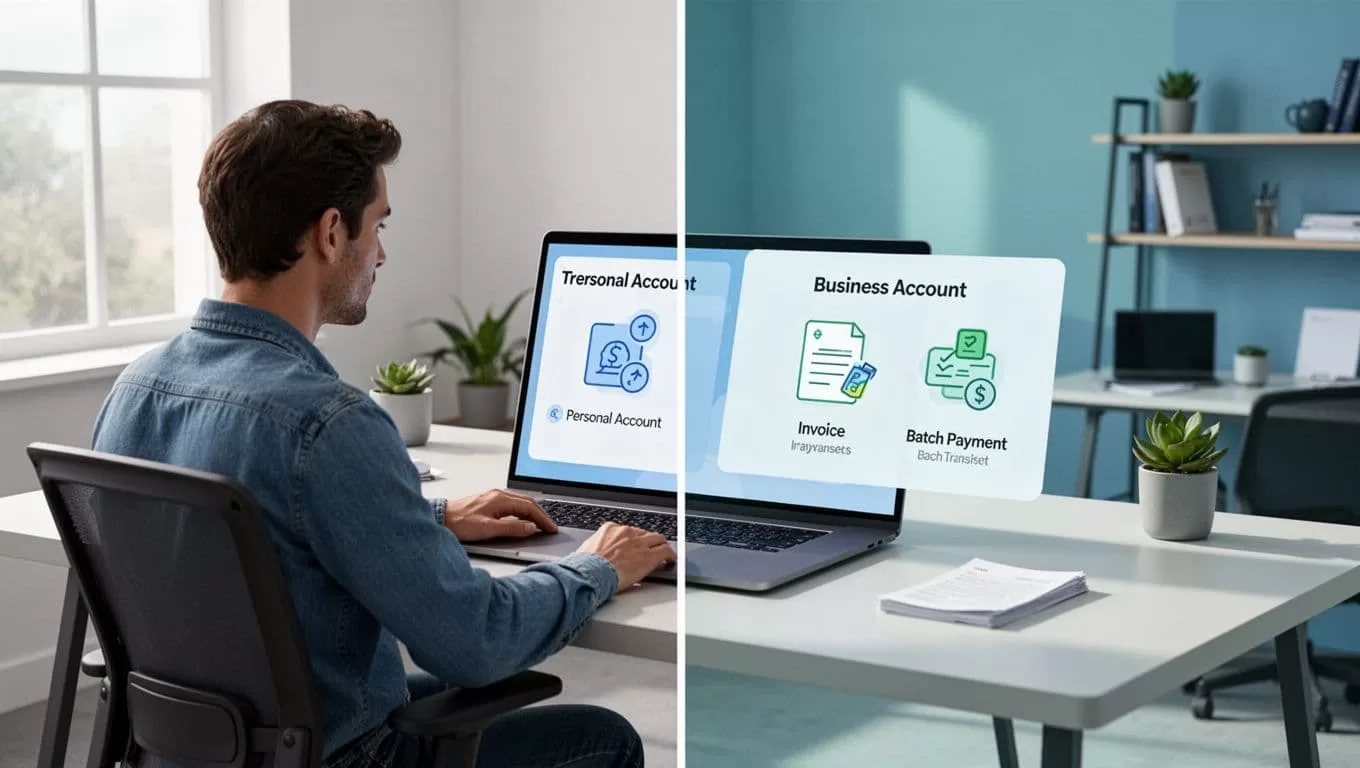
Here’s a quick side-by-side. It shows what matters for us independents.
| Feature | Personal | Business |
|---|---|---|
| Hold/convert 40+ currencies | ✔️ | ✔️ |
| Debit card | ✔️ | ✔️ |
| Invoicing | ❌ | ✔️ |
| Accounting integration | ❌ | ✔️ |
| Batch payments | ❌ | ✔️ |
| Team/expense cards | ❌ | ✔️ (limited) |
| API access | ❌ | ✔️ |
For deeper US details, check Wise’s official comparison.
Fees That Hit Freelance Wallets
Fees crush margins. Wise keeps them clear. No monthly charges on basics. Conversions start at 0.33%. No rate markups.
Both accounts match on sends and receives. Business shines with bulk tools. You save time on vendor pays. UK advanced plans add a £50 one-time hit. Cards might tack small issuance costs.
I ran numbers once. Ten client payouts cost less via batch. Personal works fine for five gigs a month. Scale up, and business pays off.
Country rules tweak this. Always preview in the app. Fees shift by location.
Eligibility and Setup for Solopreneurs
Personal opens to anyone 18+ with ID. One per person. Wise discourages business use. They limit or flag big freelance flows.
Business needs proof. Sole traders or LLCs submit tax IDs, registrations. UK limited companies must use it by law. US welcomes freelancers. You can’t swap accounts. Open both if needed.
Setup takes days. Personal verifies fast with passport. Business wants company docs. I grabbed Wise US bank details abroad for my setup. It eased USD receives.
Verify your country’s rules in-app. Features vary.
Common Freelancer Use Cases
Picture this. You design logos from a coffee shop. One US client pays via ACH. Euros land from Europe. Personal grabs them cheap. No fuss.
Now imagine 20 clients. Invoices go out weekly. You pay subcontractors. Business invoices track it all. Batch sends clear your queue. One freelancer I know switched at $5K monthly. Taxes got simpler.

Early stage? Personal. You bootstrap alone. Growing team or high volume? Business. See a full freelancer guide here.
Limits flex by country. Personal caps softer for business-like use.
Country Variations in 2026
Rules differ. US personal handles basics. Business fits sole traders. UK sole traders can use personal but should not. Limited firms need business.
EEA mirrors UK. Canada, Australia open business to freelancers. Always check app. Features like cards limit by spot.
India freelancers lean personal for simple globals. Business for teams, per this take.
My Recommendation by Stage and Needs
New freelancer under $2K monthly? Go personal. It covers receives, holds, spends.
Hit $5K+? Or invoice often? Pick business. Tools save hours. Separate income for taxes.
Test both. No conversion, but low risk. Match to your flow. Check Wise terms now. They evolve.
You control your cash flow. Pick the account that grows with you. What stage are you in? Drop a comment.

