How to Open a Poland Bank Account Using Wise.com
Searching for a Poland bank account often leads to Wise. The service is popular with expats, freelancers and remote workers. Many guides still promise a Polish IBAN from Wise. Wise now says otherwise on its own pages. Read the facts below b...
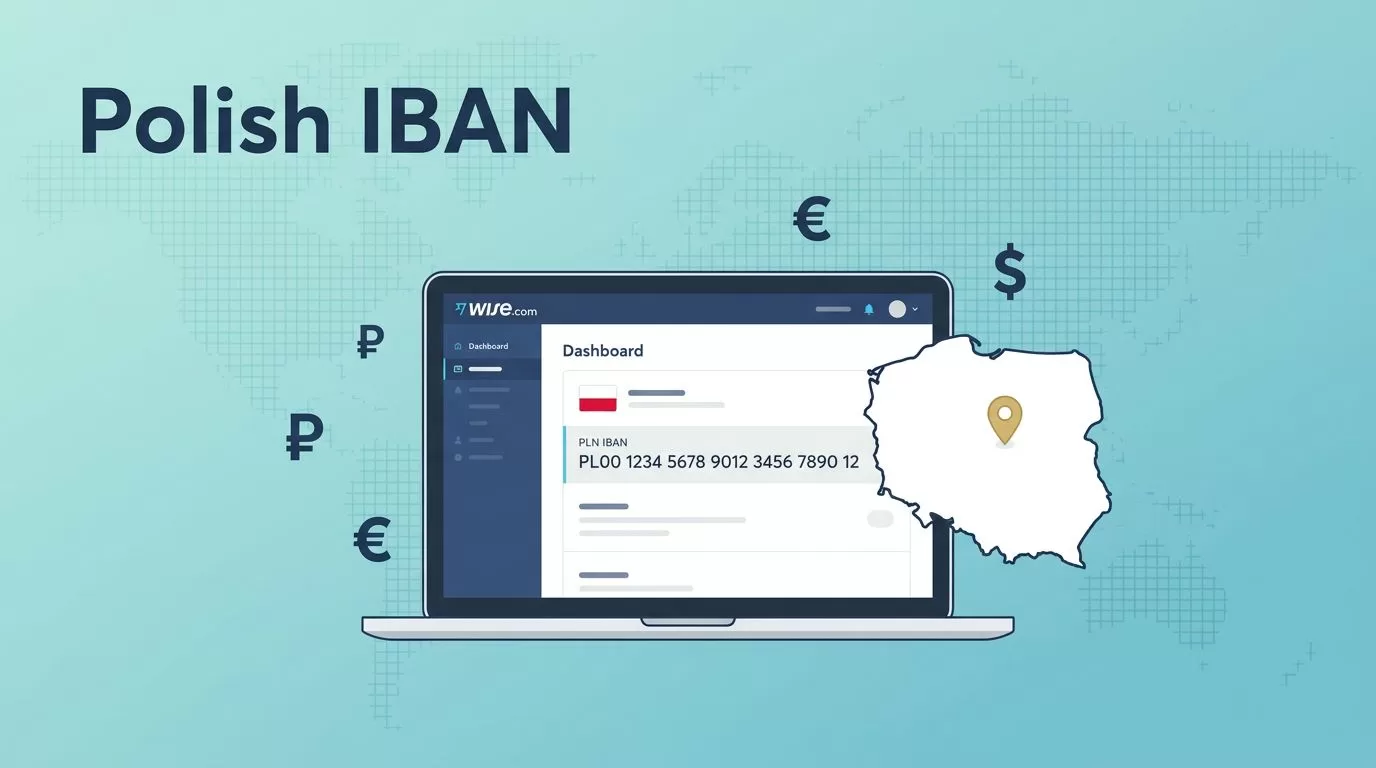
Searching for a Poland bank account often leads to Wise. The service is popular with expats, freelancers and remote workers. Many guides still promise a Polish IBAN from Wise. Wise now says otherwise on its own pages. Read the facts below before you plan your money around Wise.
Wise states plainly: Wise is not a bank, and a Wise account is not a Polish bank account. This guide shows what Wise does well, what Wise cannot do, and how to open a real Polish account when you need one. Check every fee on the official Wise pages before you act, because Wise changes prices and account features.

Is a Wise account a Poland bank account?
No. Wise is a money service. Wise lets you hold balances in many currencies, send money abroad, and spend with a debit card. Wise says you can hold 40+ currencies, send money to 140+ countries, and spend in 150+ countries with the Wise card. Wise describes these tools as a supplement to a local bank, not a replacement.
A Polish bank account does more. Employers pay salaries into the account. Landlords and utility firms expect a local account number. Offices in Poland often ask for a bank statement from a Polish bank. A Wise balance covers few of these needs.
What happened to Wise PLN account details?
Older articles, including earlier versions of this guide, said eligible users could receive Polish zloty with local PLN account details and a Polish IBAN. The current Wise help page paints a different picture. The page says you cannot get PLN account details right now, because Wise needs to make improvements. People who already hold the details can keep using them.
Wise also calls PLN account details a set of details for receiving money. Wise does not call the details a full bank account. The help page does not confirm a Polish IBAN. Treat any claim of a Polish IBAN from Wise as unverified until you see the details inside your own account.
Open the Wise help page on PLN account details to see the current status. Wise may restore the feature later.
How money reaches a Wise PLN balance
The Wise help page lists two routes for people who already hold PLN account details.
| Route | Currency | Timing stated by Wise | Fee stated by Wise |
|---|---|---|---|
| Domestic transfer inside Poland | PLN | Within 2 working days | None |
| International Swift transfer | PLN only | Usually 1 working day, sometimes up to 5 | Flat receiving fee, quoted at 43.50 PLN, plus possible correspondent bank fees |
Wise also notes you can receive PLN by Swift into GBP account details, which may avoid a conversion fee. Confirm the current amounts on the help page before you give details to a sender.
What a Wise account does well for Poland
Wise works best for cross-border money. Three jobs stand out.
- Currency conversion. Wise uses the mid-market exchange rate and shows the fee before you send. Wise advertises PLN conversion from 0.26%.
- Sending money to Polish bank accounts. You can pay a Polish bank account from your Wise balance. Check the Wise bank transfer page for the live rate and fee.
- Spending abroad. The Wise card works in many countries. Spending in a currency you already hold costs nothing extra.
Freelancers who invoice Polish clients in zloty gain the most. Remote workers who earn in dollars and live in Poland gain too. Both groups can convert at a clear rate and move the money to a Polish bank.
Wise fees in Poland
The Polish Wise pricing page lists these items. Wise changes prices, so check the official Wise pricing page before you open an account.
| Item | Cost listed by Wise Poland |
|---|---|
| Opening an account | Free |
| Monthly fee | None. Wise uses pay-as-you-go pricing |
| Currency conversion | From 0.26% |
| Physical card issue | 35 PLN |
| ATM withdrawals | Free up to 1,000 PLN each month, then 2.69% on the amount above 1,000 PLN |
| Card payments in the currency you hold | Free |
Take one example. You withdraw 1,500 PLN in a month. The first 1,000 PLN costs nothing. The remaining 500 PLN carries the 2.69% charge, which is 13.45 PLN. Local ATM operators may add their own fees.
How to open a Wise account
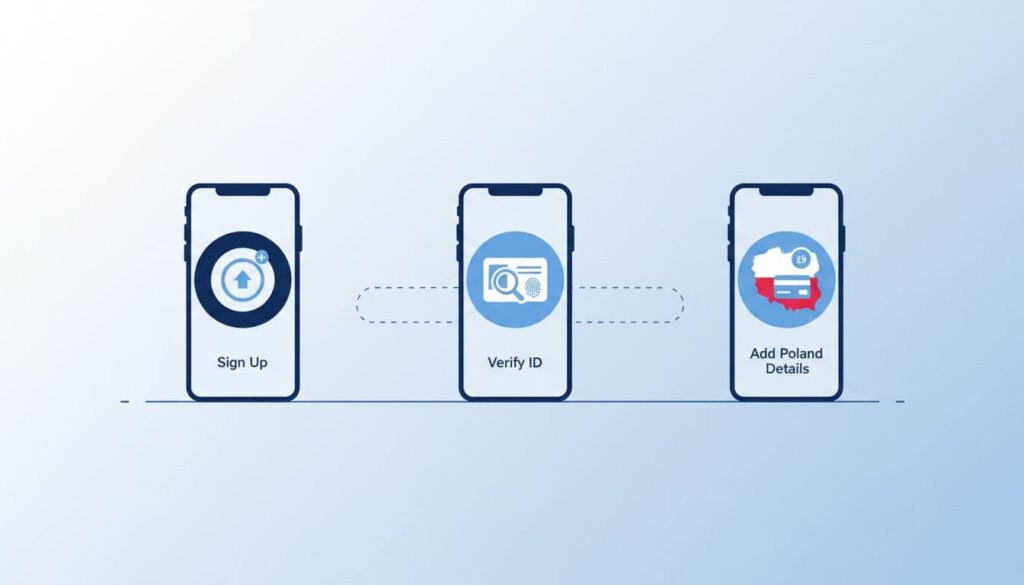
Opening a Wise account takes a few minutes. Wise publishes its own account opening guide. The usual steps follow.
- Create a profile. Choose a personal or business account and select your country of residence.
- Verify your identity. Upload a passport, national ID or driving licence. Wise may ask for proof of address.
- Wait for approval. Review time varies. Wise may request more documents for unusual activity.
- Add a PLN balance. Open the balance inside the app and check which receiving details appear for your profile.
- Order the card if you want one. Remember the 35 PLN issue fee on the Polish pricing page.
Eligibility depends on your country of residence, not on Polish citizenship. Wise decides which features appear for each profile. Two users in different countries can see different options.
How to open a real Polish bank account as a foreigner
Wise lists the documents most Polish banks ask for. Prepare these items before you visit a branch or start an online application.
- A valid passport or national ID card
- Proof of your Polish address, if you have one
- Your PESEL number, if you have one
- A residence card, visa, work permit or student confirmation
- A Polish phone number and an email address
- Tax residency information
- Proof of income or employment, if you want credit or an overdraft
A PESEL number helps. Wise says a PESEL is not always required. Wise also says a passport alone can work at some branches, while online applications often need Polish ID. Non-residents face more hurdles, and some banks expect a Polish address.
Wise names five banks in its Poland guide.
| Bank | Account named by Wise | Notes |
|---|---|---|
| Bank Millennium | Millennium 360 | Large bank with branches |
| ING Bank Slaski | Konto w Planie ING Go | Online focus |
| PKO Bank Polski | Not specified | Major bank with a wide network |
| Bank Pekao | Not specified | Traditional services |
| mBank | Not specified | Digital-first bank |
Each bank sets its own rules and fees. Read the fee table of your chosen bank before you apply. Ask whether English-speaking staff can help with the application.
Wise versus a Polish bank
| Need | Wise | Polish bank |
|---|---|---|
| Salary from a Polish employer | Often not accepted as a main account | Standard choice |
| Cash deposits | Not offered | Offered |
| Loans and overdrafts | Not offered | Offered with income proof |
| Converting currency at the mid-market rate | Core strength | Bank margins vary |
| Sending money abroad | Core strength | Fees and rates vary |
| Opening without a Polish address | Possible in supported countries | Harder at many banks |
| Utility bills and local admin | Limited | Standard choice |
Use both when your life crosses borders. Keep a Polish bank account for salary, rent and bills. Keep Wise for foreign income, currency conversion and travel spending.
A simple setup for expats and freelancers
- Open a Wise account before you arrive. Verification takes time, so start early.
- Receive foreign income in a currency Wise supports for your profile.
- Convert to PLN inside Wise when the rate suits you.
- Send the PLN to your Polish bank account for rent and daily costs.
- Review fees every quarter on the Wise pricing page.
This setup avoids the main weakness of Wise. Your landlord and employer see a standard Polish account. You still gain the low conversion cost.
Risks and limits to watch
- Feature changes. Wise paused new PLN account details. Features can vanish or return.
- Verification delays. Wise may ask for extra documents before large transfers.
- No credit. Wise does not provide loans or overdrafts on a standard balance.
- Local acceptance. Some Polish firms refuse accounts held outside a Polish bank.
- Fee drift. Rates and charges change over time.
Tax rules also matter. A Wise balance does not remove your duty to report income in the country where you live. Ask a tax adviser about your own case.
Frequently asked questions
Does Wise offer a Polish IBAN?
Wise says Wise is not a bank and does not provide a Polish bank account. The Wise help page on PLN account details does not confirm a Polish IBAN, and new PLN account details are paused. Check inside your own Wise account for the details you can use.
Can I open a Wise account without a Polish address?
Wise opens accounts based on your country of residence. You do not need Polish citizenship. Confirm your country is supported during signup.
Do I need a PESEL to open a Polish bank account?
Not always. Wise states a PESEL can make the process easier. Some branches accept a passport, but online applications often need Polish ID.
Can my employer pay my salary into Wise?
Ask your employer. Many Polish employers expect a Polish bank account number. A Polish bank account removes this risk.
Is a Wise account free?
Opening is free and Wise lists no monthly fee in Poland. You pay for conversions, card issue and ATM withdrawals above the free allowance.
Can I deposit cash into Wise?
No. Wise does not accept cash deposits. Use a Polish bank for cash needs.
Conclusion
Wise is a strong tool for converting and moving money to Poland. Wise is not a Polish bank, and Wise has paused new PLN account details. Use Wise for foreign income and travel spending. Open a Polish bank account for salary, rent and local admin. Prepare your passport, address proof, residence documents and PESEL, then compare the banks above. Confirm every fee on the official Wise and bank pages before you commit.
