Paddle Affiliate Marketing With Rewardful: Check Fit First
Affiliate programs are easy to announce and expensive to repair after launch. Your payment product, referral record, commission rules, and payout process must agree before a partner shares a link. Paddle affiliate marketing with Rewardful h...
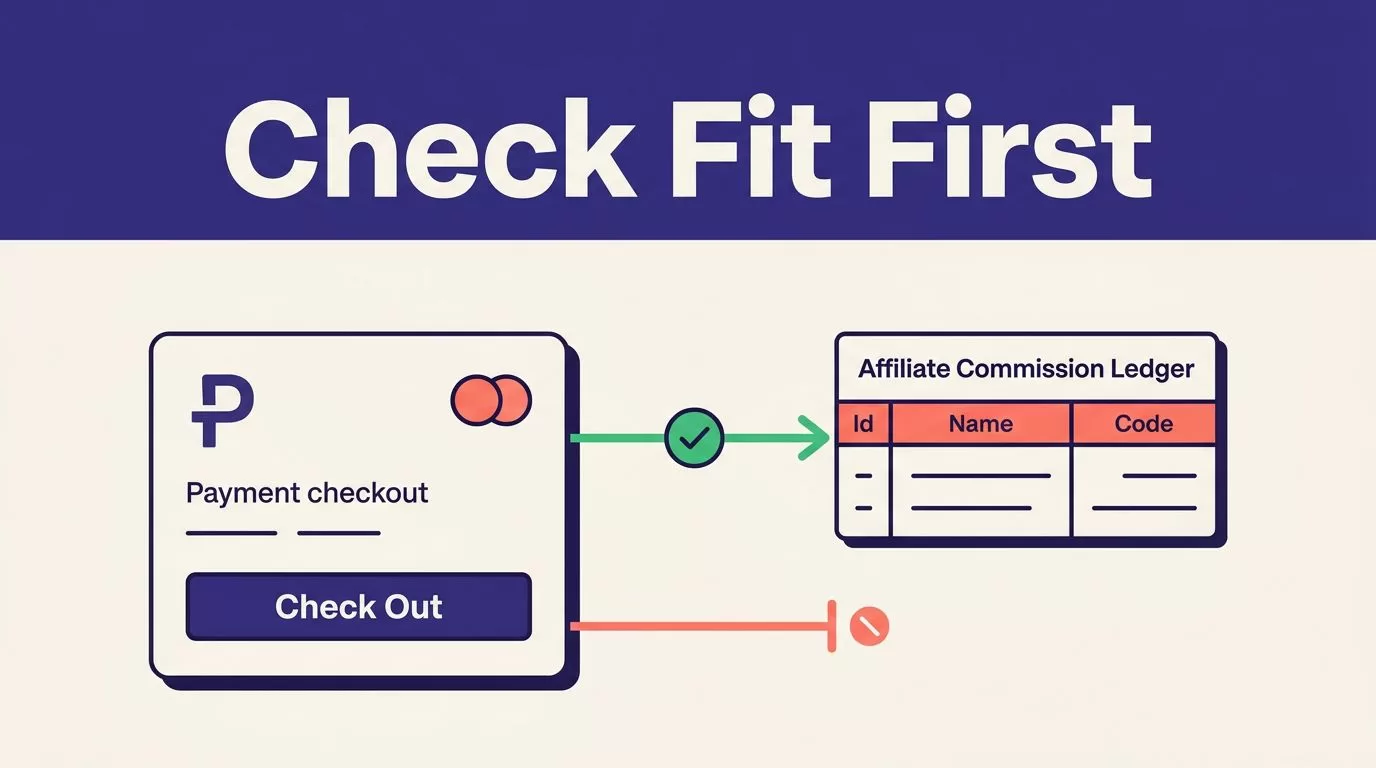
Affiliate programs are easy to announce and expensive to repair after launch. Your payment product, referral record, commission rules, and payout process must agree before a partner shares a link.
Paddle affiliate marketing with Rewardful has one hard limit. Rewardful supports Paddle Classic, not Paddle Billing. That distinction decides whether you can use this setup at all.
Check the payment product first. Then build the affiliate system around verified paid revenue, not clicks or dashboard activity.
Paddle affiliate marketing starts with product fit
Rewardful’s documented Paddle connection is for Paddle Classic. The setup uses your Paddle public key to connect checkout activity with affiliate attribution and commissions.
Confirm which Paddle product you use
Paddle Billing and Paddle Classic are separate products with separate data. Do not treat them as two versions of the same account.
Paddle says new accounts created after August 8, 2023 use Paddle Billing. New Paddle Classic signups are no longer available. Review Paddle’s Billing and Classic migration guidance before you plan an integration.
If you have Paddle Classic, read Rewardful’s Paddle Classic integration instructions and confirm access to the correct account. Do not assume a Paddle Billing public key will work with the Classic connection.
Choose the route before you recruit partners
A Paddle Classic account can continue with the Rewardful integration and a controlled launch plan.
A Paddle Billing account cannot use Rewardful’s current Paddle integration. Do not invite affiliates, create public links, or promise commissions until you choose a tracking system that supports your checkout architecture.
This is a product decision, not a small implementation detail. An affiliate can send qualified traffic while the payment record fails to connect to the referral. That creates manual disputes and weakens trust fast.
If your team needs to map the payment architecture, attribution rules, and finance workflow before launch, Book A Call.

Set commission rules before you recruit
“20% recurring commission” is not a complete offer. You need to define the revenue base, the commission period, qualification rules, and what happens after a refund.
Decide what revenue qualifies
Use eligible paid subscription revenue as the calculation base. State whether the amount is before or after discounts, taxes, credits, refunds, and currency conversion.
For example, a customer may buy a $100 monthly plan with a $20 discount. If your rule pays 20% of eligible net revenue after discounts, the commission is $16.
| Payment detail | Amount |
|---|---|
| Monthly plan price | $100 |
| Discount applied | -$20 |
| Eligible subscription revenue | $80 |
| Affiliate commission at 20% | $16 |
The same customer produces $192 in commission across 12 paid months at that price. That only applies if the account stays paid and your program pays recurring commissions for a full year.
Exclude test accounts, internal domains, free plans, failed payments, disputed charges, and one-time implementation fees unless you intend to reward them.
Set attribution and ownership rules
Define the cookie period and decide who gets credit when multiple affiliates reach the same buyer. State how coupon codes affect ownership. Also state whether self-referrals and purchases by related companies are prohibited.
Rewardful’s own published program uses a 90-day cookie and lifetime commissions while the referred customer remains paid. Read its affiliate terms and conditions, but do not copy those terms without modeling your own margins and refund exposure.
Before launch, settle these decisions in writing:
- State if commissions apply to gross invoices, discounted invoices, or net paid revenue after refunds.
- Set a clear end date for recurring commissions, such as 12 paid months or the full paid lifetime.
- Define what happens after upgrades, downgrades, pauses, credits, annual plans, and currency changes.
- Publish one rule for competing affiliate links, coupon claims, employee purchases, and self-referrals.
Connect Rewardful and test the full payment path
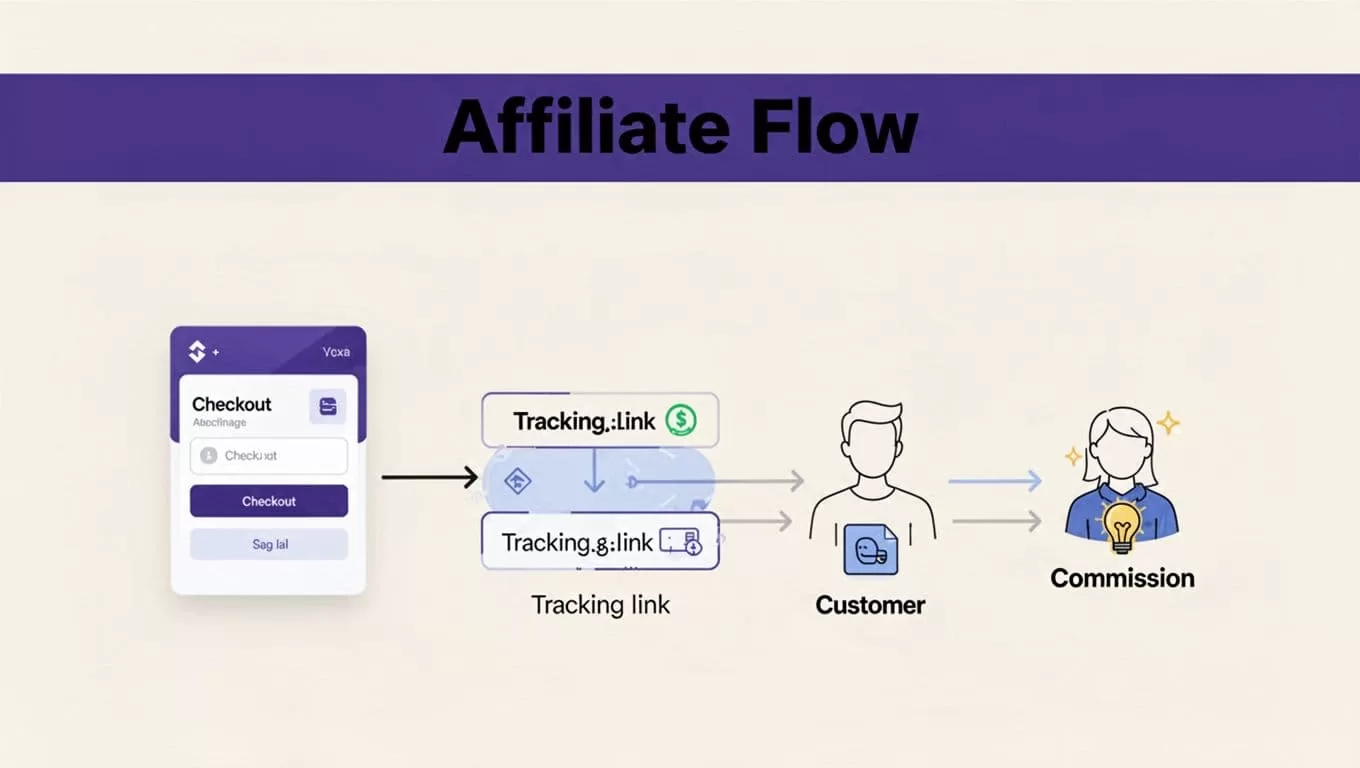
A working Paddle affiliate marketing workflow has four records that must match: the affiliate, the referred customer, the Paddle payment, and the commission.
Use the documented Paddle Classic connection
Start inside Rewardful and use its Paddle Classic connection flow. Rewardful’s published process tells you to connect Paddle and provide the Paddle public key.
Do not replace this setup with instructions written for Stripe, another billing tool, or a custom checkout. The payment objects and referral handoff can differ.
Once connected, the intended sequence is simple. An affiliate shares a tracked link. A visitor arrives, subscribes through Paddle Classic, and the completed payment is matched to the referral. Rewardful then calculates the commission under your program rules.
Run controlled referral tests
Do not launch after seeing a single green status message. Test the exact path a real buyer will use.
Open a fresh private browser window. Use a test affiliate link. Complete a controlled subscription through your approved internal process. Then compare the referral, customer, payment amount, and commission amount across Rewardful and Paddle.
Test more than the first invoice. Include a renewal, a discounted purchase, a cancellation, and a refund when your process allows it. Check that the commission follows the rule you published.
Keep a short test log with the referral URL, timestamp, customer identifier, Paddle transaction reference, expected commission, actual commission, and reviewer decision. A screenshot helps, but the transaction and referral IDs are what finance needs later.
Approve affiliates with a clear promotion policy
An affiliate application is not proof of a useful distribution channel. Ask applicants where their audience comes from and how they plan to promote the product.
Review the traffic source
A newsletter creator, technical reviewer, community operator, and integration consultant may each fit a SaaS offer. A blank application with no site, audience, or promotion method does not.
Ask whether the partner uses content, paid ads, email, communities, social channels, or coupon sites. Review examples of their work before approval. Set rules for branded search, paid search, unsolicited email, misleading discounts, and trademark use.
Start with a small approved group. You need feedback on tracking, buyer fit, and support load before you open the program widely.
Require disclosures near recommendations
Affiliates should clearly state that they may earn a commission when they recommend your product. The disclosure should sit near the recommendation, not in a buried profile page or the final line of a long description.
Your program terms should also explain prohibited claims, accepted marketing channels, data-use restrictions, and how affiliates can contact support. Keep the rules readable.
Tax reporting, contractor classification, withholding, and record retention depend on your location and affiliate arrangement. Get qualified legal and tax advice for those decisions.
Hold commissions until revenue is settled
The first payment is the start of the customer lifecycle. Refunds, chargebacks, disputes, and failed renewals can change the amount you should pay.
Set a review period for refunds and chargebacks
Do not pay a commission on day seven if your product has a 30-day refund window. Set a payout schedule that gives payments time to settle.
Rewardful’s Paddle Classic documentation does not spell out an exact automatic reversal process for every refund or chargeback case. Treat refund-related changes as review items until you have tested the behavior and confirmed it against your Paddle records.
A paid subscription can later become a refunded subscription. A due commission can later become a hold. Record the reason, owner, and final decision for every exception.
Reconcile before you mark a payout paid
Exporting due commissions is the start of the process. Compare each row with the Paddle transaction record before money leaves your account.
Rewardful’s commission payment guide covers CSV exports for PayPal, Wise, and generic payout files. It also describes marking completed payouts as paid.
Keep one fixed earnings record. Each row should include:
- The affiliate, customer, campaign, content source, and original referral details.
- The Paddle transaction ID, plan, invoice amount, discount, refund status, and commission rule.
- Pending, approved, reversed, held, due, and paid status with the payment date and reference.
- The reviewer, exception reason, and any correction made after the original record.
Keep original values unchanged. Store corrections in separate fields or rows so you retain an audit trail.
A payout export is a work queue, not proof that every commission is final.
Measure approved earnings, not clicks
Clicks show interest. Paid subscriptions with confirmed attribution show commercial value.
Track the revenue that survives review
Use a simple calculation: net affiliate earnings = approved percentage commissions + approved fixed commissions – reversals.
Review results by content URL, affiliate, traffic source, campaign, plan, buyer location, and checkout path. A partner with fewer clicks may produce more accepted revenue because their audience has stronger buying intent.
Track commission expense as a share of accepted eligible revenue. Also track missing referrals, duplicate claims, self-referral attempts, refund reversals, and time spent resolving payout disputes.
Change one variable at a time
Pilot the process with 25 recent referred customers when volume allows. Include normal renewals, a cancellation, a discounted sale, a refund, and an unsuccessful payment.
When you change a commission rule, checkout flow, landing page, or affiliate policy, keep the last trusted reconciliation file. Do not overwrite your baseline with an untested configuration.
A process that saves ten minutes of spreadsheet work but creates thirty minutes of payout corrections has failed. Paddle affiliate marketing should produce records your growth and finance teams can both verify.
Final thoughts
Rewardful can support an affiliate program with Paddle Classic, but it does not support Paddle Billing. That product check comes before every commission model, partner invitation, or payout file.
Build the program around verified paid revenue. Test the referral path, hold commissions through your risk window, and reconcile every payout against the original payment record.
The strongest affiliate program is not the one with the most clicks. It is the one with accepted commissions and clean payout records.
