Rewardful Bulk Payouts: A Controlled SaaS Workflow
Affiliate commissions look simple until a payout file reaches finance. One wrong account, duplicate row, or refund can turn a routine payment day into a support queue. Rewardful bulk payouts work when you treat them as a controlled operatin...
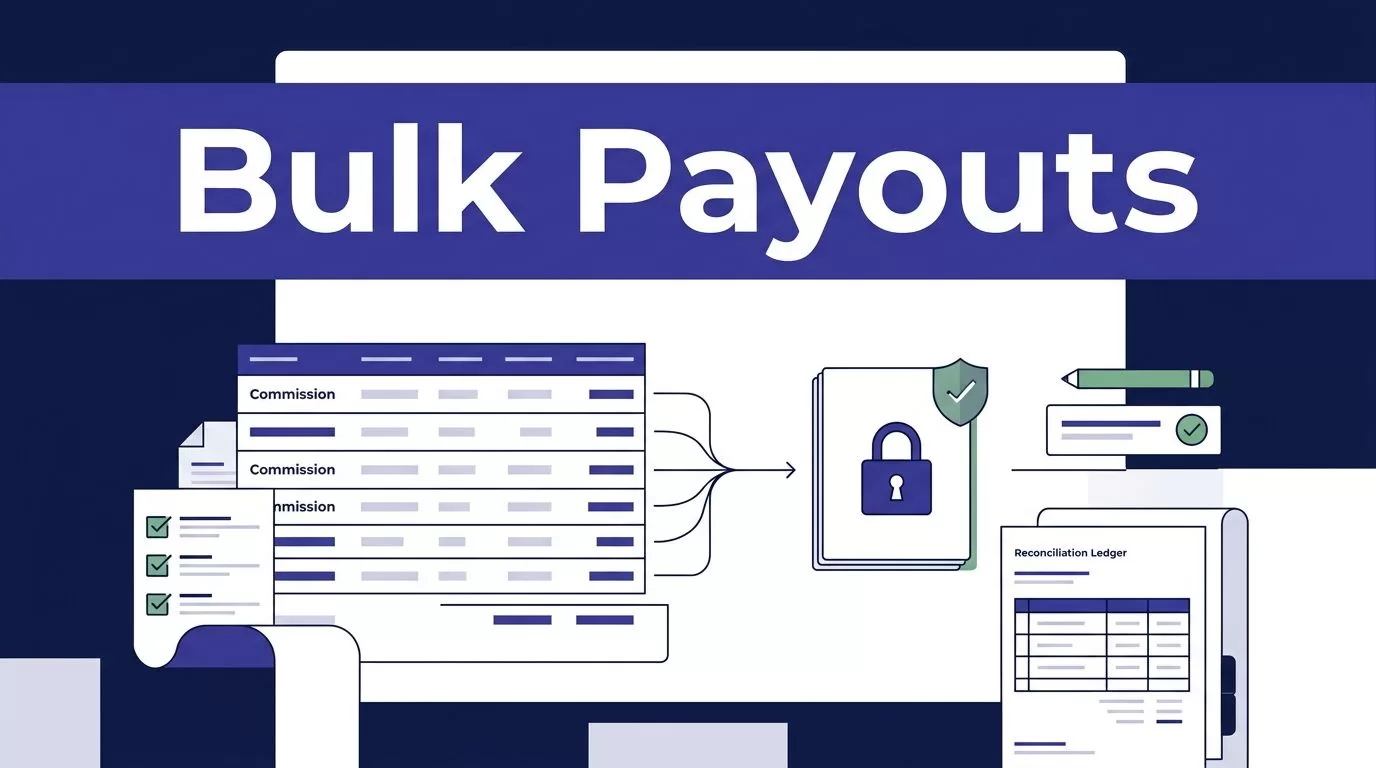
Affiliate commissions look simple until a payout file reaches finance. One wrong account, duplicate row, or refund can turn a routine payment day into a support queue.
Rewardful bulk payouts work when you treat them as a controlled operating process, not a dashboard task. Start with reviewed due commissions, validate each recipient, fund one locked batch, then keep proof of every decision.
A completed payout run is not the goal. A payout batch your team can reconcile is.
SET UP THE CONTROL LAYER
Rewardful calculates commissions from Stripe invoice payments. Its commission payment process explains that commission amounts reflect the amount actually paid, after discounts or account-balance adjustments.
Commissions begin as pending. Rewardful’s default pending period is 30 days after a sale, and campaigns can use a minimum payout threshold. Do not treat a new referral or an approved affiliate as payment approval.
Your Rewardful bulk payouts policy
Write the payment rules before you create a batch. Define the payout cutoff date, pending period, minimum threshold, payment currency, and approved payment methods.
State who can release a payout. State who can approve an exception. Finance should not need to interpret affiliate-manager comments during a payment run.
Check these rules against your refund policy. A referral can generate recurring commissions, then later produce a refund or dispute. Your payout policy needs a clear hold period that accounts for that risk.
A due commission is a candidate for payment. It is not proof that the recipient record is current.
Choose the distribution route
Rewardful supports different payment approaches. Its Managed Payouts option lets you fund a single payment, then Rewardful distributes funds to affiliates through available channels.
You can also pay commissions with an external provider. Rewardful’s commission payment guide describes merchant-controlled payouts and notes that many customers use PayPal or Wise.
The right route depends on your Rewardful account access, payout provider, recipient country, currencies, fees, and tax process. Confirm live eligibility before you promise affiliates a payment date.

BUILD ONE LOCKED PAYOUT BATCH
Create a batch only after your cutoff date passes. Do not add new commissions after review starts. New records belong in the next cycle.
Export due commissions, not affiliate activity
Your payment file should contain individual commission records with a due status. Do not build it from clicks, referrals, dashboard totals, or active affiliate lists.
Keep these fields in the batch ledger:
- Rewardful commission ID and affiliate ID
- Customer or Stripe invoice reference where available
- Commission amount, currency, and due date
- Payment method and payout-provider recipient ID
- Batch ID, reviewer, and approval timestamp
- Final provider reference and completed payment status
Save the original report before edits. Then create a reviewed working version. This gives your team a source file and a payment decision file.
Validate recipient details before funding
Check legal payee name, selected payment method, currency, and recipient account details. Use the payout provider’s current requirements for country, identity, and tax information.
Do not pull bank or PayPal details from an old email thread. Let affiliates update details through your approved process, then have an owner confirm the change before the batch is released.
If a recipient record is incomplete, move it to an exception queue. Do not replace missing data with a guess or send funds to a previously used account without confirmation.
PAUSE REFUNDS, DISPUTES, AND FAILED TRANSFERS
A bulk payment workflow needs a stop path. Otherwise, an exception becomes a rushed manual fix after money moves.
Handle refunds and disputed commissions first
Before funding, compare the selected Rewardful commissions with Stripe invoices and recent refund activity. Rewardful recalculates commissions when Stripe refund webhooks arrive. A full refund removes the commission record, while a partial refund changes the amount.
Hold disputed commissions outside the payment batch. Record the issue, owner, date opened, and required evidence. Release it only when the investigation closes.
If an affiliate was already paid for a refunded transaction, record the recovery decision. Rewardful’s terms describe adjusting the amount against a future payout when applicable. Don’t hide the adjustment inside a new commission row.
Treat transfer failures as open exceptions
A submitted payout is not a completed payout. Wait for the selected provider’s confirmed status and payment reference.
When a transfer fails, keep the original payment attempt intact. Log the provider error, contact the affiliate if details need correction, and create a new attempt linked to the first one.
Use limited retries for temporary provider errors. Do not retry a failed identity check or invalid account detail until someone corrects the record.
KEEP AN AUDIT TRAIL THAT FINANCE CAN USE
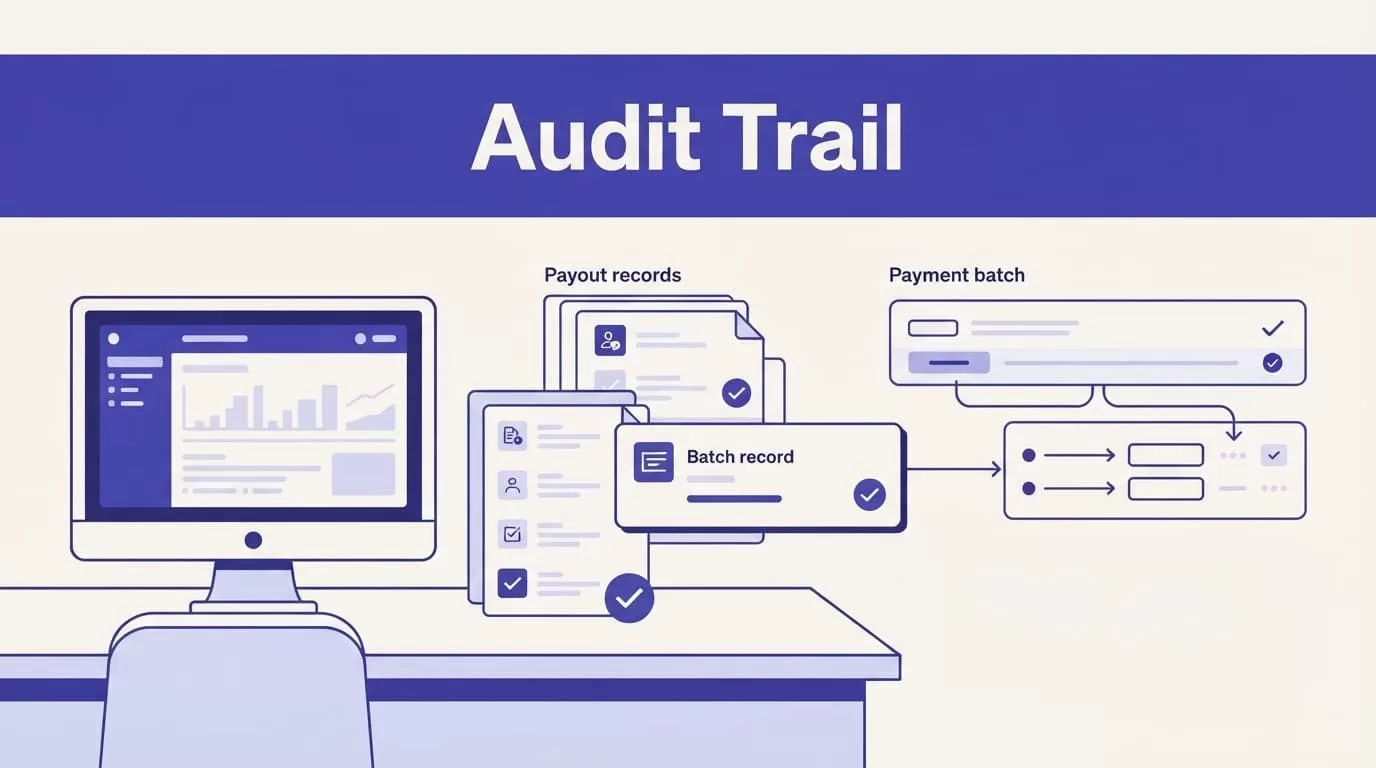
Your payout history should answer four questions fast: what you paid, why you paid it, who approved it, and where the money went.
Store the batch record and its evidence
Give every batch a unique ID before funding. Store the cutoff period, total amount, record count, currency, approver, provider, and final payment reference.
For each affiliate, retain the commission IDs included in their payment. Keep the original Rewardful export, reviewed file, provider confirmation, refund checks, exception notes, and reviewer decision.
Do not overwrite old records. Save the proposed batch and final batch as separate versions. This matters when finance needs to explain a payment weeks later.
Block duplicate payments before they happen
Use a payment key that combines the batch ID and affiliate ID. Link that payment to every commission ID it covers. Before releasing a new batch, check whether any selected commission already belongs to an open, paid, or failed batch.
Rewardful lets merchants reverse a payout that was mistakenly marked paid back to due status. That is useful for correction, but it is not a duplicate-payment system by itself.
Run a small approved batch before you move a full monthly payout cycle. Track cleared payments, incomplete recipient records, duplicate flags, transfer failures, review minutes, and correction time. Accepted payouts matter more than payment actions.
If affiliate, finance, and billing data sit in separate systems, Book A Call to map the batch fields and exception process.
FINAL THOUGHTS
Rewardful bulk payouts become manageable when every commission has a status, every payment has a batch ID, and every exception has an owner.
Pay only reviewed due commissions. Validate recipient data before funding. Keep refunds, disputes, and failed transfers outside the normal path.
That control layer protects affiliates, finance, and your SaaS team from the same costly problem: paying the right commission to the wrong record.
