Looking for a Kajabi Alternative? When Skool Fits Better
When I look for a Kajabi alternative, I don’t start with price alone. I start with the job the platform needs to do. If I want a paid community that feels alive every day, Skool deserves a hard look. If I need websites, funnels, email...
When I look for a Kajabi alternative, I don’t start with price alone. I start with the job the platform needs to do.
If I want a paid community that feels alive every day, Skool deserves a hard look. If I need websites, funnels, email automations, and deeper business control in one place, Kajabi still holds ground. That split matters more than any headline feature.
Skool vs Kajabi starts with the kind of business I’m building
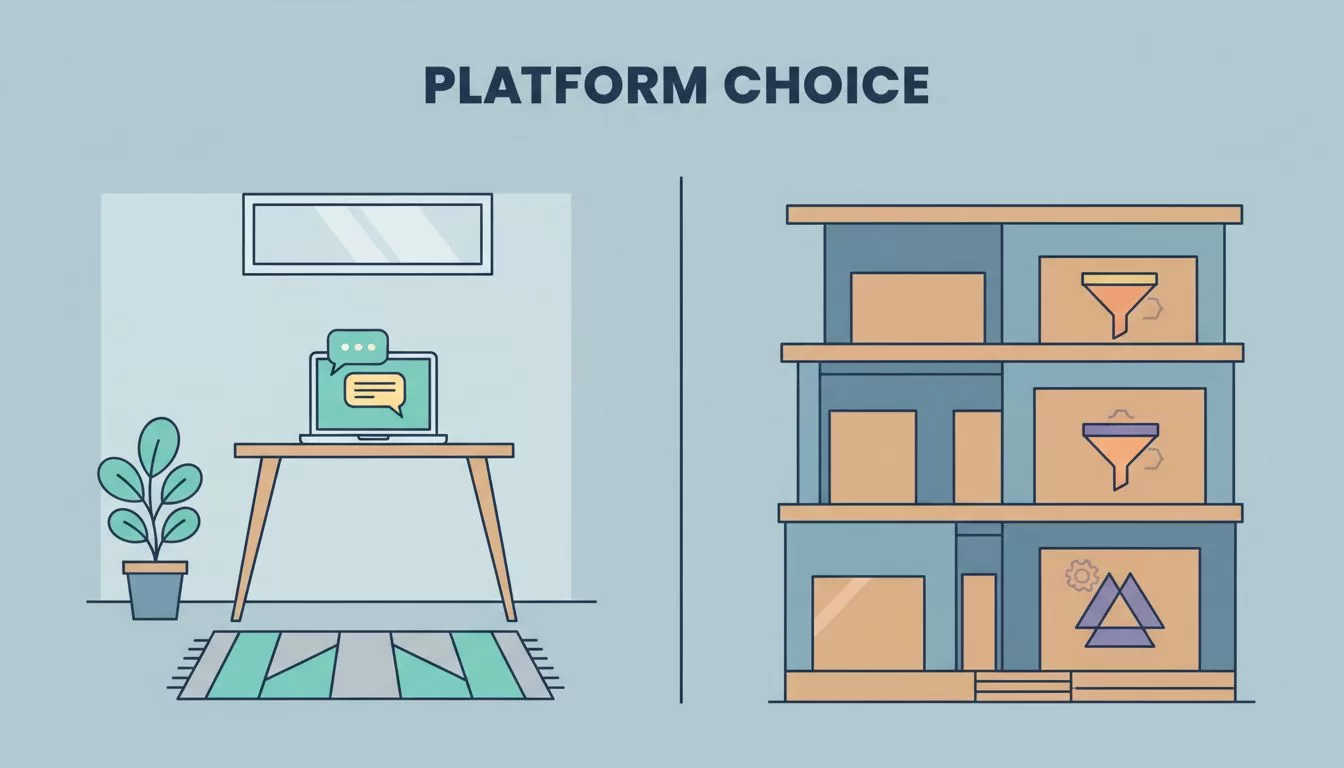
I see Skool and Kajabi as two different buildings. Skool feels like a clean studio apartment, simple, fast, and easy to live in. Kajabi feels like a full house, bigger, more capable, and more work to set up.
As of March 2026, Skool starts at $9 per month on Hobby, with a 10% fee, and $99 on Pro, with Stripe-style payment fees. Kajabi starts far higher, around $149 to $179 per month depending on plan and billing, but it charges 0% platform fees. Recent comparisons from Learning Revolution describe the same core divide: Skool is built around community, while Kajabi is built around the full online business.
Here’s the short version I keep in mind:
| Buyer concern | Skool | Kajabi |
|---|---|---|
| Starting cost | Low | High |
| Setup complexity | Simple | Broader, more moving parts |
| Community feel | Strong | Solid, less sticky |
| Course delivery | Clean, basic | Richer product options |
| Email and funnels | Minimal | Strong |
| Website and landing pages | Limited | Built-in |
| Fees at scale | Can add up | No platform fee |
The takeaway is simple. Skool is not Kajabi with a smaller bill. It’s a different bet.
If my business is community-first, Skool makes sense fast. If my business is marketing-heavy, Kajabi usually makes more sense.
Where Skool wins, especially for memberships and engagement
Skool shines when the community is the product, not a side room. The feed, gamified points, leaderboards, events, and simple course area create a loop that keeps members coming back. That matters because a quiet membership feels like a gym nobody visits.
Its mobile experience also helps. Public 2026 comparisons keep praising Skool for daily check-ins on phones, and that tracks with how community software should feel. I want members to post, reply, and jump into lessons without friction. Skool is better at that rhythm than Kajabi.

Courses inside Skool are easy to organize, and that’s both a strength and a limit. I can upload lessons, structure modules, and bundle learning with membership access. However, the course experience stays fairly plain. If I need polished assessments, deeper customization, or a more layered product catalog, Kajabi gives me more room.
I also like Skool for fast setup. I can be up and running without building a site maze first. That’s why many creators, coaches, and paid group leaders see it as the easier road. A recent Skoolmakers comparison makes a strong case for this simplicity, and I agree with that part.
Still, simple has a cost. Skool’s memberships work best when I’m selling access to a focused community with supporting lessons. It’s less comfortable when I’m trying to run a full digital business from one dashboard.
Where Kajabi still earns its price
Kajabi wins when I need the business machine around the content. Email campaigns, advanced automation, upsells, abandoned-cart flows, landing pages, and site design are not side features there. They’re the point.
That changes the math. Yes, Kajabi costs more upfront. Yet if I would otherwise pay for Skool plus Kit, a landing page tool, Calendly, and extra automation, the gap shrinks fast. In some cases, the Skool stack ends up costing more in money, time, and setup headaches.
Kajabi also scales more clearly for larger operations. Its higher plans support bigger contact counts, more products, and more room for teams. Skool may let me start cheaply, but its fees can bite once revenue grows. Meanwhile, Kajabi’s 0% platform fee becomes more attractive as sales rise. Independent roundups like DigiNo’s 2026 comparison land in the same place.
Analytics are another dividing line. Skool Pro has better reporting than its low tier, but Kajabi still gives me deeper insight tied to campaigns and automations. Even then, I don’t expect either tool to replace dedicated revenue reporting. If recurring income matters, I’d still consider a layer like subscription analytics using Baremetrics to track churn, MRR, and growth more cleanly.
Kajabi isn’t perfect, though. Its community feels more functional than magnetic. I can host discussions there, but I don’t get the same clubhouse energy that Skool creates.
How I’d decide between Skool and Kajabi
I’d choose Skool if…
- I’m building a paid membership where conversation matters as much as the lessons.
- I want low setup stress and a faster launch.
- I can live without advanced funnels, heavy email automation, and a custom website.
I’d choose Kajabi if…
- I sell courses, coaching, and digital products through a full marketing funnel.
- I want my website, landing pages, checkout flows, and email system in one place.
- I expect to scale beyond a single core offer and don’t want revenue-share fees eating margin.
There’s also a middle path. If I love Skool’s community feel but need more sales power, I can pair Skool with outside tools. That stack can work well. I just wouldn’t pretend it’s simpler than Kajabi.
Skool can be a smart Kajabi alternative, but only when I need a community-first business. That’s the heart of the choice.
If I’m selling belonging, momentum, and daily engagement, I’d lean toward Skool. If I’m selling a full online business system with stronger marketing under one roof, I’d keep Kajabi on the table.
Before moving anything, I’d map the next 12 months, not today’s monthly fee. That one step usually makes the right answer obvious.
