Automating Agency Workflows with Twin.so
Running an agency often feels like a balancing act where client demands frequently outpace your team’s capacity. You spend hours on repetitive manual tasks, like generating performance reports or copying data between platforms. This g...
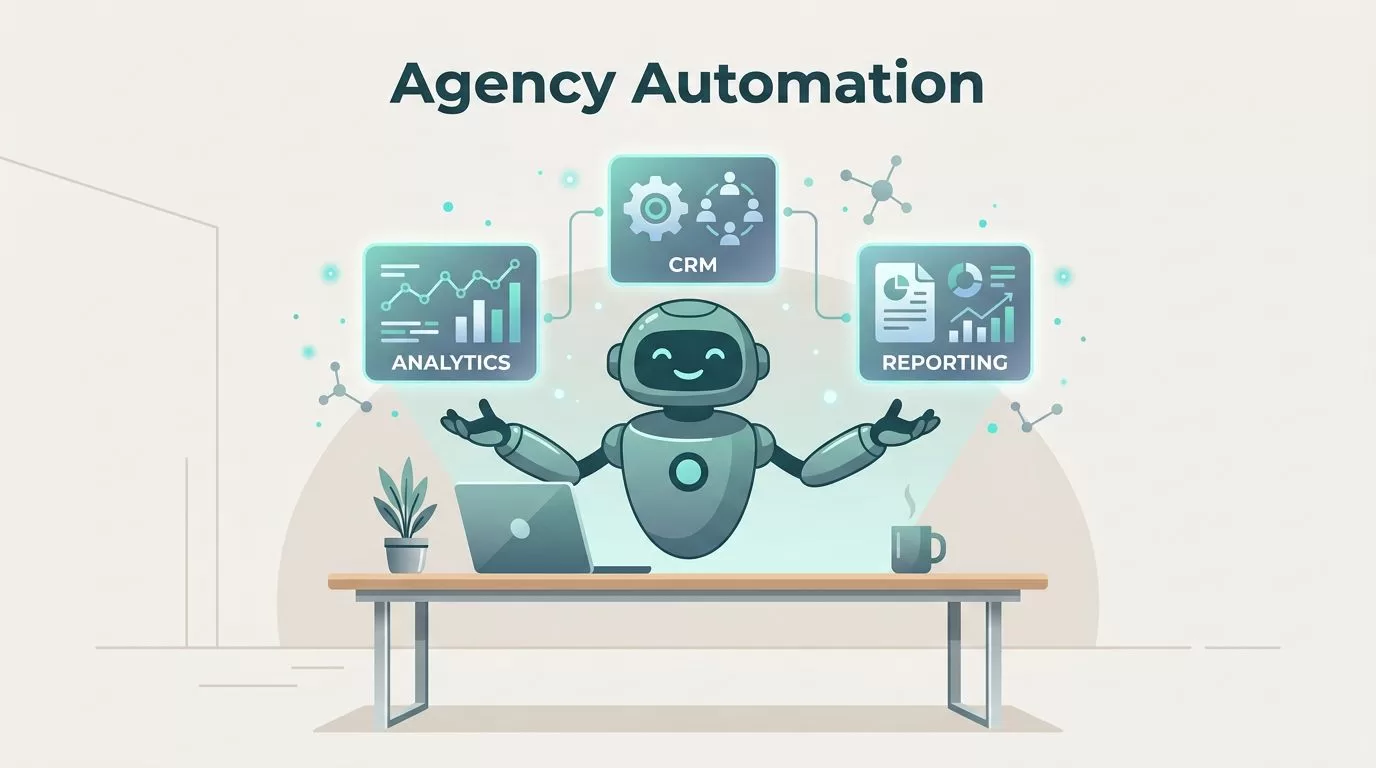
Running an agency often feels like a balancing act where client demands frequently outpace your team’s capacity. You spend hours on repetitive manual tasks, like generating performance reports or copying data between platforms. This grind eats into the time you could spend on strategy or business growth. Adopting agency automation software is the natural remedy for this operational bottleneck.
Platforms like Twin.so change how agencies handle these burdens. Instead of forcing your team to act as manual middleware between tools, you deploy autonomous agents to bridge the gaps. These agents operate 24/7, executing tasks with precision so your team can focus on client relationships.
Deploying Your Agency Automation Software
Getting started with a platform like this requires a shift in how you view your tech stack. You are not just connecting two databases; you are creating a digital teammate. To succeed, begin by mapping out your highest-frequency, lowest-value tasks. These are your best candidates for early deployment.

Before you configure your first agent, ensure you have documentation for your current manual processes. You should know exactly what inputs exist and what the expected output looks like for every workflow. For a deeper look at the platform capabilities, refer to the official Twin documentation to understand the underlying agent mechanics.
Mapping Out Client Onboarding
Client onboarding is a prime candidate for automation. It involves multiple stakeholders and strict data requirements. You often need to provision new accounts, send welcome emails, and create shared folders simultaneously. A manual approach leaves room for human error, such as missing a step or forgetting a key integration.
When you use an agent to manage this, you define the sequence once. The agent handles the account creation, triggers the invite emails, and confirms completion. It maintains consistency across every new sign-up. If you find yourself struggling with pipeline organization before the setup even begins, consider how modern staffing agency CRM tools handle similar multi-step data flows.
Handling Reporting and Lead Routing
Generating monthly performance reports remains one of the most draining tasks for marketing and growth agencies. Analysts pull data from platforms like Meta Ads, Google Analytics, or Ahrefs, clean it, and format it into a presentation. This is work that an autonomous agent handles effectively. By connecting your source tools, the agent monitors data fluctuations and prepares summaries for your review.
Lead routing is another area where speed defines your conversion rate. When a lead enters your CRM, your agent can qualify the input against your criteria, assign it to the correct account manager, and send a notification instantly. This removes the friction of manual triage. To see how these concepts integrate into broader operational structures, you can read more about streamlining recruitment processes through similar automation triggers.
Configuring Integrations and Security
Successful deployment relies on how well you connect your existing toolset. Modern platforms often provide built-in connectors for common services like HubSpot, Notion, or Slack. If an API exists for your tool, the system can generally tap into it. For niche platforms or local portals, some agents use embedded browser technology to navigate and interact with interfaces just as a human would.
Security remains a primary concern for any agency handling client data. You must verify the permissions granted to your agents. Limit access to only the specific data streams needed for their tasks. When you rely on these systems to bridge tools, it is also important to maintain a clear audit log of actions taken. This keeps you informed about how your agency automation software interacts with sensitive environments.
Testing and Scaling Your Agents
Never move an automation straight into a live client environment without a test phase. Run your agents on a staging workspace or a sandbox account first. Monitor the initial outputs to ensure the logic flows correctly and that the agent interprets inputs as expected. Small adjustments to your instructions often make a large difference in performance.
Once a flow proves reliable, you can replicate it for other clients. If your initial agent manages reporting for one account, you can often clone that logic for others with minimal adjustments. This scalability is where the return on investment truly appears. You stop building one-off solutions and start creating repeatable, scalable operations. For those interested in how to refine these configurations as your agency grows, you can study guides on optimizing recruitment agency software to learn about performance tuning and dashboard management.
Maintaining Your Automated Workforce
An autonomous agent is not a set-it-and-forget-it tool. APIs change, client portal layouts shift, and data sources move. You must treat your agents as active team members who occasionally need guidance. Monitor the success rates of your workflows weekly. If a task fails, identify the cause, update the instructions, and redeploy the agent.
Good maintenance also involves keeping your list of integrations clean. Remove access for tools you no longer use and update credentials for those that require periodic re-authentication. By keeping the system tidy, you ensure the agents continue to operate at peak efficiency. This proactive approach prevents small technical glitches from growing into client-facing issues.
Final Thoughts
Adopting agent-based automation fundamentally shifts the focus of your agency. You move from spending your time executing tasks to managing the systems that perform them. By focusing on high-value outcomes rather than manual input, you protect your margins and create the capacity needed for growth.
Start with a single, high-pain process. Prove the value through one successful deployment, then expand your footprint across your other services. You now have the knowledge to build a more efficient, autonomous operation. Take the first step by choosing a single workflow to transition today.
