Automate Upsell Campaigns Effectively Using Twin.so
Most SaaS companies and e-commerce platforms rely too heavily on acquiring new accounts while ignoring their existing user base. Your current customers already know your product, trust your brand, and represent the path of least resistance...
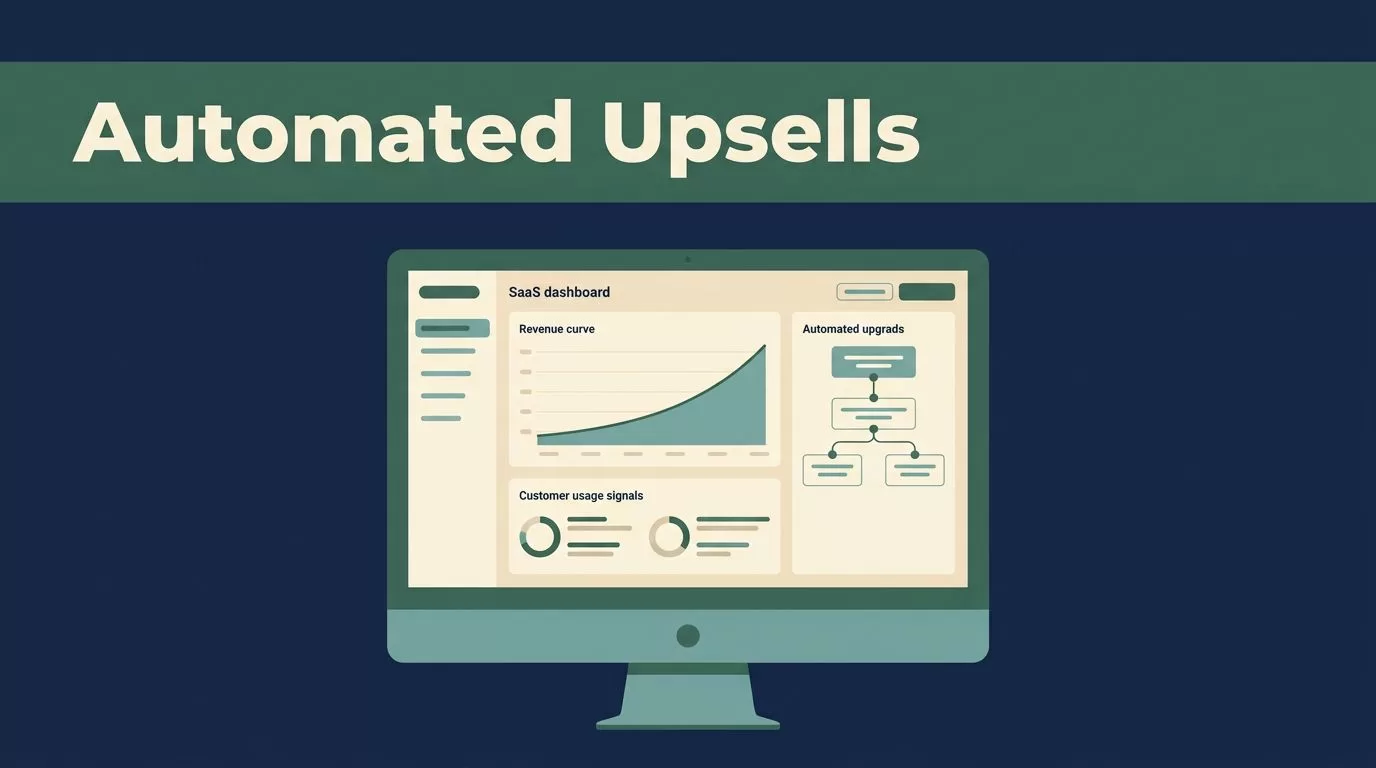
Most SaaS companies and e-commerce platforms rely too heavily on acquiring new accounts while ignoring their existing user base. Your current customers already know your product, trust your brand, and represent the path of least resistance for revenue growth. When you implement automated upsell campaigns, you stop leaving money on the table and start extracting real value from active subscriptions.
Manual account reviews don’t scale. You need a reliable system that triggers timely offers based on real usage patterns, contract milestones, and behavior data. This guide shows you how to build and scale your upgrade workflows using AI agents and automation infrastructure.
Key Takeaways
- Automated upsell workflows target existing users with relevant upgrade offers based on real behavior data rather than guesswork.
- Twin.so replaces rigid node-based tools by using autonomous AI agents that interact with APIs and browser interfaces directly.
- Monitoring key metrics like upsell conversion rate and revenue per customer ensures your campaigns drive profit without harming retention.
- Responsible monetization practices prioritize customer relevance and clear value over aggressive, spammy sales tactics.

Photo by Christina Morillo
Why Traditional Upsell Workflows Fall Short
Traditional marketing automation relies on static email sequences and rigid trigger rules. If a user hits ninety percent of their storage limit, a rule fires an email telling them to upgrade. That approach works for simple triggers, but it fails when you need nuanced context. Rigid builders lack the flexibility to evaluate complex account health, support tickets, and recent feature adoption simultaneously.
Building multi-step expansion loops across separate billing tools, CRMs, and email platforms requires constant maintenance. When an API changes or a field mapping breaks, your upgrade campaigns stall out. Growth teams spend more time debugging workflows than optimizing messaging. You need an execution layer that adapts to your tools without requiring endless custom code.
Setting Up Twin.so for Campaign Automation
Twin.so approaches workflow automation differently than traditional tools. Instead of dragging and dropping connectors onto a canvas, you describe your goal in plain English, and the platform deploys autonomous agents to execute it. This architecture lets you connect your CRM, billing provider, and messaging apps without writing brittle integration scripts.
Autonomous agents can bridge the gap between isolated software tools by reading data, making decisions, and executing multi-step sequences on a schedule or real-world trigger.
To start, define the exact business objective for your agent. For instance, you can instruct your agent to monitor customer account usage daily, identify users who exceed feature thresholds, and draft personalized outreach for your customer success team. Because the platform connects to over two hundred fifty services and can drive browsers when APIs are missing, it handles messy tech stacks easily.
Identifying the Right Triggers for Upgrade Offers
Effective campaigns require precise timing. If you pitch an enterprise tier to a user who just onboarded yesterday, you damage trust. You want to trigger upgrade prompts when a customer hits a natural value inflection point in your software.
Look for clear behavioral signals before sending an upgrade prompt. Track metrics like feature utilization ceilings, team member invitations, API call volumes, and storage thresholds. When a user bumps against these limits repeatedly, they experience the exact pain point your higher tier solves. That moment is when your automated campaign should fire.
- Usage velocity: A customer reaching their monthly active user limit within the first ten days of the billing cycle.
- Feature expansion: A team member attempting to access an advanced reporting module restricted to higher pricing tiers.
- Account maturity: An active subscriber maintaining consistent log-ins and high engagement over a ninety-day window.
For a deeper dive into maximizing customer value, review these detailed strategies SaaS companies use to increase customer lifetime value. Pairing those foundational tactics with autonomous execution helps you capture revenue at scale.
Crafting Personalized Outreach Messages
Generic upgrade emails get ignored. Your automated messaging must reflect the specific value the customer will unlock based on their actual product usage. If an account manager has to rewrite every message manually, the campaign isn’t automated. If the message reads like a robot wrote it, conversion rates drop.
Train your automation agents to pull specific account details before drafting outreach. The agent can reference the customer’s current usage volume, recent support interactions, and industry vertical to tailor the copy. For more advanced strategies on improving account expansion, examine these proven tactics for increasing customer lifetime value in SaaS.
Keep your copy direct, concise, and focused on operational relief. Avoid overly promotional language or fake urgency timers. State clearly what changes for the user when they upgrade and provide a direct path to complete the transaction.
Monitoring Performance and Key Metrics
Launching automated upsell campaigns without tracking performance leaves your revenue growth to chance. You need to measure specific indicators to ensure your expansion loops improve unit economics rather than driving churn.
| Metric | Target Focus | What It Tells You |
|---|---|---|
| Upsell Conversion Rate | Percentage of targeted users who upgrade | Evaluates whether your triggers and offers match user intent |
| Revenue Per Customer | Average expansion revenue added per active account | Measures the financial impact of your upgrade tiers |
| Customer Lifetime Value | Total projected revenue across the customer lifecycle | Confirms long-term health and retention gains |
Small samples require caution during early testing. A high conversion rate on a sample size of five accounts is a lead, not proof. Let your campaigns run long enough to gather statistically valid data across different traffic sources and customer segments before rolling them out company-wide.
Maintaining Responsible Messaging Practices
Aggressive monetization damages brand equity. When automation agents run unsupervised, they can easily cross the line from helpful to harassing. Set hard constraints on how often a customer can receive upgrade communications across email, SMS, and in-app notifications.
If a customer ignores two consecutive upgrade prompts, the agent should back off for at least thirty days. Prioritize customer relevance over forced volume. Sustainable growth comes from helping users access the capabilities they actually need to do their work better.
Conclusion
Automated upsell campaigns turn idle product usage into predictable revenue growth. By replacing rigid rules with autonomous agents, you can monitor account health, trigger timely offers, and personalize outreach without adding headcount. Focus on clear behavioral signals, keep your messaging direct, and monitor your conversion metrics closely to protect customer retention. Deploy your first workflow today and turn active users into long-term expansion accounts.
