Optimizing Checkout Flow Testing with Mida.so
Most ecommerce stores lose potential revenue at the final hurdle. A customer adds items to their cart, reaches the checkout screen, and then abandons the purchase. You might blame the shipping costs or product pricing, but the root cause is...
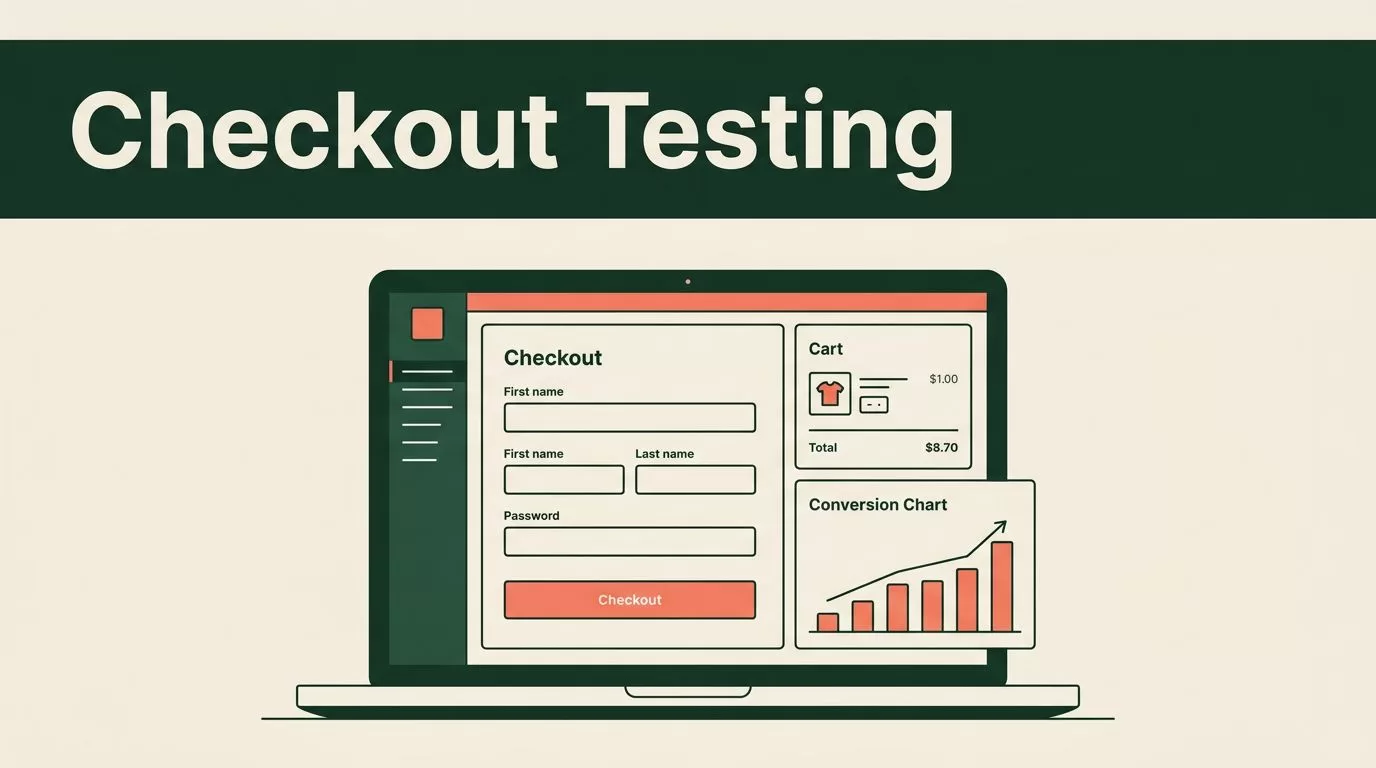
Most ecommerce stores lose potential revenue at the final hurdle. A customer adds items to their cart, reaches the checkout screen, and then abandons the purchase. You might blame the shipping costs or product pricing, but the root cause is often the checkout experience itself. If your flow is clunky, slow, or confusing, users leave. Consistent checkout flow testing is the only way to identify these friction points and convert more browsers into buyers.
Testing your checkout process manually is slow and error-prone. Modern teams use specialized tools to automate this work, isolate variables, and measure the real impact of UI changes. Mida.so provides a structured environment for running these experiments without breaking your production payments. You can isolate specific page elements, adjust field requirements, and validate whether these updates actually lift your conversion rate.
Key Takeaways
- Effective testing targets common friction points like excessive form fields, confusing guest checkout options, and slow page interactions.
- Mida.so allows you to isolate checkout components for experimentation without disrupting backend payment processing.
- Reliable data requires clear test goals, controlled variables, and a focus on high-impact user actions.
- Benchmarking your current performance against industry standards helps prioritize which checkout elements to test first.

Understanding Checkout Flow Testing
You cannot improve what you do not measure. In the context of ecommerce, checkout flow testing is the process of altering specific variables in your payment sequence to observe how users react. A minor change, such as reordering address fields or testing a single-page versus multi-page layout, often produces measurable differences in completion rates. The industry standard for Checkout UX Best Practices 2025 highlights that mediocre design is the primary driver of cart abandonment.
When you use Mida.so, your primary goal is to remove unnecessary barriers. If your checkout requires a customer to create an account before buying, that is a friction point. If your payment form doesn’t auto-format credit card numbers, that is another. You use Mida.so to deploy variations of these components and track the resulting change in successful transactions. The platform acts as a sandbox, allowing you to iterate on the user interface while keeping the actual payment processing stable.
How to Prioritize Your Experiments
You have a limited amount of engineering time and traffic. You should focus your efforts where they provide the most value. Start by auditing your existing checkout page against 14 proven tips for improving ecommerce checkout. If you are missing basics like mobile-friendly inputs or clear progress indicators, fix those immediately before running complex split tests.
Once the obvious issues are resolved, look for data-driven opportunities. Use your analytics to see exactly where users drop off. If 40% of users leave at the shipping information step, your experiment should target that specific page. Mida.so excels here because it lets you configure granular tests for specific sections of your funnel. You don’t need to rebuild the entire site to test a single field label. Focus on variables you can measure easily, such as button color, form length, or the presence of trust signals like security badges.
Setting Up Tests Without Risks
Safety is the primary constraint when testing payment flows. A mistake here results in lost revenue or locked accounts. Never test changes directly in your production environment without a controlled rollout plan. Mida.so handles this by isolating your testing traffic. You define the segments that see your variations, and you maintain complete control over the scope of the experiment.
Implement your tests in small batches. If you change five different elements at once, you will never know which one caused the change in conversion. Change the field layout, gather data for a week, and then analyze the results. For a comprehensive overview of how these tests fit into your broader operations, review the best practices for ecommerce website testing. Always keep a backup of your original checkout configuration. If a test shows a negative impact, you must be able to revert to your baseline state instantly.
Analyzing Results for Conversion Gains
Once your test concludes, you need to determine if the results are statistically significant. A 2% lift in conversion might be a win, or it might be random noise. Mida.so provides the metrics you need to decide. Look at the total number of sessions, the conversion rate for both the control and the variation, and the time spent on the page. If the data shows a clear preference for the variation, you move to full implementation.
If the results are inconclusive, don’t discard the test immediately. Sometimes a change has no impact on conversions but improves other metrics, like reducing support inquiries or speeding up the checkout time. Document everything. Even a failed test provides valuable information about what your customers do not care about. Over time, this repository of experiments builds a picture of your specific audience’s behavior, allowing you to make smarter decisions about your platform development.
Integrating Mida.so Into Your Workflow
Your team should treat checkout testing as a regular maintenance task rather than a one-time project. Integrate Mida.so into your sprint planning. Each month, your team should identify one or two areas of the checkout flow to optimize. This keeps your conversion strategy active and prevents your checkout experience from growing stale while competitors continue to refine theirs.
Ensure that your developers, designers, and marketers agree on the test goals before you click start. If the marketing team wants to add a promotional banner to the checkout page, that is a testable variable. Can that banner exist without distracting the user from completing the payment? Your testing process in Mida.so should be the final arbiter of these decisions. Use data to end internal debates about page layout and content. When you make decisions based on what actually drives sales, your entire organization aligns on growth.
Maintaining Payment Security and Data Integrity
Any modification to your checkout flow must comply with PCI-DSS requirements. Even when testing with tools like Mida.so, you are dealing with sensitive financial information. Do not use test environments to bypass your payment gateway’s security protocols. Your checkout tests should focus on the presentation layer and user interface, not the underlying transaction logic.
If you are unsure whether a specific UI change is secure, consult with your payment processor before you launch the test. Reliable testing platforms prioritize security, but you remain responsible for your store’s data handling. Keep your experiments focused on areas that do not touch raw card data whenever possible. If you must test a payment field, verify that your implementation maintains the tokenization and encryption standards required by your provider. A secure checkout is a trustworthy one, and trust is the ultimate conversion driver.
Conclusion
Checkout flow testing is a direct path to higher conversion rates and better customer experiences. By using Mida.so to manage your experiments, you remove the guesswork and technical friction that often holds ecommerce teams back. You get a clear, reproducible way to test UI changes, measure the results, and optimize your path to purchase.
Focus your testing on the most problematic areas of your checkout funnel. Use data to validate your assumptions and keep your testing scope narrow to ensure clear results. When you maintain a disciplined approach to your site optimization, you turn your checkout from a source of frustration into a consistent engine for growth. The work you put into testing today compound over time as you understand your customers better.
