How I Track Fast-Growing Clean Energy Startups With Exploding Topics
A clean energy startup can move from unknown to funded before most teams finish a quarterly plan. That pace makes old research habits feel slow. I use Exploding Topics to catch movement early, then I check whether the motion is real. Batter...

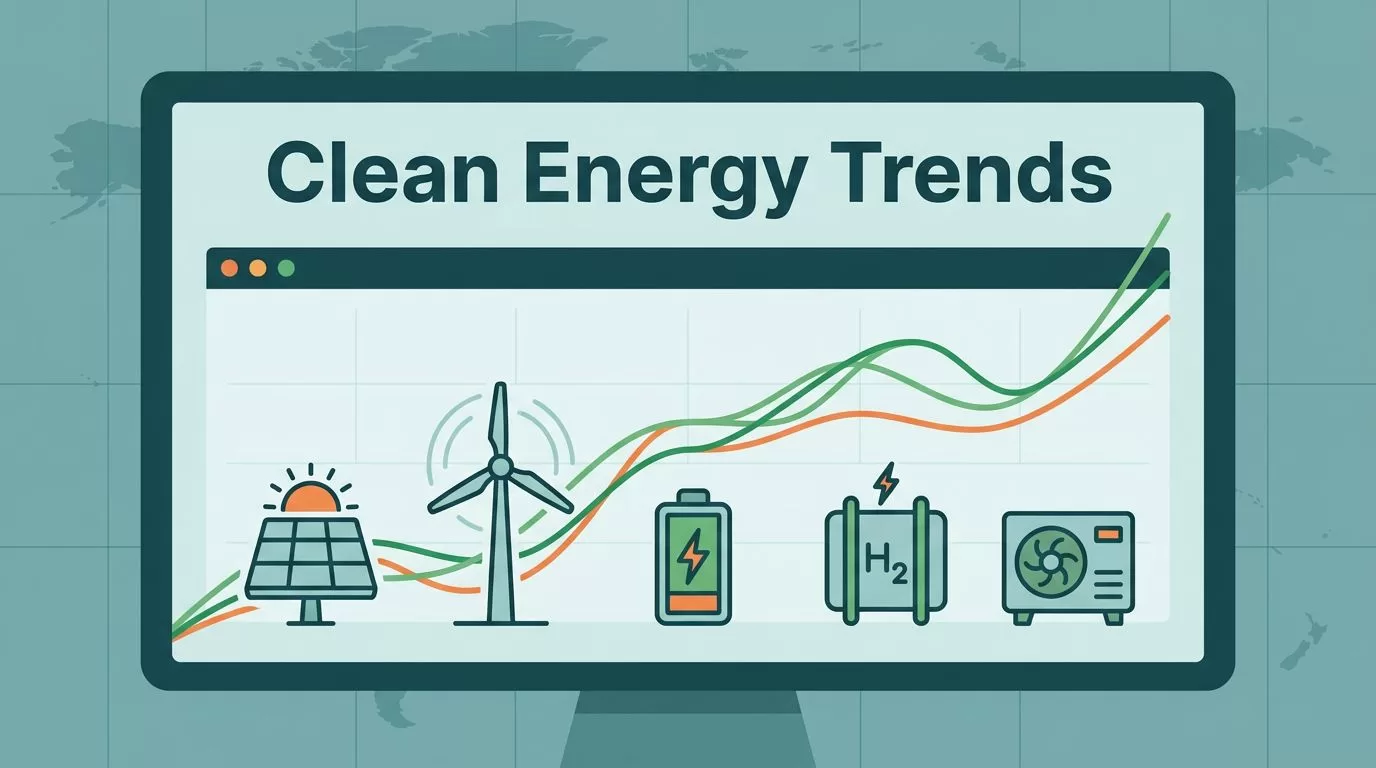
A clean energy startup can move from unknown to funded before most teams finish a quarterly plan. That pace makes old research habits feel slow.
I use Exploding Topics to catch movement early, then I check whether the motion is real. Battery tech, grid software, hydrogen, solar tools, and heat pumps often start as quiet trends before they turn into crowded markets.
Why I start with trend motion, not company names
I don’t begin with logos. I begin with pressure points.
When I open Exploding Topics, I look for categories that keep rising over time, not one-week spikes. A clean energy company matters more when it sits inside a growing pain point, like grid strain, industrial heat, or EV charging gaps. That is why I keep my trend discovery process nearby when I scan new themes.
I also like to compare what I see with broader context. The Exploding Topics renewable energy startup roundup helps me see which parts of the market already have momentum. From there, I ask a simple question, does this category solve a problem buyers already feel?
In April 2026, I’m watching for clean energy startups that reduce delay, cut cost, or improve reliability. Those three things show up again and again in the best early signals.
The clean energy subcategories I watch first


I don’t try to follow every clean tech trend at once. I watch the subcategories where growth can spill into real budgets.
| Subcategory | Why I watch it | What I want to see next |
|---|---|---|
| Battery tech | Storage makes solar and wind more useful | Pilot deals, utility interest, repeat installs |
| Grid modernization | A weaker grid creates a stronger need | Software adoption, utility partnerships |
| EV infrastructure | Charging still has many bottlenecks | Site rollouts, fleet contracts, public funding |
| Hydrogen | Hard-to-abate industries need options | Industrial use, serious capital, policy support |
| Solar software | Faster project work saves time and money | Better permitting, design, and forecasting |
| Geothermal, heat pumps, efficiency | Heat and waste are expensive to ignore | Building adoption, retrofit demand, local programs |
That table is my short list, not my full map. I still pay attention to adjacent areas, such as carbon management and thermal storage, because they often grow alongside those core categories.
For market context, I also keep Trellis’s 2026 climate tech startup watch list open. It helps me see where capital still has appetite, which matters when a trend looks promising but funding is tight.
How I tell real momentum from headlines
A rising chart is useful, but it’s not proof. I trust a trend more when it shows up in outside signals too.
I treat a spike as a clue. I wait for funding, partnerships, policy, and customer proof before I call it real.
Here’s the quick filter I use after I spot a clean energy startup or subtrend on Exploding Topics.
| Signal I check | What it tells me |
|---|---|
| Funding rounds | Investors see enough room for growth |
| Partnerships | A startup is getting pulled into real workflows |
| Policy support | The market may get faster or cheaper to enter |
| Customer adoption | Buyers are moving from interest to action |
This is where my Exploding Topics data process helps me most. I’m not asking the chart to predict the future. I’m asking it to tell me where to look next.
Recent news shows why this matters. Plume’s €3.3 million raise stood out to me because renewable project timing is often slowed by site work, permitting, and grid connection. If software can cut that delay, it solves a real bottleneck.
I saw the same pattern in Exergy3’s £10 million seed round. Clean heat only scales when it fits industrial needs, not just climate headlines.
Real clean energy startups I’m tracking now
The names that keep my attention usually sit close to a hard problem.
Crusoe is a good example because AI data centers need power that doesn’t wobble. That demand makes grid-ready clean energy more valuable. Electric Hydrogen matters for a different reason. It targets industrial hydrogen, where the market still needs lower-cost systems and clearer economics.
Plume is another strong signal. Its geospatial AI helps speed renewable development work, and that matters because time is money in project finance. Exergy3 points to the same theme in a different lane. Clean industrial heat is a huge gap, and thermal storage can make it easier to close.
I also watch startups that help solar developers move faster, improve grid planning, or reduce energy waste in buildings. Those companies may not look flashy at first, but they often solve the part of the chain that slows everything else down.
When I see a clean energy startup with funding, a live customer, and a clear policy tailwind, I pay attention. That mix tells me the category may be moving from experiment to repeatable business.
My weekly tracking routine
I keep the process simple so I’ll actually use it.
- I save the clean energy topics that keep rising on Exploding Topics, then I check them once a week.
- I compare nearby categories, such as battery tech versus grid software, to see which line climbs with more strength.
- I verify outside the chart, using funding news, partnership announcements, customer case studies, and policy changes.
That routine keeps me from chasing a single headline. It also helps me spot when one small signal starts echoing across the market.
If I want a trend to matter, I need more than interest. I need signs that builders, buyers, and backers are all leaning the same way.
Clean energy startups move fast, but the best ones leave tracks. I use Exploding Topics to find those tracks early, then I test them against real-world proof. That’s how I separate a hot chart from a market that can keep growing.

