How I Spot Upcoming Trends on Exploding Topics Before They Go Mainstream
Most trends look exciting right before they fade. The hard part is telling early signal from short-lived noise. I use exploding topics trends to find movement before the market gets crowded, then I test each idea like a cautious buyer, not...

Most trends look exciting right before they fade. The hard part is telling early signal from short-lived noise. I use exploding topics trends to find movement before the market gets crowded, then I test each idea like a cautious buyer, not a fan.
When I do this well, I see where demand is building, where competition is still thin, and where a topic can support real business use. That matters whether I’m watching AI tools, data products, or B2B software. The method is simple, but the discipline is what keeps me from chasing shiny objects.
I Start With One Filter, Not Ten
I open Exploding Topics and look for a clean rise, not a lucky spike. In April 2026, their trending topics list includes topics like AI Voice Detector and AI Music Generator, which makes the signal easy to see, but not easy to trust. That is why I also skim the methodology page and, when I want a quicker primer, their how to find trends early guide.


The point is not to collect interesting terms. I want a topic that keeps showing up in more than one place and keeps rising for more than one reason. If a subject fits a real user need, then I pay attention. If it only looks loud, I move on.
The Signals I Check Before I Care
I score each topic across five things: growth curve strength, consistency, search intent, commercial potential, and competition. A strong trend usually climbs in a steady arc, not a jagged jump. It also shows up in search, social chatter, and content publishing around the same time.
This table is my quick screen:
| Signal | Strong trend looks like | Weak trend looks like |
|---|---|---|
| Growth curve | A steady climb over months | One sharp spike, then flat |
| Consistency | Interest holds across channels | One noisy source only |
| Search intent | People ask how, best, pricing, reviews | Pure curiosity with no action |
| Commercial potential | Clear buyer or real workflow | No obvious use case |
| Competition | Some room to enter | Crowded with copycats |
When I see a curve like the one below, I know the topic deserves a second look.
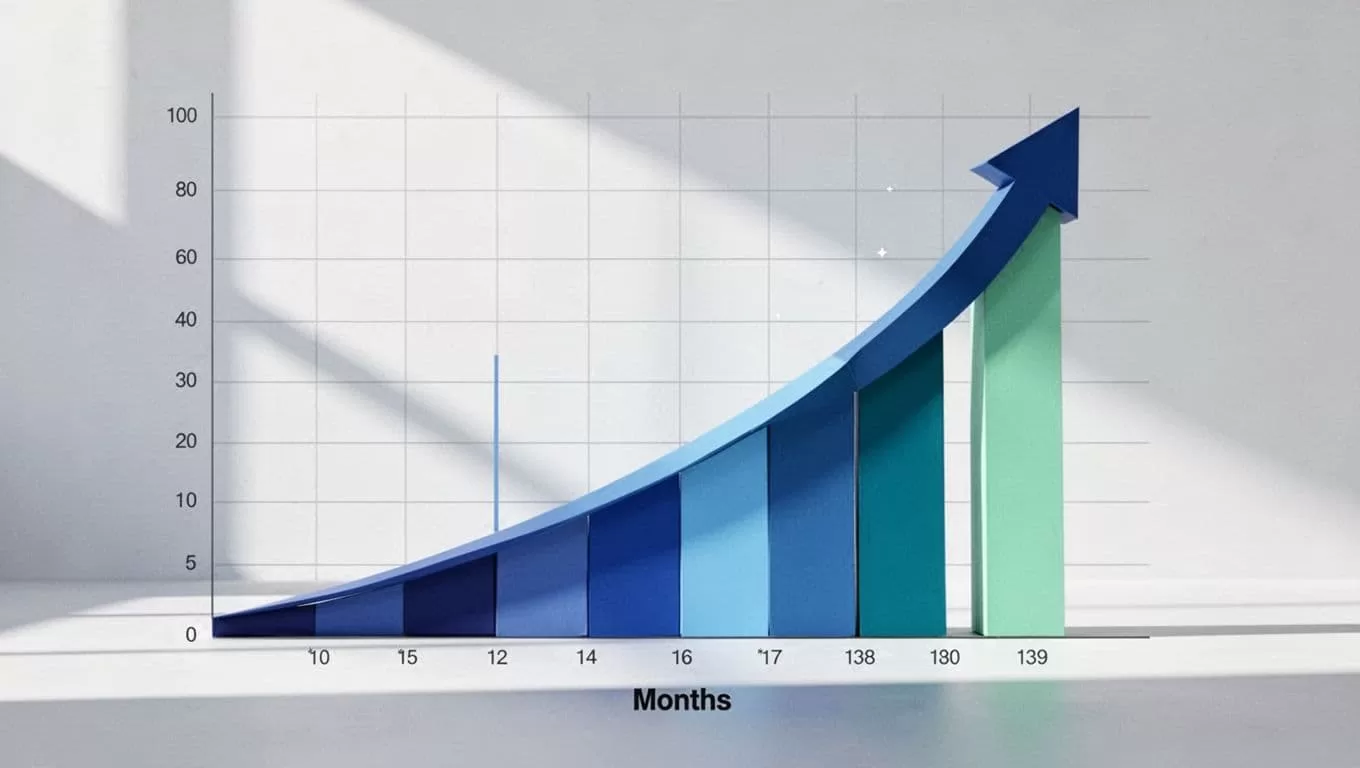
I care most about the shape of the rise. Slow and steady growth can beat a flashier burst, because it usually points to real demand. That is especially true in AI and B2B software, where a topic needs time to prove itself.
I Separate Fads From Durable Trends
A fad gets attention because it’s new. A durable trend sticks because people keep needing it after the novelty wears off. I ask one simple thing: does this solve a problem that will still exist next quarter?
A topic that only lives on one platform usually needs more proof. A topic that appears in search, forums, and buying intent deserves a longer look.
In April 2026, AI Voice Detector feels more durable than a lot of flashy AI gadgets because it answers a real trust problem. AI Translator Headphones also look more serious, since they fit travel, support, and global team use. I’d treat a topic like that differently from a one-week meme product.
I also think about workflow fit. If a trend can sit inside a repeatable business process, it has a better shot at lasting. That is why I compare some topics to tools like Recruit CRM setup guide, because software wins when it saves time inside a real system.
I Validate the Signal Outside Exploding Topics
Exploding Topics gives me the first flag, then I test it elsewhere. I never trust one source alone, because one source can miss the bigger picture.

My quick validation loop looks like this:
- I open Google Trends and check whether interest holds across time, not just a single week.
- I scan Reddit threads to see what people complain about, what they praise, and what wording they use.
- I check X, LinkedIn, and TikTok to see whether the topic is spreading or staying trapped in one niche.
- I look at keyword tools and newsletters to find buying language, not just buzz.
That mix helps me spot the difference between attention and intent. A topic can get lots of mentions and still have weak demand. It can also look quiet on social and still show strong search intent. For a useful cross-check, I often compare what I see with Exploding Topics’ how to find trends early guide.
My Short Checklist Before I Act
I keep this checklist in my head before I spend time on a trend:
- The growth curve should rise for more than a few days.
- The topic should appear in at least two other places.
- The search terms should show buying intent, not only curiosity.
- The use case should be clear enough to explain in one sentence.
- The market should still have room for a new angle.
If I can’t check at least four boxes, I keep watching and do nothing yet. That saves me from buying hype too early.
When a topic affects pricing, retention, or recurring revenue, I also think about measurable business value. That’s where a tool like SaaS revenue recognition with Baremetrics comes to mind, because the best trends leave a clean trail in the numbers.
The Quiet Signals Usually Win
I use Exploding Topics like a radar, not a verdict. It tells me where motion starts, then I test for staying power, buyer intent, and room to enter. That keeps me focused on trends that can support real work, not just loud headlines.
The best opportunities usually look plain at first. They rise slowly, repeat across channels, and point to a problem people already want solved. That is how I separate an upcoming trend from a noisy spike.

