
Free signups can look healthy while revenue stays flat. I’ve seen busy trials, full inboxes, and growing traffic, yet the paid handoff was weak.
That’s why I watch free-to-paid transitions in Baremetrics before I trust the funnel story. When those transitions slip, I usually find the break in onboarding, pricing fit, or channel quality.
Set up Trial Insights so I trust the numbers
I start in Trial Insights inside Baremetrics. That view gives me the basic shape of the funnel, including New Trials, Active Trials, Canceled Trials, Converted Trials, and the trial-to-paid conversion rate.
If I’m still shaping the view, I use building a better Baremetrics dashboard as my starting point. I want the conversion metric next to the revenue context, not buried in a second tab.

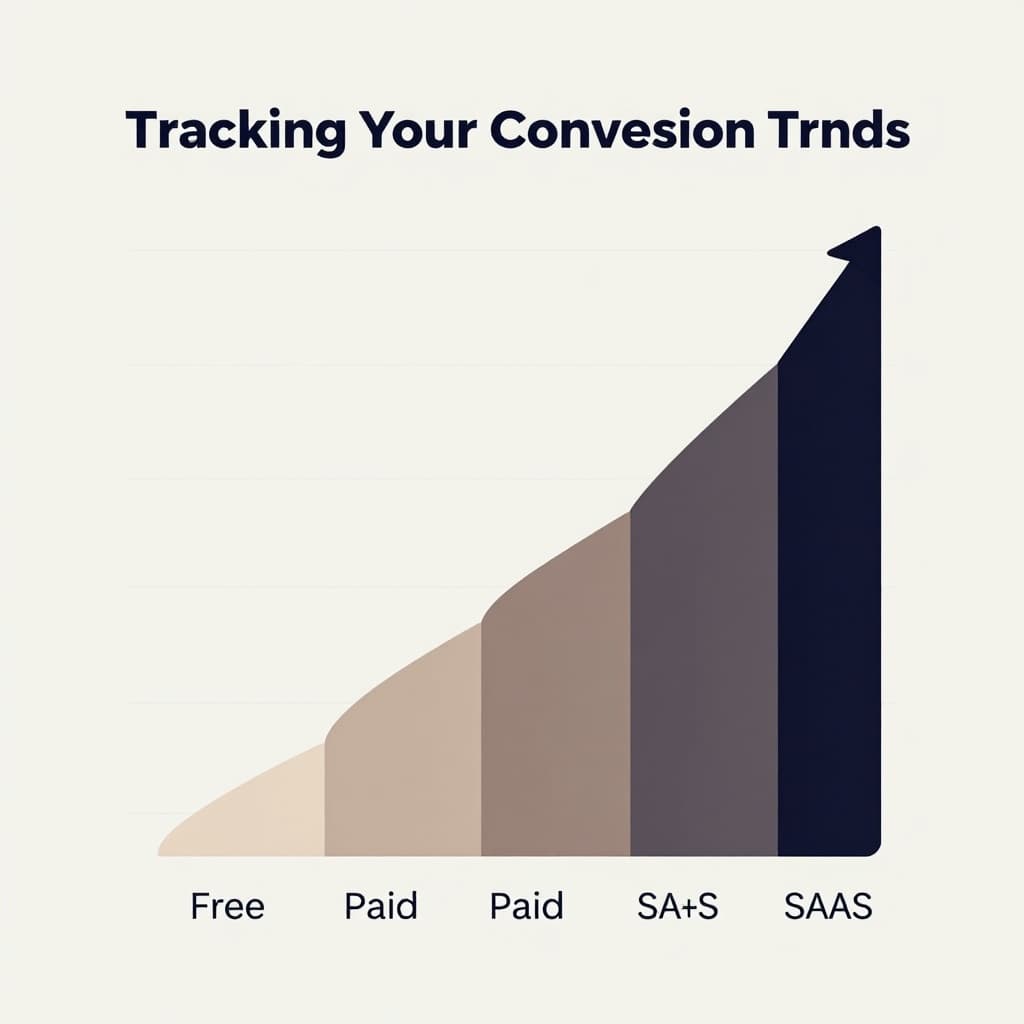
I also keep the setup simple:
- I pin the trial-to-paid conversion rate to the top.
- I watch Converted Trials beside New Trials.
- I compare Active Trials and Canceled Trials before I celebrate a spike.
- I check the 30-day rolling average, so I don’t overreact to one noisy day.
- I split the view by signup source or cohort when the default line looks too smooth.
That last step matters more than most teams expect. A single conversion number can hide a weak channel. If paid search brings volume but poor paid handoff, the average will blur that out.
I also compare the numbers with Maxio’s SaaS free trial best practices, because trial length and follow-up shape the curve I see in Baremetrics. If I want a number that means something, I need the funnel design to be visible too.
Read the curve with cohorts, rolling averages, and MRR
Once the metric is on the page, I stop staring at the headline number. I read the line the way I would read a weather map. One bright spot doesn’t mean the storm has passed.
The 30-day rolling average helps me here. It smooths out weekend dips, campaign bursts, and random sales noise. I still want the day-to-day detail, but I trust the rolling view more when I’m deciding whether a change is real.
Cohorts give me the next layer. I want to know whether May signups convert better than April signups, and whether one channel beats another. A cohort split often reveals a product or message shift before the top-line rate moves enough to notice.
A flat average can hide a bad cohort. I trust the average only after I check the source and signup date.
I also connect the conversion rate to new MRR. That keeps me honest. A higher conversion rate means little if the customers are landing on low-value plans or disappearing a month later. The real question is whether paid transitions create durable revenue.
If conversion rises and MRR rises with it, I see a cleaner handoff. If conversion rises but MRR barely moves, I look at plan mix, discounting, and first invoice size. If churn also climbs, I treat the gain as temporary.
Here’s the quick read I use when the trend changes:
| What I see in Baremetrics | What it usually means | What I check next |
|---|---|---|
| Conversion rises, new MRR rises, churn stays steady | Better fit and smoother onboarding | Keep the flow, then test scale in the strongest source |
| Conversion rises, but MRR stays flat | More low-priced buyers or too many discounts | Review plan mix, pricing prompts, and first purchase size |
| Conversion falls in one cohort or source | Channel quality or message mismatch | Split by signup source, landing page, and signup date |
| Conversion falls and cancellations rise | Users hit friction before they reach value | Review onboarding steps and time-to-value |
That table keeps me from guessing. I don’t call every dip a problem. I call it a problem when the trend, the cohort, and the revenue all point the same way.
I also like to compare the pattern against tracking essential Baremetrics metrics, because MRR, churn, and LTV put the conversion line in context. A stronger free-to-paid rate should support LTV. If it doesn’t, something else is off.
Spot healthy movement before it turns into a false win
Healthy movement usually looks boring at first. That’s a good sign.
I want to see conversion rise in the same cohorts that later hold steady in churn. I want new MRR to climb without a matching spike in cancellations. I want LTV to trend up, or at least stay stable, after the conversion bump.
Concerning changes feel sharper. A sudden jump in conversion after a pricing change can look great until churn tells the rest of the story. The same goes for a new acquisition source. If a channel converts well but churns fast, it may be buying shallow intent.
I watch for these warning signs:
- A spike in free-to-paid transitions without a lift in MRR.
- Strong conversion from one source, weak retention after the first bill.
- A drop in trial cancellations that only comes from users abandoning the product earlier.
- Higher conversion after a promotion, followed by weaker LTV.
That last one comes up more than teams admit. Discounts can move the line in the short term. Baremetrics makes it easier to see whether the line is lying.
I also look at the shape of active trials. If active trials are piling up while conversions stall, the trial period may be too long, the onboarding too slow, or the promise too vague. If active trials drop fast and cancellations climb, users may be signing up out of curiosity instead of intent.
The point is not to chase a high conversion rate by itself. I want a rate that holds up next to revenue quality. A smaller, cleaner cohort can be worth more than a bloated one.
Turn each shift into an experiment I can run
When the numbers move, I want a next step, not a meeting. Baremetrics gives me the signal, and my job is to turn that signal into a test.
I usually start with the signup source. If one channel converts poorly, I ask whether the promise matched the product. If one cohort converts well, I look for the message, offer, or landing page behind it. That’s where the useful patterns live.
Then I work through the parts of the trial that shape the handoff:
- I shorten the path to the first win, because early value makes paid decisions easier.
- I change the timing of the paywall or upgrade prompt, then watch whether MRR improves.
- I tighten follow-up emails, especially when users stall after day one.
- I test plan order and pricing framing, then compare conversion against churn and LTV.
- I mark the change date in my dashboard, so the next chart has context.
If I want more ideas on reducing friction, I compare my results with Cleverbridge’s tips for optimizing free-trial conversions. I use that as a checklist for where users lose momentum, not as a script.
I also keep the experiment tied to the business result. A test only matters if it improves the right metric. If conversion climbs but cancellations rise, I reset the test. If conversion stays flat but MRR increases because more users choose better plans, I keep going.
The strongest setups usually look simple after the fact. One signup source converts better. One onboarding path gets users to value faster. One pricing change lifts paid transitions without hurting retention. Baremetrics helps me see which change deserves another week and which one needs to go.
Conclusion
When I monitor free to paid transitions in Baremetrics, I’m really checking the handoff between interest and revenue. The best view is the one that shows conversion, MRR, churn, and LTV in the same story.
I trust the metric most when I can explain it by cohort, source, or product change. That’s the point of the work, not a prettier chart.
If the line moves, I want to know why. If it doesn’t, I want to know where the leak starts.