Mida.so A/B Testing: A Practical Guide for Marketers
A/B testing often fails before the first visitor sees a variation. The team starts with a vague idea, changes five elements at once, then calls a winner after two days. Mida.so A/B testing gives marketers a simpler way to organize website e...
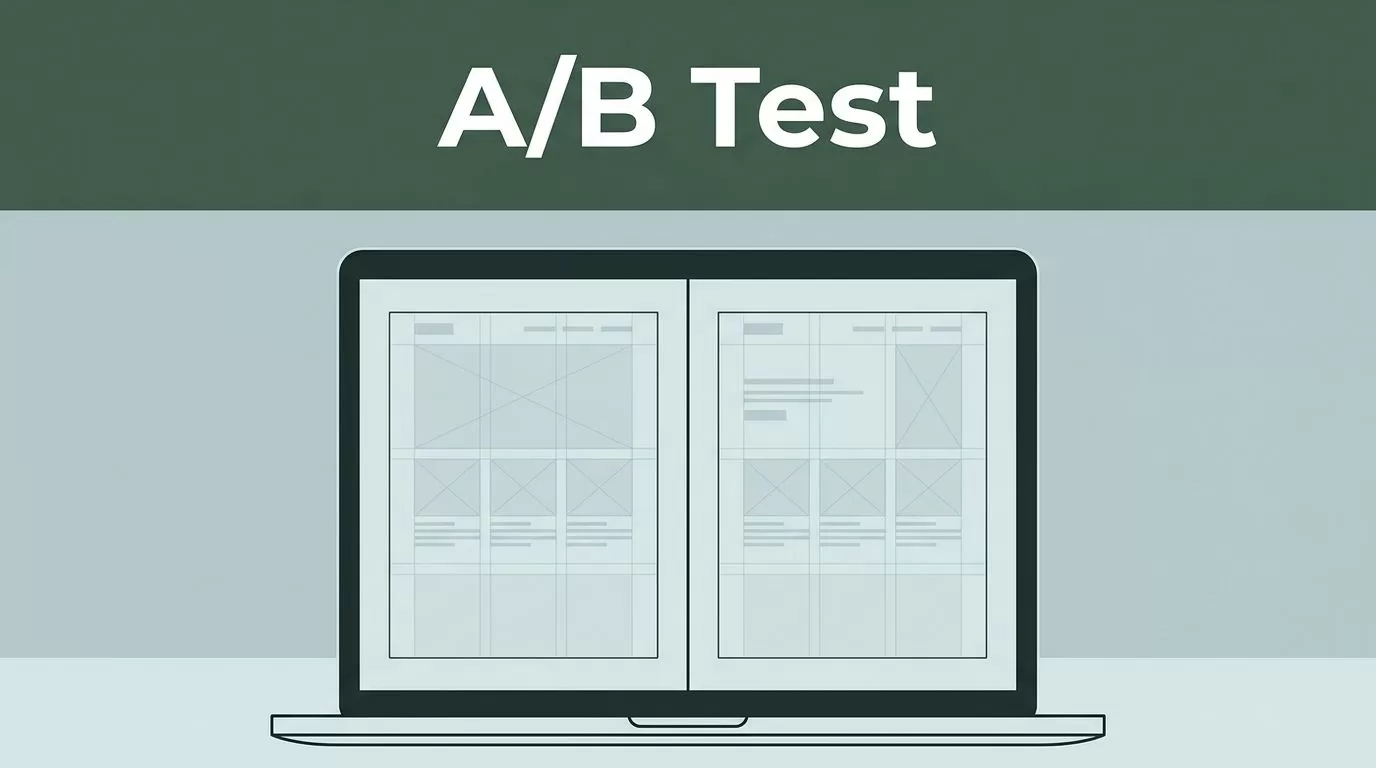
A/B testing often fails before the first visitor sees a variation. The team starts with a vague idea, changes five elements at once, then calls a winner after two days.
Mida.so A/B testing gives marketers a simpler way to organize website experiments. You can create controlled variations, define the result you want to measure, and review performance without turning every test into a development project.
The tool helps with execution. Your testing discipline still determines whether the result is useful.
Key Takeaways
- Start with one clear hypothesis and one meaningful change.
- Use a primary metric that matches the business goal.
- Give the test enough visitors and time before judging performance.
- Use Mida.so to reduce setup work, not to skip sound experimentation.
- Record each result so future tests build on evidence.
Why A/B Testing Stalls for Marketing Teams
An A/B test compares the current version of a page with one alternative. Half of the eligible visitors may see version A, while the rest see version B. The team then compares a chosen outcome, such as form submissions, purchases, or booked calls.
The method is simple. The execution often isn’t.
Marketing teams usually face three problems. They need developer support to launch a test, they don’t know which metric matters, and they stop the experiment before enough data has collected. Each problem weakens the result.
A visual experimentation tool reduces the first problem. It doesn’t solve the other two. A faster test with a weak hypothesis is still a weak test.
For example, changing a button from blue to green may be easy. But what question does the change answer? If the goal is more demo requests, the team needs to measure completed demo forms. A button click is only a supporting metric unless it connects to a valuable next step.
The best tests focus on a page where users already show intent. Good candidates include:
- Product landing pages
- Pricing pages
- Signup pages
- Checkout steps
- Lead-generation forms
- Email capture pages
Start with a page that receives steady traffic and has a clear conversion event. A low-traffic blog post may produce interesting observations, but it can take too long to produce a reliable answer.
The Nielsen Norman Group guide to A/B testing offers a useful foundation for understanding how controlled comparisons support design decisions. The same principle applies to landing pages and conversion paths: change one important variable, then measure the response.
What Mida.so Adds to the Testing Process
Mida.so is designed for website experimentation. Its value for small marketing teams is practical. You can set up a control and a variation without building a separate release process for every page change.
A typical workflow includes creating the experiment, editing the variation, selecting the traffic allocation, and choosing a conversion goal. The exact installation method and available integrations depend on your website and current Mida.so plan. Check the current setup requirements before you publish a test.
The visual workflow is useful for common marketing changes. You may want to adjust a headline, simplify a form, change the order of page sections, or test a different call to action. These changes normally don’t require a new page in your content management system.
That doesn’t mean every change belongs in a visual editor. Complex application logic, pricing calculations, account flows, and backend behavior need technical review. Ask a developer to assess any test that affects data handling, authentication, checkout logic, or site performance.
Mida.so also shouldn’t replace your main analytics platform. Use your product analytics or web analytics system to review supporting behavior, traffic quality, device patterns, and downstream conversions. For example, Google Analytics event documentation explains how important user actions can be recorded as events for additional analysis.
Keep the tool’s role clear:
Mida.so helps you launch and compare website variations. It doesn’t decide what your team should test or whether the evidence is strong enough.
That division of responsibility prevents a common mistake. Marketers see a result inside a testing dashboard and treat it as a complete business answer. The result needs context, clean tracking, and a defined decision rule.
Build a Test Around One Clear Hypothesis
A useful A/B test starts with a sentence that connects a change to a user action.
Use this structure:
If we change [specific element] for [audience], [primary metric] will improve because [reason].
For a B2B software company, the hypothesis could be:
“If we replace a feature-focused headline with an outcome-focused headline, the pricing page will produce more demo requests because buyers will understand the business result faster.”
This hypothesis contains one main change, one audience, and one primary metric. It gives the team a clear result to investigate.
Avoid stacking unrelated edits in one variation. A new headline, shorter form, customer logo strip, and different page layout may improve performance. But you won’t know which change caused the result. The variation becomes a package, not a clean experiment.
Testing one meaningful change at a time doesn’t mean every test must be tiny. A full hero section can be one test if the team treats the section as a single message. The important point is to keep the cause of the expected impact clear.
Choose the primary metric before launching. Use a metric that reflects the goal of the page:
| Page goal | Suitable primary metric |
|---|---|
| Generate sales leads | Completed qualified forms |
| Drive product trials | Completed registrations |
| Sell a product | Completed purchases or revenue |
| Increase booked meetings | Scheduled meetings |
| Improve checkout | Completed checkout rate |
Track secondary metrics as guardrails. A new headline may increase form starts but reduce completed submissions. A shorter checkout may increase orders but also raise refund requests. The primary metric identifies the main decision. Guardrails reveal damage elsewhere.
Next, define the audience. Decide whether the test includes all visitors, new visitors, mobile users, paid traffic, or a specific geographic market. Don’t change the audience definition halfway through the test unless tracking is broken.
Estimate the required sample before launch. The Evan Miller A/B testing calculator can help estimate how much traffic you need based on your current conversion rate, baseline traffic, and minimum improvement worth detecting.
A small lift needs more data than a large lift. If your current form conversion rate is 5 percent and you want to detect a 10 percent relative improvement, the test may require far more visitors than a test looking for a 40 percent improvement.
Launch Mida.so Tests Without Corrupting the Data
Prepare the tracking before you send traffic to the experiment. Test the original page and the variation yourself. Submit the form, complete the purchase flow, and confirm that the selected goal records the conversion.
Check the test on desktop and mobile. Review the page in the browsers your audience uses. Watch for layout shifts, missing images, broken buttons, and variation code that loads after the visitor has already interacted with the page.
A clean launch process has five steps:
- Write the hypothesis and select the primary metric.
- Create the control and one variation in Mida.so.
- Confirm the audience, traffic split, and conversion goal.
- Test the experience and tracking across key devices.
- Record the launch date, change, expected outcome, and decision rule.
Traffic allocation should match the purpose of the test. A balanced split gives both versions similar exposure and makes comparison easier. If the variation creates a serious business or compliance risk, use a smaller rollout only when your setup supports that control. Don’t adjust traffic because one version looks ahead during the first few hours.
Test duration matters. Website traffic changes across weekdays, weekends, campaigns, paydays, and product launches. A test that runs only on Monday may not represent normal behavior.
Don’t stop the test when the dashboard shows a temporary leader. Early results are unstable because a small number of conversions can move the percentage sharply. Wait until the experiment has enough sample and has covered the normal traffic cycle.
A winning percentage is not the same as a trustworthy result.
Watch for tracking problems before interpreting performance. A sudden conversion spike may come from duplicate events, a campaign launch, bot traffic, or a broken control page. Compare Mida.so data with your analytics and CRM records when the conversion has a sales or revenue impact.
The Optimizely explanation of A/B testing covers the basic logic behind comparing versions and evaluating outcomes. The practical lesson is direct: statistical output only helps when both versions receive comparable traffic and the measured event is reliable.
Read the Result and Turn It Into a Decision
When the test reaches its planned sample and duration, review the primary metric first. Check the conversion rate for each version, the difference between them, and the confidence information provided by the platform.
Don’t treat statistical significance as a promise about future performance. It indicates how compatible the observed difference is with random variation under the test model. Business conditions can still change after rollout.
Review the result by segment, but don’t search every segment for a winner. Segment analysis is useful when you planned it in advance or when the difference matches a clear business question. A mobile result may differ from desktop because the form, page speed, or user intent differs. That finding can support a follow-up test.
Use a simple decision framework:
- If the variation wins on the primary metric and passes guardrails, plan the rollout.
- If the control wins, keep the original and document what the test ruled out.
- If the result is inconclusive, keep the control unless there is another reason to change it.
- If tracking is unreliable, fix the measurement and rerun the experiment.
Avoid declaring a winner because the variation has a higher conversion rate. The difference must be large enough to matter to the business, not only large enough to appear attractive in a dashboard.
For example, a pricing page variation may improve demo requests by 3 percent. That result matters only if the lift is reliable and the additional requests are qualified. Connect the test outcome to CRM quality, sales acceptance, revenue, or another downstream measure when possible.
Document the final result in a shared testing log. Record the hypothesis, audience, dates, versions, primary metric, result, and next action. A failed test still provides useful evidence when the team records what it learned.
Make Mida.so Part of a Repeatable Workflow
A/B testing produces value when it becomes a process, not a series of isolated experiments.
Create a short backlog of test ideas. Rank each idea by potential impact, confidence in the hypothesis, and implementation effort. Put high-intent pages near the top. Don’t fill the backlog with cosmetic changes that have no clear link to conversion behavior.
Assign ownership before launch. One person should own the hypothesis and decision. Another team member can check tracking and page quality. Technical review should be required for tests that affect application logic or customer data.
Use a consistent naming system in Mida.so. Include the page, change, audience, and date. A name such as “Pricing headline, new visitors, Q3 2026” is easier to find than “Test 14.”
Review completed tests in a monthly meeting. Look for repeated patterns. If several tests show that buyers respond to clearer outcomes, update the messaging system. If mobile users repeatedly struggle with long forms, prioritize mobile form improvements over more headline tests.
Try Mida.so with one high-intent page first. Choose a page with stable traffic, define one conversion goal, and launch a focused experiment. That approach gives your team a clear way to assess the workflow before expanding testing across the site.
Conclusion
A/B testing becomes easier to manage when the tool, question, and measurement plan work together. Mida.so can reduce the technical work required to create website variations, but the team still needs a clear hypothesis, one meaningful change, a primary metric, and enough data.
Don’t chase early winners. Run controlled tests, check the tracking, review downstream quality, and record the result. That discipline turns Mida.so A/B testing into a repeatable marketing system instead of another dashboard your team checks without making better decisions.
