Paddle Affiliate Tracking With Rewardful: Classic Setup
An affiliate program can look healthy until finance finds paid customers with no affiliate owner. That failure usually starts at checkout, not during payout. Paddle affiliate tracking with Rewardful has one hard requirement. Rewardful’...
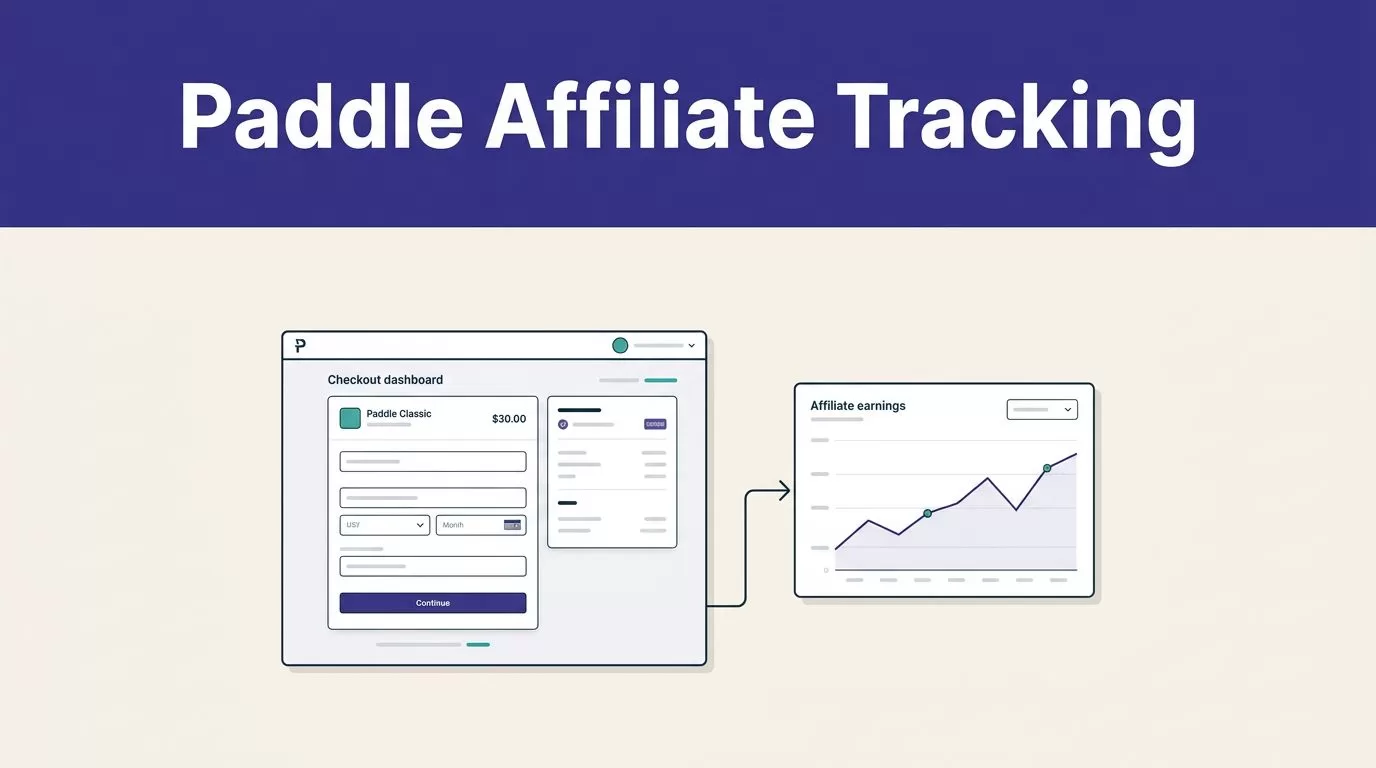
An affiliate program can look healthy until finance finds paid customers with no affiliate owner. That failure usually starts at checkout, not during payout.
Paddle affiliate tracking with Rewardful has one hard requirement. Rewardful’s supported Paddle connection is for Paddle Classic, not Paddle Billing. Get that decision right before your team writes code, recruits partners, or promises recurring commissions.
The reliable setup is simple: confirm your Paddle version, preserve referral data through checkout, test billing events, and reconcile every payout against real revenue.
PADDLE AFFILIATE TRACKING STARTS WITH YOUR BILLING VERSION
Rewardful currently documents its Paddle integration for Paddle Classic only. Its Paddle integration page makes that distinction clear. Paddle Classic and Paddle Billing are different billing products with different checkout flows, APIs, and event handling.
Paddle says new signups created after August 8, 2023 use Paddle Billing. Most newer SaaS companies should assume they need to verify this before planning a Rewardful deployment.
Confirm the account before building
Ask the billing owner to confirm the Paddle product in use. Record the checkout implementation, dashboard access, and whether the team still has a working Paddle Classic account.
If you use Paddle Billing, stop the Rewardful implementation here. Don’t try to force a Classic checkout pattern into a Billing stack. It creates a tracking system that engineering cannot support.
Choose a provider that documents support for your live Paddle version. TinyAffiliate’s Paddle tracking options and Partnero’s Paddle integration information are useful starting points for vendor research. Confirm version support, billing-event coverage, refund handling, and attribution rules in each provider’s current documentation.
WRITE COMMISSION RULES BEFORE YOU CONNECT TOOLS
The integration does not decide what an affiliate earns. Your published terms do that.
Set the commission model before you create a campaign. A simple offer is easier to audit, explain, and fund. Complex offers usually create disputes after the first refund or plan change.
Define the revenue that earns a commission
Choose one clear model and write it in the affiliate terms.
- Pay 20% of eligible subscription revenue for the first 12 paid months.
- Pay a fixed $50 reward after a referred customer pays an annual subscription.
- Pay 15% of eligible recurring revenue while the customer remains paid, with a stated end date.
Define whether the commission uses revenue before or after discounts, account credits, taxes, refunds, chargebacks, and currency conversion. State how annual plans, upgrades, downgrades, failed payments, and cancelled subscriptions affect the amount.
A 20% recurring offer can become expensive when customers stay for years. Model the cost against gross margin and customer lifetime before publishing it.
A referral click is not a commission. A paid customer who meets your written rules is a commission.
Set a payout review period that matches your refund risk. If customers have a 30-day refund right, do not pay on day seven. Rewardful’s current Paddle Classic materials should be checked before you promise automated handling for renewals, refunds, cancellations, upgrades, or downgrades.
BUILD THE REFERRAL-TO-CHECKOUT PATH
The referral must survive the path between an affiliate link and Paddle checkout. A working redirect is not enough.
Rewardful uses its JavaScript to identify a visitor referred by an affiliate. When that visitor opens Paddle Classic checkout, your checkout code must pass the Rewardful referral ID into Paddle’s passthrough field.
Keep the referral attached to the order
Rewardful’s documented Classic pattern reads window.Rewardful.referral and passes it into Paddle.Checkout.open() as JSON under rewardful.referral.
The flow should look like this:
Affiliate link -> landing page -> Rewardful referral value -> Paddle checkout passthrough -> Paddle event -> Rewardful sales and commission record
If your team already uses Paddle passthrough for internal order data, inspect the existing value first. Update the payload without removing fields another system needs. A careless overwrite can break internal reconciliation or referral attribution.
Keep customer emails, account notes, and other unnecessary personal data out of URLs and passthrough values. The referral ID is enough for this job.
Test the affiliate link in a fresh browser session. Then inspect the checkout request and confirm the referral value is present before payment starts. This catches missing scripts, blocked cookies, and checkout code that drops the passthrough field.
CONFIGURE REWARDFUL AND PADDLE CLASSIC IN ORDER
Rewardful’s Classic setup starts with a Paddle public key and webhook delivery. Do not guess at field names or event mappings from an old blog post.
Use a controlled setup sequence
- Create or open the Rewardful account and choose Paddle as the payment processor.
- In Paddle Classic, copy the public key from Developer Tools -> Public Key. Include the BEGIN and END markers when Rewardful requests the key.
- Configure Paddle’s webhook destination under Developer Tools -> Events. Rewardful needs webhook notifications to maintain sales and commission records.
- Add the Rewardful JavaScript to the public pages where affiliate traffic lands.
- Create the first campaign, then update the Paddle Classic checkout code to send the referral in
passthrough.
Use HTTPS for webhook delivery. Store admin credentials, public-key records, webhook settings, and deployment notes in the same operating document.
Rewardful’s current materials explain that it needs Paddle events, but do not rely on an old event list. Review the live documentation before changing webhook subscriptions. Event names and product support can change.
If checkout engineering, affiliate operations, and finance have no clear owner, Book A Call before you launch a public program. Missing ownership creates payout problems that no dashboard can fix.
TEST THE CUSTOMER LIFECYCLE BEFORE RECRUITING AFFILIATES
A first purchase test proves only one part of the system. SaaS affiliate tracking must also handle the customer relationship after checkout.
Use a controlled customer account and a test campaign. Keep the test affiliate separate from production partners. Record the referral ID, Paddle checkout or order identifier, customer identifier, campaign, and expected commission result.
Run the billing cases that create disputes
Use this table as the minimum acceptance test.
| Test case | Expected record | If it fails |
|---|---|---|
| Referred first purchase | Affiliate, campaign, and Paddle order match | Hold launch and inspect passthrough data |
| Organic first purchase | No affiliate commission exists | Check for stale cookies or internal test links |
| Renewal | Result matches the published recurring rule | Open an exception, do not manually assume payment |
| Refund | Commission result matches the refund policy | Hold payout until billing data settles |
| Cancellation or downgrade | Future commission treatment matches terms | Review the account and campaign record |
| Self-referral attempt | Transaction is blocked or held for review | Apply the fraud policy before payout |
Rewardful’s original Paddle launch post discusses subscription lifecycle activity at a high level. Treat current support instructions as the source of truth for your live configuration.
Do not assume Rewardful handles every Paddle Classic lifecycle event in the way your terms require. Confirm recurring commission behavior, refund reversals, cancellation treatment, and plan-change logic in the current documentation before going live.
SET COOKIE AND CREDIT RULES THAT PARTNERS CAN UNDERSTAND
Attribution disputes start when your campaign rules are vague. Decide who owns the customer before two affiliates claim the same account.
Rewardful’s default referral-cookie duration is 60 days. You can set the cookie window by campaign. New campaigns use first-touch attribution by default, while last-touch attribution is also available.
Pick one attribution rule per campaign
First touch credits the first eligible affiliate in the configured window. Last touch credits the most recent eligible affiliate. Neither rule is universally better. Pick the one that matches how your partners promote the product.
Document what happens when a customer:
- Clicks two affiliate links before purchasing.
- Uses an affiliate coupon after clicking another affiliate’s link.
- Moves between your marketing site, application, help center, and checkout.
- Returns after the cookie window expires.
- Uses a work email after first visiting with a personal email.
Paddle affiliate tracking depends on client-side referral data reaching checkout. Browser privacy settings, blocked scripts, cross-domain journeys, and deleted cookies can interrupt that path.
Do not promise coupon ownership or cross-device attribution unless your tested configuration supports it. Send unclear cases to an exception queue with an owner and follow-up date.
RECONCILE COMMISSIONS BEFORE YOU PAY THEM
A payout export is a starting record. It is not proof that every listed commission should be paid.
Create a fixed commission record for every eligible transaction. Include the affiliate, campaign, Rewardful referral ID, Paddle order or checkout identifier, customer identifier, billing date, currency, collected amount, commission calculation, refund status, payout status, and payment reference.
Keep the original billing values intact
Do not overwrite a Paddle amount because someone corrects a commission later. Preserve the original values and add reviewer notes, correction fields, and approval dates separately.
Each payout cycle should follow the same process. Export commissions that are due. Compare them with Paddle transaction records. Check for refunds, chargebacks, failed payments, duplicate referrals, missing payout details, and campaign mismatches. Approve only the records that match both systems.
Measure reconciled payouts, not exported payouts.
Rewardful’s commission-payment explanation describes this event-to-payment chain for Stripe. The control principle still applies here, but it does not confirm Paddle Classic behavior. Your Paddle records remain the billing source for approval.
Record the final payout date, amount, method, payment reference, and reviewer. Finance needs that history when an affiliate asks about a missing payment months later.
BLOCK INVALID COMMISSIONS AND PROTECT CUSTOMER DATA
Affiliate fraud is often ordinary misuse, not advanced technical abuse. Internal purchases, self-referrals, coupon claims, fake signups, and recycled customer accounts can all produce bad commission records.
Define what your program will reject
Exclude internal email domains, test accounts, free plans, implementation fees, cancelled invoices, and self-referrals unless your program intentionally rewards them. Review affiliate applications before approval. Ask how each applicant will promote the product and where their audience comes from.
Require affiliates to disclose that they may earn a commission near the recommendation. A disclosure buried in a profile page does not help the buyer understand the relationship.
Rewardful referral tracking and Paddle billing both involve customer information. Load tracking scripts only after the consent required in the markets you serve. Update your privacy notice to describe affiliate tracking. Limit dashboard access to people who need it.
Store keys and webhook configuration in approved secret storage. Give contractors and agencies the least access needed. Do not give a tracking tool permission to delete unrelated production records.
SCALE WITH ACCEPTED RECORDS, NOT DASHBOARD ACTIVITY
More clicks do not mean more reliable revenue. A dashboard can show activity while your team spends hours correcting missing attribution and duplicate commissions.
Start with a small approved batch, such as 25 recent referred customers. Include a normal renewal, a refund, a cancellation, a discounted sale, and an unsuccessful payment where available.
Monitor the records your team accepts
Review a sample every week. Compare the affiliate, campaign, customer, Paddle payment, commission amount, and refund result against your billing records.
Track these operating measures:
- Paid customers with confirmed affiliate attribution.
- Missing or duplicate commission records.
- Self-referral and internal-purchase exceptions.
- Refund-related reversals.
- Review and correction time per payout cycle.
Set alerts for missing tracking scripts, sharp drops in attributed customers, failed webhook delivery, and unusual duplicate claims. Keep the last trusted commission report. If a checkout change breaks attribution, you need a verified record to continue reconciliation while engineering fixes the issue.
A workflow that removes five minutes of data entry but creates thirty minutes of correction work has failed.
PRE-LAUNCH CHECKLIST FOR PADDLE AFFILIATE TRACKING
Pass every item before you invite affiliates.
- Your team has confirmed that the account uses Paddle Classic, not Paddle Billing.
- Commission terms define eligible revenue, duration, refunds, credits, taxes, plan changes, and payout timing.
- The campaign cookie window and first-touch or last-touch rule match the published terms.
- The Rewardful script loads on affiliate landing pages under your consent process.
- Paddle Classic checkout sends the tested Rewardful referral value in
passthrough. - Paddle webhooks reach Rewardful through the current documented setup.
- First purchases, renewals, refunds, cancellations, and self-referrals have written test results.
- Finance has a reconciliation sheet, exception process, payment approval owner, and record-retention process.
- The team has alerts and a last trusted commission report for recovery.
CONCLUSION: KEEP THE BILLING RECORD IN CHARGE
Rewardful can support Paddle affiliate tracking when you use Paddle Classic and preserve referral data through checkout. The system works when campaign terms, checkout code, webhook delivery, and payout controls agree.
If you use Paddle Billing, choose a provider built for that product instead of forcing a Classic integration. The useful metric is not affiliate clicks or exported commissions. It is the number of paid, verified, reconciled commissions your team can defend.
