Optimize Ad Spend Conversion Tactics With Mida.so
Pouring more budget into your paid campaigns rarely fixes a leaking funnel. If your traffic arrives at a slow, confusing landing page, your cost per acquisition climbs and your return on ad spend disappears. Growth teams often blame ad crea...

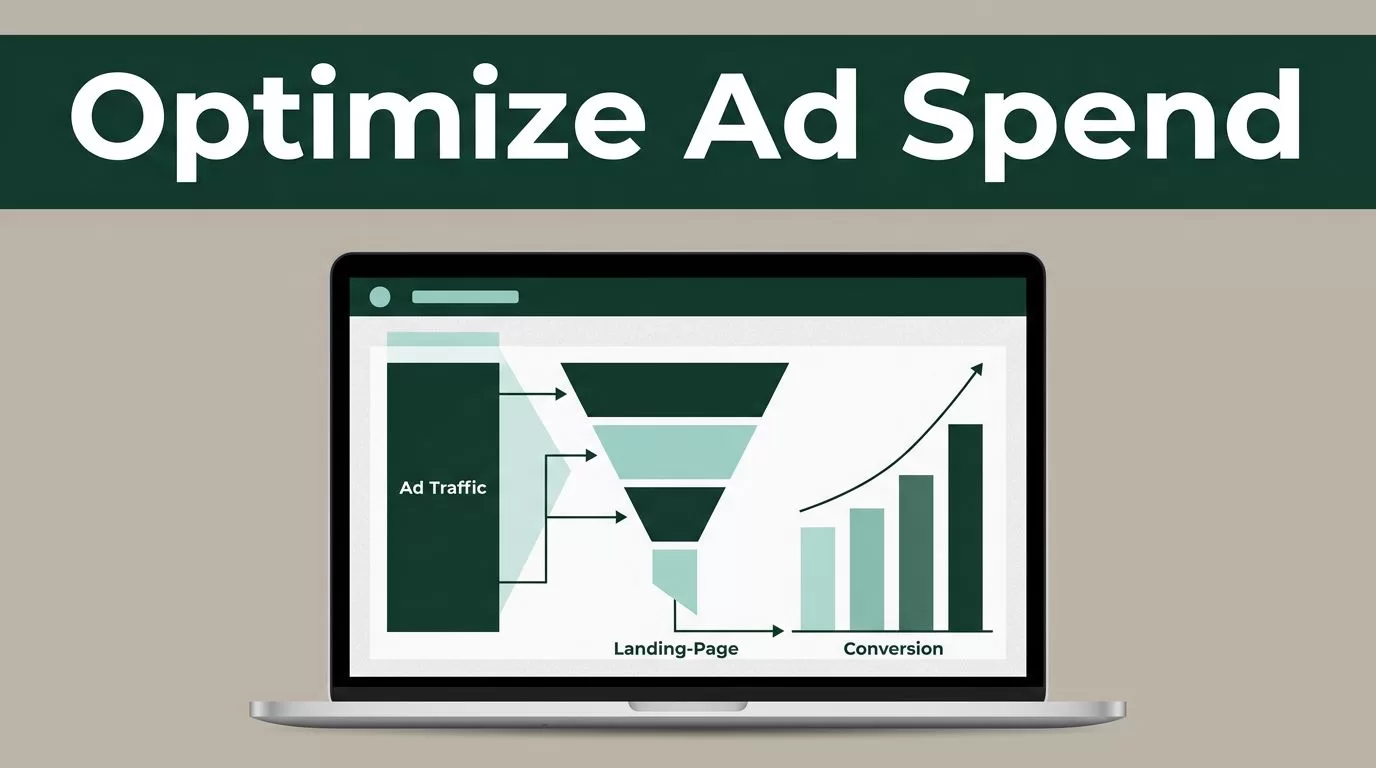
Pouring more budget into your paid campaigns rarely fixes a leaking funnel. If your traffic arrives at a slow, confusing landing page, your cost per acquisition climbs and your return on ad spend disappears. Growth teams often blame ad creative or audience targeting when the real bottleneck hides on the post-click experience. You can fix this gap by treating ad spend optimization as a direct extension of conversion rate optimization.
When you align your paid media with rigorous testing and clean landing page architecture, every dollar works harder. Mida.so gives performance marketers the granular control needed to test variants, monitor live metrics, and eliminate friction without breaking your site speed. Let’s look at how you can stop wasting paid traffic and start turning clicks into predictable revenue.
Key Takeaways
- Use Mida’s live reporting to monitor traffic splits, conversions, and statistical confidence before calling a winner.
- Match your ad copy, headlines, and visuals directly to your landing page elements to reduce bounce rates.
- Set performance guardrails to ensure conversion uplifts do not degrade Core Web Vitals or mobile speed.
- Connect your paid acquisition metrics with downstream CRM data to measure true business value over raw clicks.
Connect Ad Messaging to Landing Page Reality
A visitor clicks your ad because of a specific promise, discount, or product feature. If that exact promise vanishes the second the page loads, confusion takes over and they bounce. Message mismatch remains one of the quietest killers of ad campaign efficiency across Google Ads, Meta, and paid social channels.
You fix this by making your landing page headline and hero imagery mirror the ad creative that drove the click. If your ad promotes a specific enterprise security feature, the landing page must feature that exact capability above the fold. Mida.so lets you deploy targeted variations for different traffic sources without rebuilding your entire site architecture.
Visitors coming from a specific search campaign get a tailored headline, while organic visitors see your default homepage. This level of relevance reassures the user immediately and keeps your bounce rates low. When message alignment is tight, your conversion rate climbs, lowering your effective customer acquisition cost. For a deeper look at platforms built to compare user paths and tracking setups, explore conversion rate optimization tools and platforms.
Reduce Friction in the Post-Click Funnel
Driving high-intent traffic to your site is only half the battle. Once users arrive, every extra form field, slow script, or unexpected requirement gives them a reason to leave. Checkout abandonment and form drop-offs drain your paid budgets faster than poor keyword targeting.
Start by auditing your conversion funnels to find where users stall. If your checkout requires mandatory account creation before purchase, you are introducing the single biggest friction point in digital commerce.
┌───────────────────────────┐     ┌───────────────────────────┐     ┌───────────────────────────┐
│     Ad Click Captured     │ --> │    Message Match Check    │ --> │  Frictionless Checkout    │
└───────────────────────────>     └───────────────────────────>     └───────────────────────────┘
Add guest checkout options to keep the path to purchase as short as possible. Display trust signals, such as verified review counts and clear return policies, right next to your primary call-to-action buttons. For additional strategies on cutting budget waste through cleaner tracking and attribution, read this guide on smart ways to cut waste and improve marketing spend.
Read Real-Time A/B Testing Data With Discipline
Running experiments on high-traffic paid campaigns requires patience and statistical guardrails. A test can collect thousands of visits in hours and still trick you into making the wrong decision if you read the numbers too early. Mida.so helps you track visitor allocation, uplift, and confidence levels as data flows in, but your interpretation must remain disciplined.
Do not declare a winner after a single morning of heavy traffic. Check your traffic split first to ensure your targeting rules distribute visitors evenly between the control and the variant. Small discrepancies happen, but a large gap points to tracking errors or broken audience definitions.
Watch both your primary conversion rate and your micro-conversions. A variant that boosts email signups might hurt overall revenue if the resulting leads lack buying intent. Use Mida to segment your traffic by device type and campaign source so you know whether a winning variation holds up for mobile users and high-intent paid clicks alike.
Monitor Page Speed and Core Web Vitals
Conversion rate optimization tactics often fail when extra testing scripts slow down page loading times. Google data shows that a large percentage of mobile visitors abandon sites that take over three seconds to load, and each additional second of delay drops your conversion rate significantly.
Protect your Core Web Vitals by auditing every script you inject for an experiment. Mida.so is engineered for performance, but your implementation strategy still matters. Keep your tracking scope limited to the specific pages and audiences that require testing.
Treat Largest Contentful Paint and Cumulative Layout Shift as hard test guardrails. If a high-converting variant introduces an annoying layout shift or delays your main hero image, reject the update. A modest conversion gain is never worth a slower mobile experience that frustrates your best prospects.
Track Downstream Business Metrics Beyond Clicks
Paid media dashboards often report vanity metrics that look great on agency spreadsheets while failing to reflect actual revenue growth. A shorter form or a flashy button can easily spike your click-through rate while attracting low-quality leads that never convert into paying customers.
You need to connect your experimentation platform with your CRM and payment systems to see the full financial picture. Track customer lifetime value, average order value, and actual closed revenue alongside your immediate conversion rate.
If a specific Mida.so experiment generates a high volume of form submissions but your sales team reports zero qualified opportunities, the test is a failure. Cross-reference your experiment logs with your backend database to ensure your optimization efforts drive profitable growth rather than empty form entries.
Conclusion
Wasted ad spend is usually a symptom of post-click friction and misaligned landing pages rather than bad media buying. When you pair disciplined A/B testing with clear message matching, you turn more of your existing paid traffic into revenue. Mida.so gives you the structural control needed to run fast experiments without slowing down your site or guessing at results.
Take a close look at your primary landing pages today and identify your biggest drop-off point. Set up your first targeted experiment, monitor your data with strict statistical rules, and let continuous optimization protect your advertising budget.

