Choosing A Plerdy Alternative For Your Website Testing
You need a reliable way to validate website changes. Plerdy provides a mix of heatmaps, session recording, and A/B testing, but it might not fit your specific growth stack or feature requirements. Choosing the right testing partner depends...
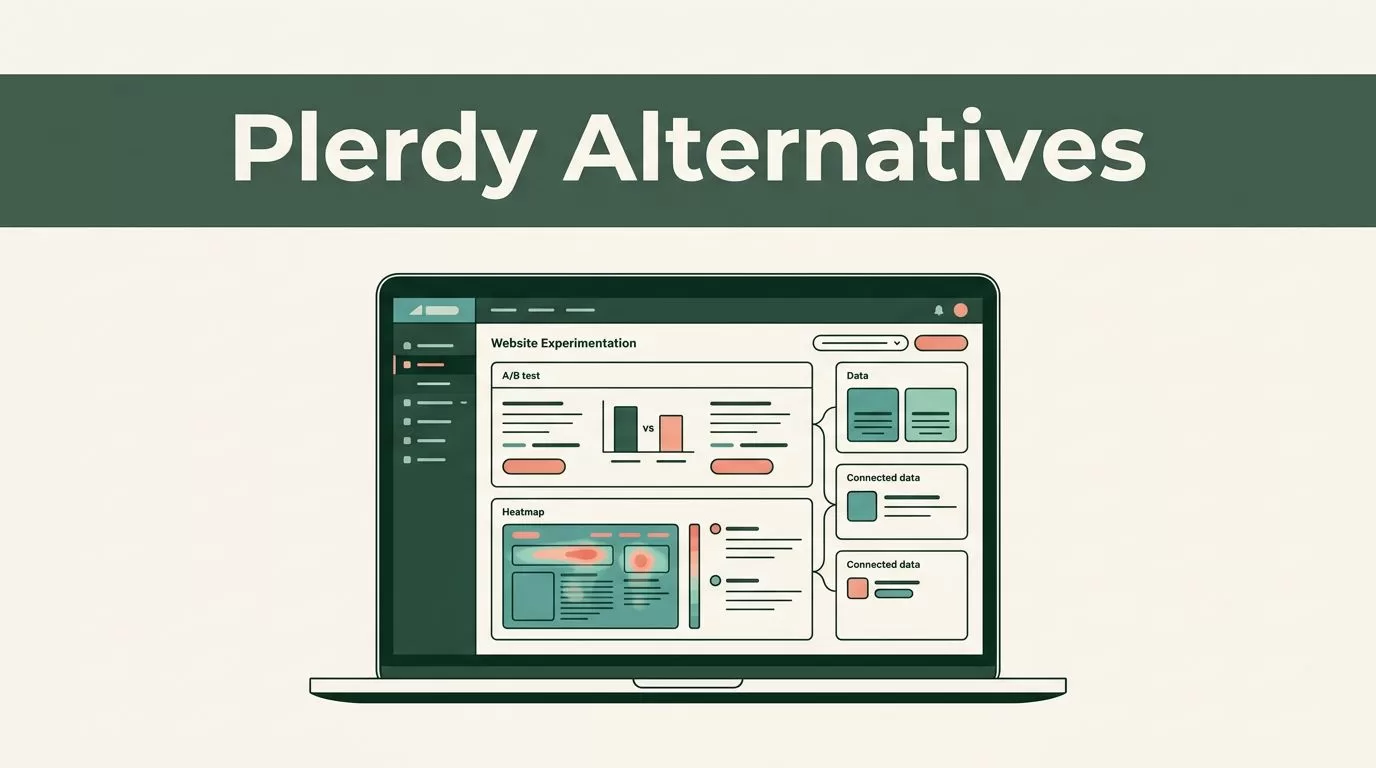
You need a reliable way to validate website changes. Plerdy provides a mix of heatmaps, session recording, and A/B testing, but it might not fit your specific growth stack or feature requirements. Choosing the right testing partner depends on whether your priority is deep behavioral insight, large-scale enterprise experimentation, or simple, budget-friendly validation.
Teams often start with an all-in-one platform only to realize they need more specialized control over their experimentation pipeline. If your current tool limits your ability to scale tests or integrate with your existing data warehouse, it is time to audit your options.
The goal is to find a platform that matches your team size and testing maturity. This article highlights top alternatives to help you maintain your testing velocity without sacrificing data quality.
Key Takeaways
- Match your chosen platform to your team’s technical maturity rather than chasing feature lists.
- Prioritize tools with low developer dependency if your marketing team needs to launch experiments quickly.
- Consider behavioral analytics platforms if you primarily need session recordings and heatmaps over complex A/B testing.
- Enterprise-grade platforms are necessary for multi-variant testing at scale but often come with higher setup costs.
- Use free tools like Microsoft Clarity for baseline behavioral tracking before committing to paid experimentation suites.
Selecting the Right Tools for Your Experimentation Workflow

Successful experimentation starts with a clear process. A systematic process for CRO allows you to move beyond guessing and start making data-backed decisions. When evaluating a potential Plerdy alternative, identify which part of your workflow is the current bottleneck.
If you struggle to identify why visitors abandon a checkout page, you need a tool with strong session recording and funnel visualization. Platforms like Hotjar or Smartlook excel here. They provide a clear window into user friction without the overhead of enterprise-level testing suites.
For teams focused on landing page optimization, the priority is speed. You need a platform that lets you run website experiments without code. If you find yourself filing Jira tickets for simple headline changes, your tool is the problem. Look for editors that allow non-technical marketers to push variations live instantly.
Growth teams at the enterprise level require more robust capabilities. You may need advanced traffic splitting, multivariate testing, or deep integration with your CRM. At this scale, tools like VWO or Adobe Target are common choices. They offer a more stable environment for complex campaigns, though they require more configuration and technical oversight.
Evaluating Alternatives for Growth Teams
Market comparisons often group disparate tools together. You must separate behavioral tracking tools from dedicated experimentation platforms. For a baseline view of the market, Google Optimize Alternatives After Sunset provides a solid starting point for seeing how major players compare.
If your team is evaluating Plerdy alternatives based on their ability to support growth, focus on these three categories:
- Behavioral Analytics: These tools prioritize visual data. Use them to uncover “why” users click or scroll where they do. Hotjar and Mouseflow are reliable options here.
- Pure-Play Experimentation: These platforms focus on statistically significant testing. If your primary task is running split tests on pricing or layout, Best A/B Testing Tools for Growth Teams outlines the best players for mature environments.
- Digital Experience Platforms: These offer a hybrid approach. They combine analytics with testing, often providing a broader view of the user experience.
If you are looking for a platform that balances ease of use with enterprise capability, 11 Best Optimizely Alternatives & Competitors in 2026 serves as a useful resource for auditing what is currently available.
Matching Tools to Your Testing Maturity
Your choice of tool changes as your team matures. Early-stage startups need low-cost, high-feedback tools. Mature teams need high-security, high-customization tools.
If you are in the early stages, focus on free or low-cost behavioral tools. Microsoft Clarity is an excellent, free alternative if you only need heatmaps and recordings. It lets you get the data you need without burning your budget.
As you move into mid-market operations, you need to consolidate. A tool that combines tracking with testing becomes more efficient than managing three different subscriptions. Look for platforms that support automatic event tracking and retroactive funnels. This reduces the time spent on manual tagging.
Enterprise teams face a different challenge. The priority here is security, data governance, and high-volume traffic handling. You need a tool that integrates into your CI/CD pipeline. Feature flagging is a standard requirement at this level. If your chosen Plerdy alternative lacks robust feature flagging, you will eventually outgrow it.
Establishing Your Testing Infrastructure
Never select a tool based on the demo alone. Ask about the “hidden” technical requirements. How much does the script impact page load time? Does the tool interfere with your existing analytics setup?
Implementation speed matters. A complex tool that takes months to configure will delay your testing schedule. Choose an option that offers a straightforward installation process, ideally through a tag manager.
Reliable testing infrastructure also requires solid statistical support. Ensure your platform provides clear documentation on how it calculates significance. You do not want to act on “winners” that are actually just statistical noise. Check the platform’s support for multivariate tests if you intend to run more than simple A/B tests.
Finally, consider the long-term cost. Some platforms are cheap initially but scale rapidly as your traffic grows. Calculate your projected traffic for the next year to avoid unexpected billing jumps.
Conclusion
Choosing the right Plerdy alternative involves a careful assessment of your current testing maturity. You do not need an enterprise-grade platform if you are still learning the basics of user behavior. Start with a tool that provides immediate, actionable insights into your site traffic.
Once you have a consistent testing cadence, evaluate whether your current setup limits your growth. If you find yourself constrained by manual processes or limited data depth, consider upgrading to a more robust experimentation suite. The right tool is the one that removes friction from your workflow, letting you focus on testing ideas rather than managing software.
