Recurring Commission Software: Rewardful SaaS Setup
An affiliate program can look profitable in month one and lose money by month three. The usual cause is simple, you pay for signups while your business earns only when subscription invoices clear. Recurring commission software closes that t...

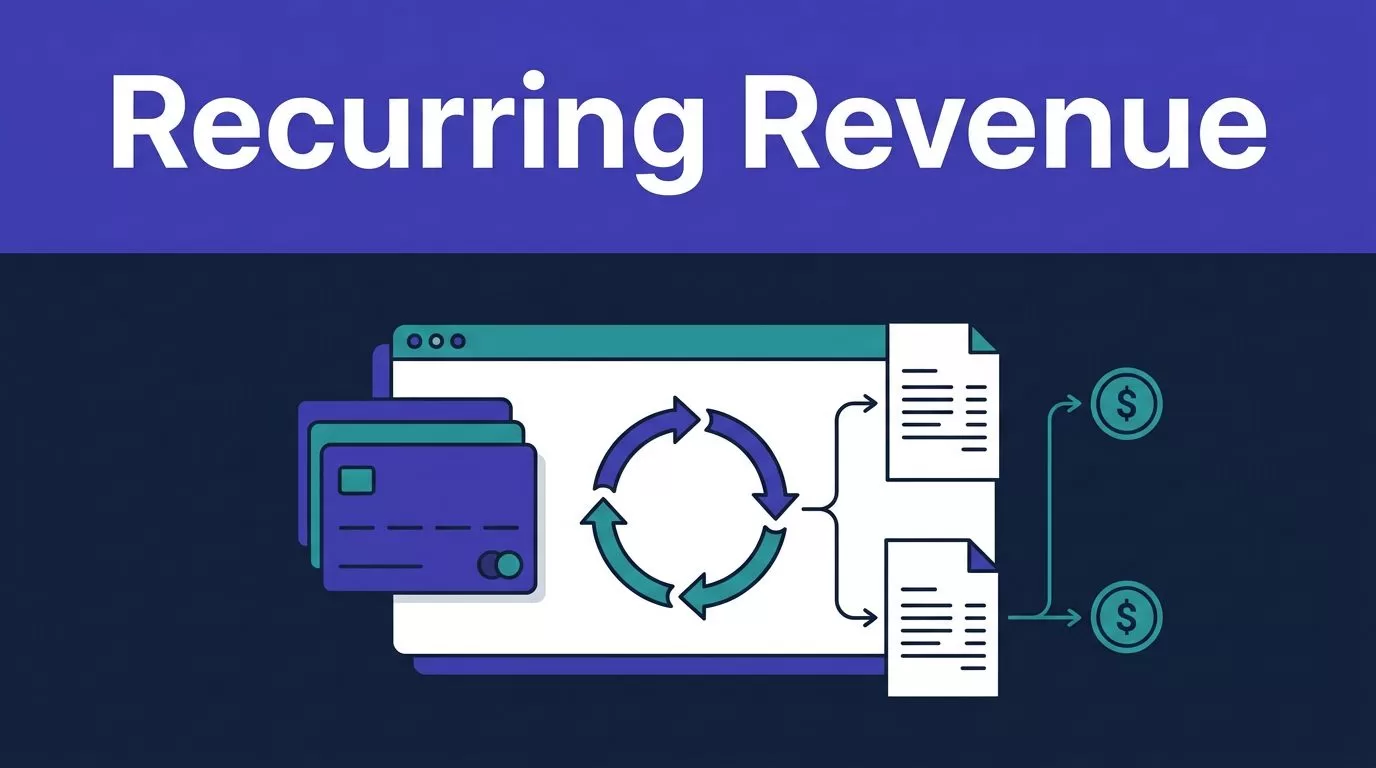
An affiliate program can look profitable in month one and lose money by month three. The usual cause is simple, you pay for signups while your business earns only when subscription invoices clear.
Recurring commission software closes that tracking gap, but it doesn’t write your payout rules. Rewardful can connect affiliate attribution to subscription billing, then track commission changes when customers upgrade, downgrade, cancel, or refund.
Start with the economics. Then configure the campaign, test the billing path, and release payouts only after the refund period has passed.
ONE-TIME VS. RECURRING COMMISSIONS
A one-time commission pays an affiliate once after a defined conversion. That conversion is usually a first paid invoice, not a trial signup or form submission.
For example, a customer starts a $100 monthly plan. At a 30% one-time commission, the affiliate earns $30 after the first eligible payment. The customer can renew for two years, but the affiliate receives no additional commission.
When one-time commissions fit
One-time payouts fit products with high onboarding costs, low margins, or long sales involvement. They also work when the first payment produces enough gross profit to fund the referral.
This model is easy to forecast. It also gives affiliates less reason to promote retention, upgrades, or product adoption after the first sale.
How recurring commissions work
A recurring commission pays the affiliate on each eligible paid subscription invoice. If a customer pays $100 per month and the rate is 25%, the affiliate earns $25 for each approved invoice.
If that customer stays for 12 paid months, the gross commission is $300. If the customer cancels after four months, the affiliate receives only the approved commissions tied to those four payments.
Recurring revenue does not mean lifetime commission. Set a clear end date, such as 12 paid months, or state that rewards continue until the referred customer cancels.
SET A COMMISSION RATE YOU CAN AFFORD
Pick the rate after you model retention, support cost, payment fees, refunds, and gross margin. Don’t copy a competitor’s headline rate and hope the math works later.
Use the amount actually collected as the basis for percentage commissions. A $100 list price is not $100 of collected revenue when a coupon reduces the invoice to $75.
These are practical launch settings, not Rewardful defaults or universal market benchmarks.
| SaaS setup | Recommended starting rule |
|---|---|
| Low-touch self-serve product | Pay 20% to 30% for the first 12 paid months |
| Lower-margin or onboarding-heavy product | Pay 10% to 15% for 6 to 12 paid months |
| Annual subscription plan | Pay 15% to 25% of the eligible annual invoice after the hold period |
| Fixed-price product or short contract | Use a fixed payment after the first cleared invoice |
A 30% recurring rate can work for a $99 self-serve product with strong retention. It can fail for a service-heavy $99 plan that requires several support hours per account.
Set a hard ceiling before launch. For most new programs, a time-limited recurring reward is safer than promising “lifetime” commissions with no retention model behind it.
SET UP RECURRING COMMISSION SOFTWARE IN REWARDFUL
Rewardful uses campaigns to define affiliate rewards. Its public product pages describe tracking for recurring commissions, upgrades, downgrades, cancellations, and other subscription billing changes through its affiliate software for SaaS.
Connect your billing system before you invite affiliates. Rewardful is built around subscription billing workflows, including Stripe and Paddle integrations. Your tracking must pass the affiliate referral through the signup and checkout process.
Configure one clear launch campaign
Start with one campaign. Avoid separate rates for every partner before you know which traffic produces retained customers.
Set these terms before publishing the affiliate offer:
- Choose a percentage commission or a fixed amount.
- Set a duration, such as 12 paid invoices or 12 calendar months.
- Set a cookie or attribution window that matches your buying cycle.
- State whether trials qualify only after the first payment clears.
- Explain whether coupon discounts reduce the commissionable amount.
For a self-serve SaaS product, a 30-day attribution window is a reasonable starting point. Use 60 or 90 days if customers often read content, take a demo, and return later to subscribe.
Rewardful can calculate percentage commissions from the amount the customer actually pays. If a $100 invoice has a $25 discount, a 30% commission applies to the $75 collected amount, not the list price.
Make attribution visible before launch
Create a test affiliate. Open the affiliate link in a fresh browser session. Complete a test signup, apply a test coupon, and review the resulting customer and commission records.
The Rewardful listing in the Stripe App Marketplace states that the system adjusts commissions for billing events such as free trials, refunds, upgrades, downgrades, and cancellations. Test those events in your own checkout. A product claim is not proof that your configuration is correct.
WRITE RULES FOR REFUNDS, CANCELLATIONS, AND CHURN
Software can detect billing changes. Your operating rules decide what happens to affiliate money.
Write those rules before the first affiliate applies. Put the same terms in your partner agreement, internal payout process, and finance record.
Hold commissions through the refund period
Set a refund hold before a commission becomes payable. A 30-day hold is a practical default for many monthly SaaS products.
Rewardful’s automated refund handling states that it adjusts commission records for refunded affiliate sales, along with upgrades and downgrades. That feature reduces manual correction work. It does not remove the need for a documented hold policy.
If a customer refunds before payout, void the pending commission. If you already paid the affiliate, apply the reversal against a future payout or handle it under the terms you published.
Review chargebacks manually. A disputed payment can require a different decision than a normal customer refund.
Apply plan changes to the next paid invoice
Use a percentage rate when plans can change. It keeps the commission aligned with the billed amount.
If a customer upgrades from $100 to $200 per month, a 25% recurring commission changes from $25 to $50 on the next eligible paid invoice. A downgrade works in reverse.
Don’t restart a 12-month commission term when a customer upgrades. Keep the original referral start date unless your published program terms say otherwise.
When a customer cancels, future recurring commissions stop because future paid invoices stop. Don’t reverse prior cleared commissions unless the underlying payment was refunded, disputed, fraudulent, or otherwise invalid.
Track churn by affiliate. Record the cancellation date, last paid invoice, total commission paid, and customer retention period.
CONTROL PAYOUTS LIKE A FINANCE PROCESS
A commission dashboard is not your accounting system. Keep separate records for pending, due, paid, voided, and reversed commissions.
Rewardful explains that commissions sit through a user-defined refund window before payout in its commission-to-payout workflow. That status change matters. Pending revenue is not approved revenue.
Use a fixed payout rule
Set a monthly payout date and a minimum balance, such as $50 or $100. A minimum reduces payment fees and avoids processing dozens of small transfers.
Collect the affiliate’s payment details and required tax information before the first payout is due. Don’t hold up a valid payout because your team never requested basic payment data.
A pending commission is not a permanent debt. It becomes payable only after the customer payment, refund hold, and attribution record all pass review.
Block invalid commissions early
Write exclusions in plain language. Common exclusions include self-referrals, employee purchases, test transactions, fraudulent orders, reseller purchases, and leads already in an active sales process.
Review coupon attribution with the same care. A coupon can help an affiliate receive credit, but it can also create duplicate claims when another partner already influenced the sale.
Keep a record of each exception. Store the customer ID, invoice ID, affiliate ID, decision, reviewer, and date. Don’t overwrite the original record when a dispute occurs.
TEST THE BILLING PATH BEFORE RECRUITING AFFILIATES
Run a controlled test before you announce the program. One missed referral parameter can create weeks of payout disputes.
Use this test sequence:
- Click a test affiliate link in a clean browser session.
- Create a test account and complete a trial or paid signup.
- Confirm the affiliate, customer, subscription, and invoice appear in the expected records.
- Apply a coupon and compare the commission with the amount actually paid.
- Test an upgrade, downgrade, cancellation, and refund where your billing setup allows it.
If your backend creates Paddle checkout data, preserve the referral value in the passthrough data. Replacing the full passthrough object can remove the affiliate identifier without producing an obvious error.
Follow Rewardful’s affiliate tracking implementation guidance when you configure the billing connection. Then compare a small sample against Stripe or Paddle every week during launch.
Check the affiliate, customer, paid invoice, paid amount, commission amount, and refund status. Keep the last trusted commission report before each payout run. If attribution suddenly drops, stop automatic approvals and investigate the checkout path.
MEASURE RETAINED CUSTOMERS, NOT CLICKS
Clicks show interest. They do not show revenue quality.
A partner can send hundreds of clicks, produce ten trials, and still generate no retained paid customers. Your recurring commission software should support a program decision, not a vanity dashboard.
Keep a fixed program record
Use a spreadsheet or database with one row per attributed customer. Include the affiliate, customer ID, first paid invoice, plan, commission rate, refunds, reversal status, payout date, and cancellation date.
Track these operating measures:
| Metric | What it tells you |
|---|---|
| Confirmed paid referrals | Whether the partner produces real customers |
| Refund and reversal rate | Whether referrals create valid revenue |
| Month-three retention | Whether customers stay after initial signup |
| Cost per approved customer | What you spend to acquire a retained account |
| Review time per payout | Whether the program creates correction work |
Calculate total program cost using Rewardful fees, affiliate commissions, payment fees, discounts, and staff review time. A high click count has little value if your team spends hours fixing duplicate claims and refund reversals.
Review a sample every week
Compare a small group of Rewardful records with your billing platform. Check the partner, customer, paid invoice, commission, and refund status.
Measure accepted records, not completed automations. A workflow that saves ten minutes but creates thirty minutes of correction work is not working.
WHEN REWARDFUL FITS A SUBSCRIPTION SaaS PROGRAM
Rewardful fits a SaaS affiliate program when you sell subscriptions, collect payment through a supported billing workflow, and want partner rewards tied to actual invoices.
Start with five approved affiliates and one campaign. Run the program long enough to see paid invoices, refunds, and at least one payout cycle. Then expand only after the billing data matches the affiliate records.
Use separate campaigns only when the business reason is clear. A strategic integration partner may deserve a different rate than a content publisher. A reseller may need a different agreement entirely.
Don’t add complexity because a dashboard allows it. Add a new rule only when it solves a real payout, attribution, or partner-management problem.
FINAL THOUGHTS
A recurring affiliate program works when each commission can be traced to a real customer and a cleared subscription invoice.
Set the rate around retained revenue. Hold commissions through refunds. Let upgrades and downgrades change the eligible invoice amount. Stop future rewards when the customer stops paying.
Rewardful can handle the tracking layer. Your payout rules and review process make the program financially safe.

