Remitly Nicaragua: Send Money Securely in 2026
Sending money to Nicaragua shouldn’t require guesswork about fees, delivery times, or identity checks. Remitly Nicaragua gives you a practical way to send funds through a website or mobile app, but security depends on how you set up a...
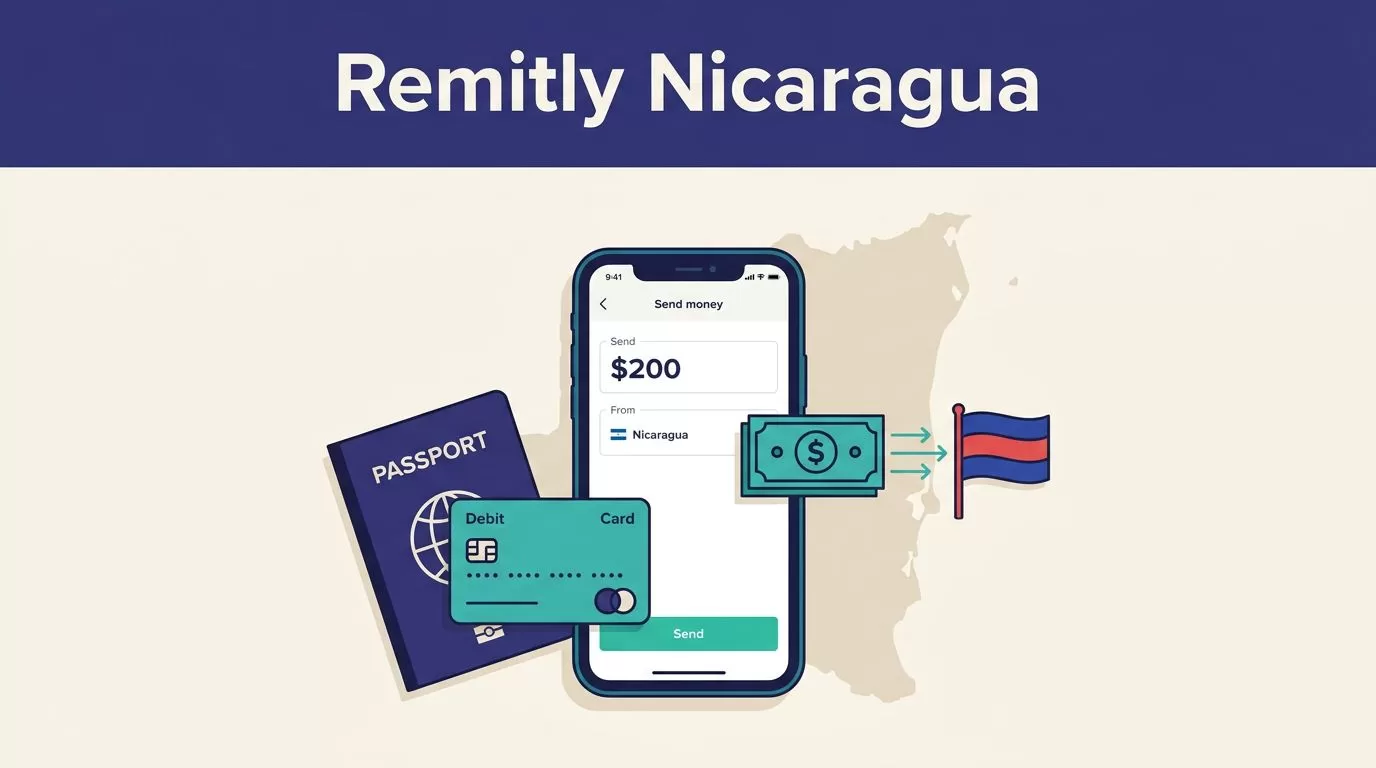
Sending money to Nicaragua shouldn’t require guesswork about fees, delivery times, or identity checks. Remitly Nicaragua gives you a practical way to send funds through a website or mobile app, but security depends on how you set up and review the transfer.
Your sender location, recipient location, payment method, amount, and delivery option all affect the final quote. Use the live Remitly estimate before every transaction, then confirm the recipient details before authorizing payment.
How Remitly Nicaragua Transfers Work
Remitly lets you send money online through its website or app. You first select the country you’re sending from and choose Nicaragua as the destination. Then you enter the transfer amount, recipient information, payment method, and delivery method.
The recipient may receive funds through cash pickup, bank deposit, mobile wallet, or debit card deposit, depending on the available network. The options shown in your account are the options available for that specific route. They may differ from what another sender sees.
The official Remitly page for sending money to Nicaragua is the correct place to start. Don’t use links from unsolicited text messages, social media ads, or emails that ask you to log in.
Photo by Monstera Production
After you enter the transfer details, Remitly displays the exchange rate, fee, recipient amount, and an estimated delivery time. The estimate is not a guarantee. Compliance reviews, bank processing, payment verification, weekends, holidays, and local provider hours can affect delivery.
Remitly may also ask for identity information before completing a transfer. Requirements can vary by sender country, transfer amount, funding method, and account history. You may need to provide your legal name, address, date of birth, government-issued identification, or other verification details. Follow the instructions inside the official app or website.
Check the Full Cost Before You Send
The fee shown on the final review screen matters more than a general advertisement. A low transfer fee can still produce a poor result if the exchange rate reduces the amount the recipient receives.
As of August 2026, Remitly’s U.S. pricing page shows a listed fee structure of 1.1% of the amount sent plus $3.99 for bank deposit, debit card deposit, and cash pickup to Nicaragua. For a $200 transfer, that formula equals $6.19 in fees. This is the displayed U.S. to Nicaragua schedule, not a universal price for every sender.
Review the current Remitly Nicaragua pricing page before sending. The page’s calculator is the source for your actual quote. Check the total debit from your payment method and the exact amount the recipient will receive.
The exchange rate is part of the total cost. Compare the recipient’s final amount, not only the advertised fee. A transfer with a lower fee can deliver less if its exchange-rate margin is wider.
A promotion may change the fee. Remitly currently advertises a free first transfer for eligible new customers. A separate promotion document describes two fee-free completed transactions for eligible U.S. to Nicaragua customers through December 31, 2026. Read the offer terms shown in your account. Don’t assume that a promotion applies to a second transfer, a different payment method, or a different sending country.
If you compare providers, a Remitly exchange-rate comparison can provide a second reference point. Use it for research only. The live Remitly quote controls the transaction you are about to submit.
Fees, exchange rates, supported services, limits, and regulations can change. Save a screenshot or transaction record that shows the fee and exchange rate at the time you approve the transfer.
Select the Delivery Method Carefully
The best delivery method depends on how the recipient manages money. Ask the recipient before you create the transfer. A convenient option for one person may be difficult for another.
| Delivery method | Best fit | What to verify |
|---|---|---|
| Cash pickup | Recipients who need physical cash | Provider location, operating hours, identification requirements, and reference details |
| Bank deposit | Recipients with an eligible bank account | Account holder name, account number, bank name, and currency |
| Mobile wallet | Recipients who regularly use a supported wallet | Wallet ownership, phone number, limits, and availability |
| Debit card deposit | Recipients with an eligible debit card | Card eligibility, recipient details, and the amount received |
Cash pickup requires extra coordination. The recipient may need identification and transaction information before the local provider releases the funds. Confirm the exact instructions in the transfer record rather than relying on an old transaction.
Bank deposits require accurate account information. A wrong account number or mismatched name can delay the transfer or send it into a correction process. Copy the details from a trusted source, then ask the recipient to confirm them independently.
Mobile wallet availability can depend on the specific provider and phone number. Don’t select a wallet option unless the recipient confirms that the account is active and eligible.
The delivery option also affects the price and estimated timing. Remitly may show faster and lower-cost service choices, but the exact terms depend on the route. Choose based on the recipient’s need, not a generic promise that funds will arrive within a certain number of minutes.
Follow These Steps to Send Securely
Use this process every time you send money through Remitly Nicaragua.
- Open the official Remitly website or the official Remitly app. Check the spelling of the website address before entering your password.
- Set your sender country and select Nicaragua as the destination. Confirm the currencies and amount before continuing. A transfer from the United States may have different fees and options than a transfer from Canada, the United Kingdom, or another country.
- Enter the recipient’s legal name and delivery information exactly as required. For cash pickup, use the name shown on the recipient’s identification. For deposits, verify the account or wallet details with the recipient.
- Choose a payment method that belongs to you and that you recognize. Review the card or bank account information before submitting payment. Never fund a transfer through instructions sent by an unknown person.
- Read the review page from top to bottom. Confirm the transfer amount, fee, exchange rate, recipient amount, delivery method, recipient name, and estimated delivery date. Correct errors before you authorize the transaction.
- Complete any identity verification inside Remitly. Use clear and current documents. Don’t send identification documents or verification codes to a person claiming to be a Remitly employee through an unofficial channel.
- Save the confirmation number and status information. Share only the details the recipient needs to collect or track the transfer. Keep the full receipt private.
Don’t create a second transfer because the first one appears slow. Check the status first. Duplicate transfers can create two separate charges and may be difficult to cancel after processing.
Protect Your Account and Avoid Remittance Scams
Your Remitly account is the control point for every transfer. Use a unique password that you don’t reuse for email, banking, or social media. Keep your phone, email account, and payment cards protected.
Never share a password, one-time passcode, verification code, or security answer. A legitimate support interaction shouldn’t require you to reveal a code that was sent to your phone or email. If someone asks for one, stop the conversation and contact Remitly through the official app or website.
Watch for common scam patterns. Someone may claim to be a relative in an emergency, a romantic partner who needs help, a government official, or a recruiter offering a job. Another scam may promise a prize, refund, loan, immigration service, or account release after you pay a fee.
Verify urgent requests through a separate channel. Call the family member using a number you already have. Don’t use the number included in the suspicious message. Ask a direct question that an impersonator may not know.
Treat requests to send money on behalf of another person as high risk. You may be asked to receive funds, forward them, or purchase gift cards after a payment. These arrangements can involve fraud or stolen payment information.
Use a private device and a trusted internet connection when possible. Log out of shared computers. Keep the Remitly app and your phone operating system updated. Turn on available account security controls, and monitor your bank or card account for unexpected charges.
A verification code is not proof that a caller is legitimate. It is a credential that can give someone access to your account or transaction.
For cash pickup, don’t send the transfer reference number to anyone except the intended recipient. The recipient should also avoid posting it publicly. Once funds are collected or deposited, recovery may be difficult.
What to Do If a Transfer Is Delayed
Start by checking the transfer status in the Remitly app or website. Review any messages asking for identity documents, payment confirmation, or additional information. A missing verification step can prevent delivery.
Check whether the recipient’s bank, wallet, or cash pickup location has accepted the transfer. Local provider hours and holidays can affect availability. The estimated delivery time shown at checkout doesn’t remove these processing steps.
If the status remains unclear, contact Remitly through its official support channel. Provide the transaction number, sender details, recipient details, and the exact error message. Don’t create another transfer until support confirms that the first transaction was canceled or completed.
If your bank or card shows a charge but Remitly shows no completed transfer, contact both providers through official channels. Keep your receipt and payment record. Never pay an additional person to release or accelerate the transfer unless the official transaction screen clearly shows a new charge.
Use Remitly Nicaragua With a Final Review
Remitly Nicaragua can support bank deposits, cash pickup, mobile wallets, and other delivery options when they are available for your route. The safe process is consistent: use the official service, verify the recipient, compare the full quote, complete required identity checks, and protect every account code.
Don’t rely on an old fee, exchange rate, delivery estimate, or promotion. Review the final transaction details before each send because prices, limits, provider availability, and regulations can change. A careful final check takes less time than fixing an incorrect transfer.
