Build A Research Paper Summarizer Using Twin.so
Staring at fifty pages of dense academic prose burns out your focus before you even reach the methodology section. Researchers, students, and product teams drown in literature reviews because manual extraction takes hours. You need a fast,...
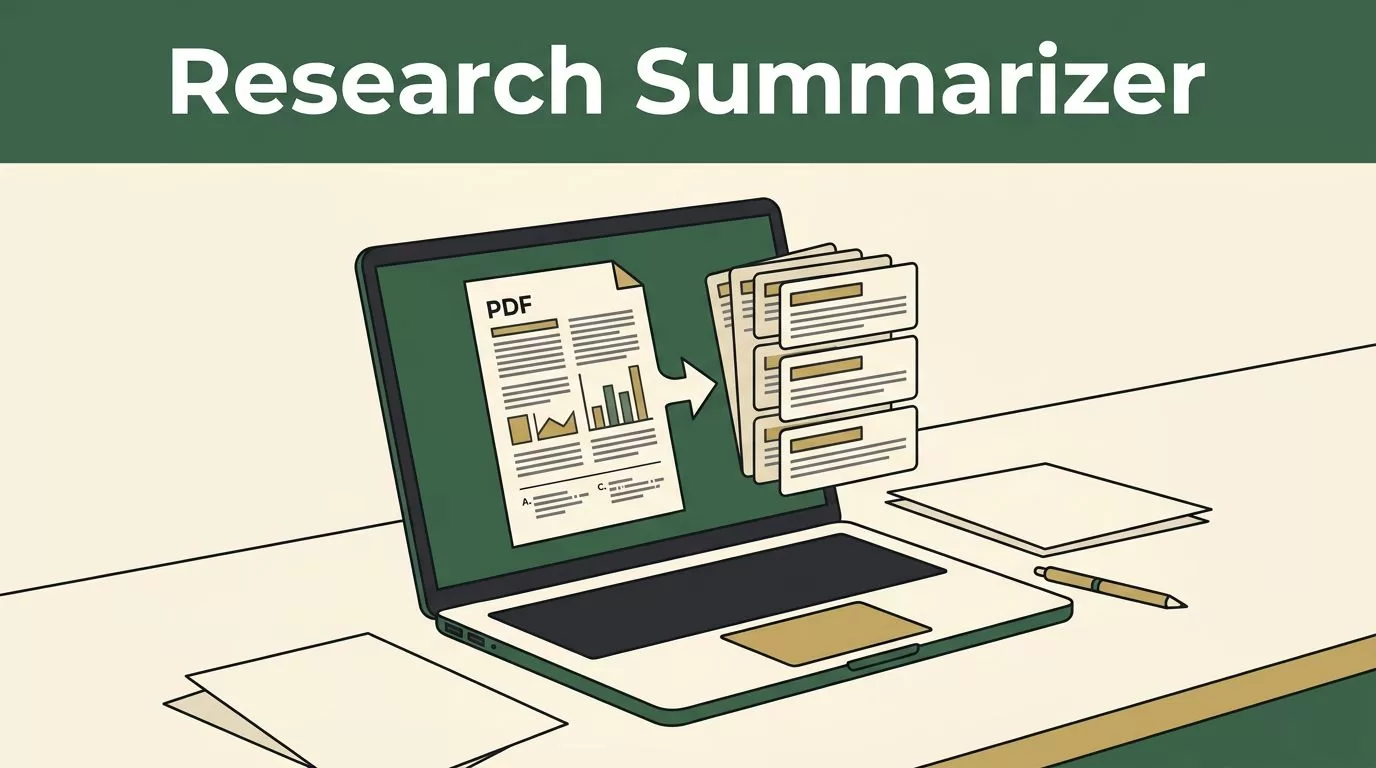
Staring at fifty pages of dense academic prose burns out your focus before you even reach the methodology section. Researchers, students, and product teams drown in literature reviews because manual extraction takes hours. You need a fast, repeatable system to pull core insights without reading every single word. Building a custom research paper summarizer solves this bottleneck by turning raw PDFs into structured, actionable briefs automatically.
Off-the-shelf reading tools often miss domain-specific jargon or force you into rigid subscription tiers. Building your own tool on Twin.so lets you control the prompt logic, formatting rules, and output structure. You set the exact parameters for what matters to your workflow. Let us walk through how to build, test, and deploy your own automated academic summarization pipeline.
Why Build a Custom Research Paper Summarizer
Off-the-shelf AI reading assistants give you generic bullet points that miss crucial nuance. When you analyze technical literature, you need specific data points, exact statistical findings, and clear methodology breakdowns. A generic summary tool treats every paper like a blog post.
Building your own research paper summarizer gives you total control over the extraction schema. You decide whether the model focuses on statistical significance, experimental design, or market implications. Twin.so provides the no-code infrastructure needed to connect document uploads with advanced language models without writing complex backend code.
You avoid paying monthly fees for software that locks your data behind closed APIs. Your team gains an internal utility tailored precisely to your research domain. Whether you study biotech, machine learning, or macroeconomics, your tool extracts the variables that matter to your specific projects. Similar workflows are explored by researchers looking for alternatives to commercial platforms like Scholarcy and SciSummary for heavy literature reviews.
Designing the Summarizer Pipeline in Twin.so
An automated summarization workflow relies on three core stages. First, your system ingests raw files like PDFs or plain text documents. Second, the backend text processor cleans formatting artifacts, running headers, and stray footnotes. Third, the language model parses the cleaned text against your predefined extraction rules.
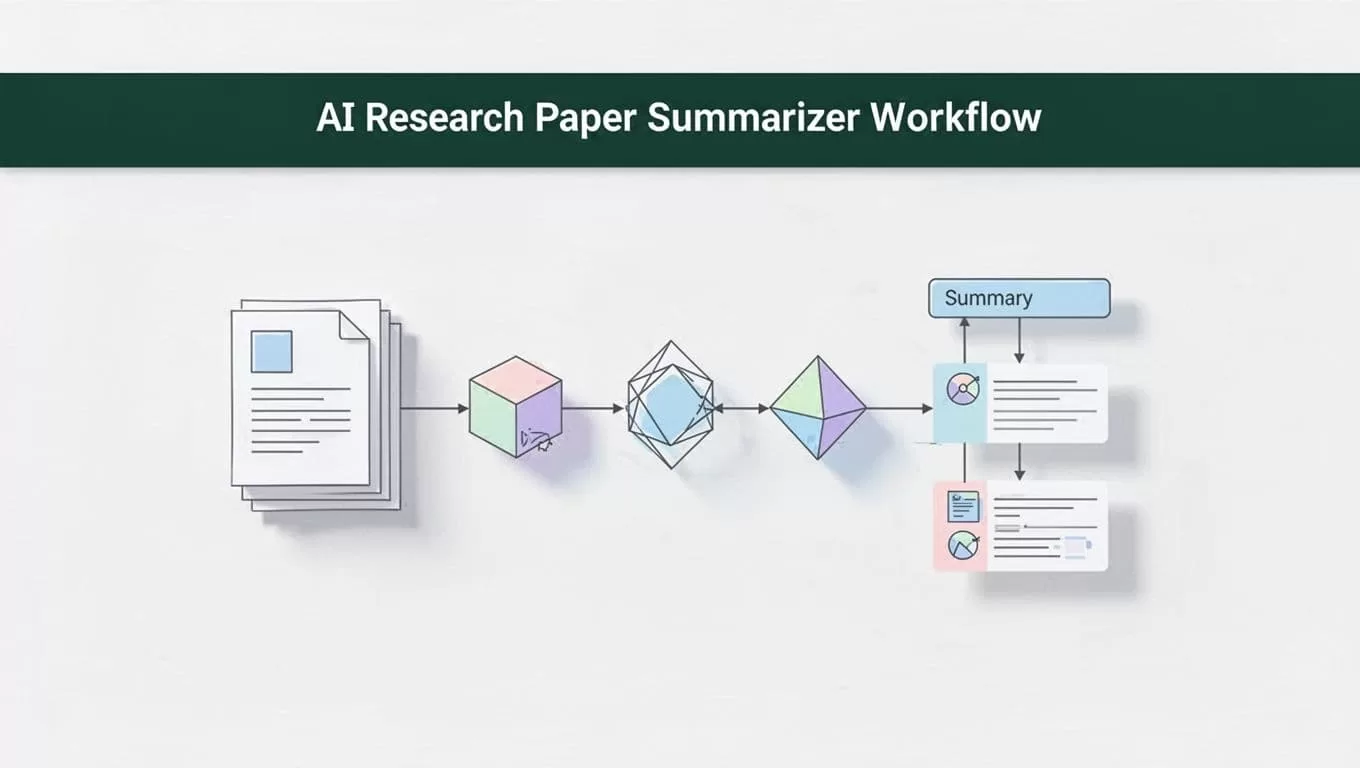
Set up your Twin.so workspace by creating a dedicated project folder for document ingestion. Configure the input node to accept multi-page PDFs from your local machine or shared cloud drives. Clean preparation prevents parsing errors later. If your documents contain multi-column layouts or complex tables, run a preliminary text check to ensure the parser reads sentences in proper sequence.
Connect your file input node to the processing layer where the language model executes your prompt templates. Keep your parsing logic modular so you can adjust prompt instructions without rebuilding the entire workflow. When errors occur, clear error handling flags corrupted files before they crash the summarization queue. Organizing your research files into dedicated folders by project name keeps your processing queue structured and prevents context switching during intensive review sessions.
Structuring Your Summaries for Maximum Clarity
Unstructured AI summaries create more work than they save. If your output is just a wall of conversational text, you still have to hunt for key metrics. A high-performing research paper summarizer forces the model to return information in a strict, predictable format.
Structure every generated brief around five mandatory components to maintain consistency across dozens of files:
- Extract the exact research question by identifying the core hypothesis or problem statement addressed in the paper.
- Record the methodology by documenting experimental design, sample size, and analytical tools used by the authors.
- List the empirical findings by capturing primary quantitative results, statistical outcomes, and observed trends.
- Note the study limitations by highlighting potential confounding variables, sample biases, and acknowledged shortcomings.
- Translate academic conclusions into key takeaways that apply directly to your current product roadmap or essay outline.
Enforcing this modular structure ensures every document outputs identical data fields. You stop wasting time deciphering inconsistent summaries and start comparing papers side by side. For community discussions on extracting these exact data points, see this Reddit thread on scientific paper AI tools.
Writing Effective Prompts for Academic Extraction
Your summarization pipeline is only as good as the prompt engineering behind it. Vague prompts yield vague summaries. You need explicit system instructions that tell the language model how to behave, what tone to adopt, and which sections to prioritize.
Write your system prompt with strict behavioral boundaries. Instruct the model to act as a rigorous academic peer reviewer rather than a casual chatbot. Prohibit conversational filler like greetings or closing remarks. Require the model to flag missing data explicitly if a paper lacks a clear methodology section.
Deploy this reliable prompt template inside your Twin.so workflow: You are an expert academic research assistant. Analyze the provided text and extract findings into five distinct sections covering the research question, methodology, findings, limitations, and key takeaways. Use concise bullet points for each section. If the text lacks explicit methodology details, write that the information is not provided in the source text. Do not include introductory or concluding conversational filler.
Long academic papers often exceed token limits if processed in a single pass. Configure your Twin.so workflow to split large documents into manageable text chunks before feeding them to the language model. Summarize each chunk sequentially, then pass those intermediate summaries into a final synthesis node. This multi-step approach guarantees that no experimental detail or statistical finding gets lost in translation.
Implementing and Verifying Your Output
Automation accelerates your workflow, but it does not replace critical human review. Language models occasionally hallucinate statistics or misinterpret complex causal relationships. You must verify generated summaries against the original paper before citing them in formal reports or product documentation.

Establish a verification routine for high-stakes documents. Compare the extracted statistical findings directly with the results table in the source PDF. Check citation details and author names if you plan to export your notes into a reference manager. When you spot discrepancies, refine your prompt instructions or adjust the chunking size of your input documents.
Organize your verified summaries into dedicated digital folders by topic or project name. Clean file organization prevents context switching and keeps your reference library accessible during active writing blocks. Export your structured notes directly into your workspace to streamline essay generation or market research reports.
Final Thoughts
Building a custom summarization tool removes the friction of processing heavy academic literature. By combining automated file ingestion, modular prompt structures, and rigorous verification steps, you turn messy PDF backlogs into structured data assets.
Audit your current reading volume today and select three dense papers to test your new pipeline. Calibrate your prompt instructions based on the initial output quality, and let your automated system clear your reading queue while you focus on execution.
