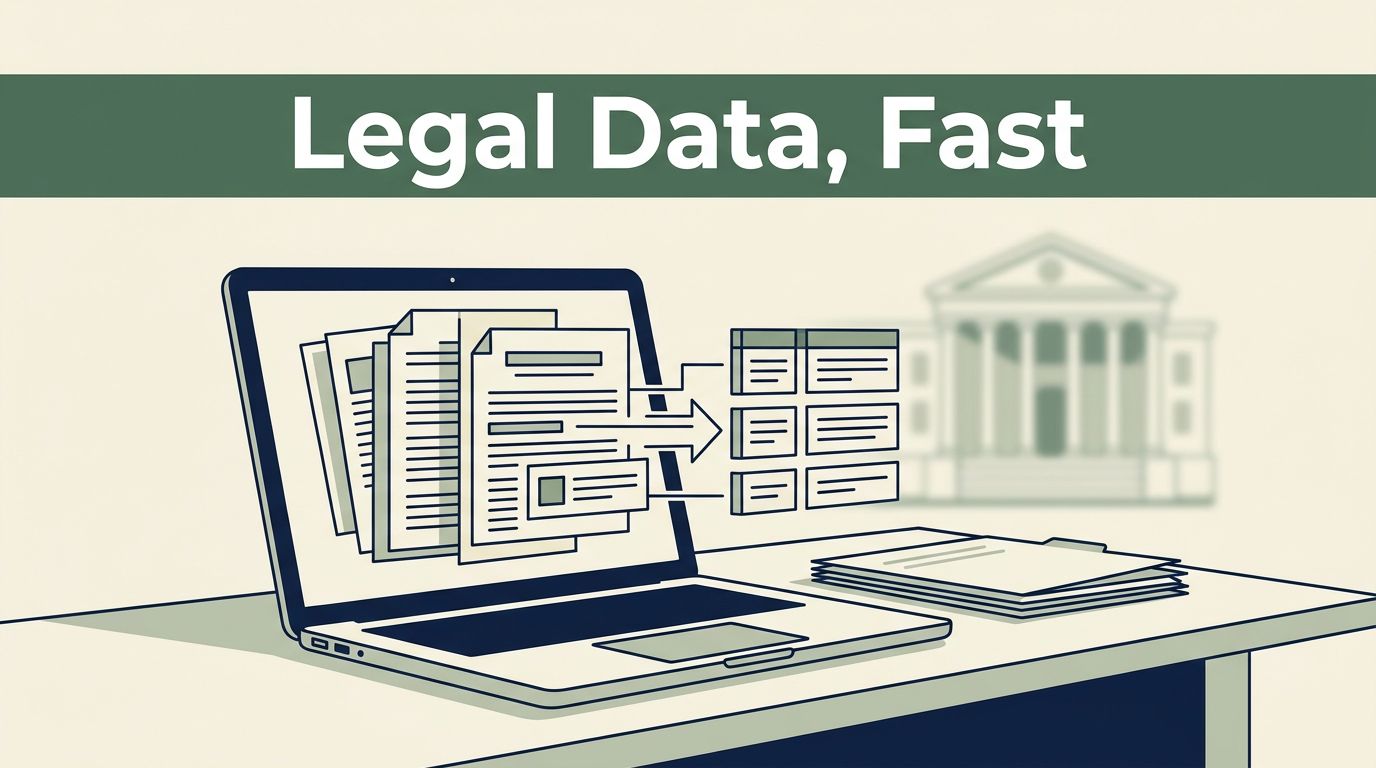
Manual data entry drains hours from paralegals and compliance teams. When you need to gather public records, court filings, or regulatory updates across hundreds of pages, copy-and-paste workflows fail. Scrape legal documents using Twin.so to turn unstructured web text into clean, structured records in minutes.
Legal research demands accuracy and speed. You need a reliable pipeline that respects site structures while extracting the specific clauses, docket numbers, and dates required for your database.
Key Takeaways
- Targeted extraction: Focus your automation on public regulatory portals and court docket pages to pull exact records without manual intervention.
- Compliance boundaries: Always respect rate limits, robot exclusion files, and terms of service before initiating any automated collection run.
- Structured output: Convert messy HTML tables and text blocks into clean CSV or JSON formats ready for your database.
- Workflow integration: Connect your extraction output directly to downstream legal-tech tools and internal dashboards.
Setting Up Your Twin.so Workspace for Public Records
Before you run any extraction job, configure your workspace parameters correctly. You need to define the target URLs, isolate the specific containers holding the text, and set appropriate pacing rules. Public legal repositories often restrict heavy traffic, so dialing in your request frequency prevents blocks.
Start by mapping out the HTML structure of the target repository. Identify the specific CSS selectors or XPath expressions corresponding to case numbers, filing dates, and document bodies. Paste these selectors into the configuration panel so the system knows exactly where to look.
For a broader perspective on the legality and rules governing automated data collection, review this web scraping legal compliance overview before deploying your project. You want to ensure your parameters align with current standards before scaling up operations.

How to Scrape Legal Documents Without Breaking Rate Limits
Aggressive collection scripts trigger security walls instantly. You must configure randomized delays and rotate user agents to keep your jobs running smoothly. Most public court databases monitor connection spikes, so throttling your requests protects your IP address from temporary bans.
Set your concurrency settings to low thresholds during initial tests. Observe how the server responds to each request batch before scaling up speed. If you encounter CAPTCHAs or sudden connection drops, pause the job, adjust your request headers, and introduce longer pauses between page loads.
Always verify that your target site permits automated access via its robots.txt file and terms of service. Bypassing access controls on restricted portals introduces severe compliance liabilities.
When evaluating the legal boundaries of automated collection, consult the browserless guide on scraping laws and risks to understand how courts handle terms of service violations and data access agreements. Operating within established guardrails keeps your firm safe from disputes.
Structuring Extracted Data for Compliance and Review
Raw HTML output is useless until you normalize it. You need to map extracted fields to a standardized schema that your compliance database can ingest immediately. Twin.so allows you to clean whitespace, standardize date formats, and tag records by jurisdiction before export.
| Extraction Field | Target Format | Normalization Rule |
|---|---|---|
| Case Number | Alphanumeric string | Strip special characters and spaces |
| Filing Date | ISO 8601 (YYYY-MM-DD) | Convert local date strings automatically |
| Docket Text | Plain text block | Remove embedded styling and script tags |
Export your cleaned dataset into a structured CSV or push it directly via API to your case management software. This eliminates manual transcription errors and speeds up document review cycles for your entire team.
Managing Complex Court Record Workflows
Court records often span multiple pages, nested tables, and downloadable PDF attachments. Configuring pagination rules ensures your scraper doesn’t stop at the first search results page. You need to set pagination triggers that follow “next” buttons or scroll events automatically.
If a docket points to a downloadable PDF file, route that URL to a secondary processing queue. You can extract text from the PDF binaries using integrated parsing modules within your pipeline. This captures the complete record without requiring manual file downloads.
Conclusion
Automating your research workflows eliminates the friction of manual data collection. By configuring precise selectors, respecting rate limits, and structuring your output cleanly, you turn hours of administrative work into an automated background process. Set up your collection rules today, verify your compliance boundaries, and let your team focus on high-value legal analysis.