Most online courses don’t stall because the lessons are weak. They stall because students walk into a maze.
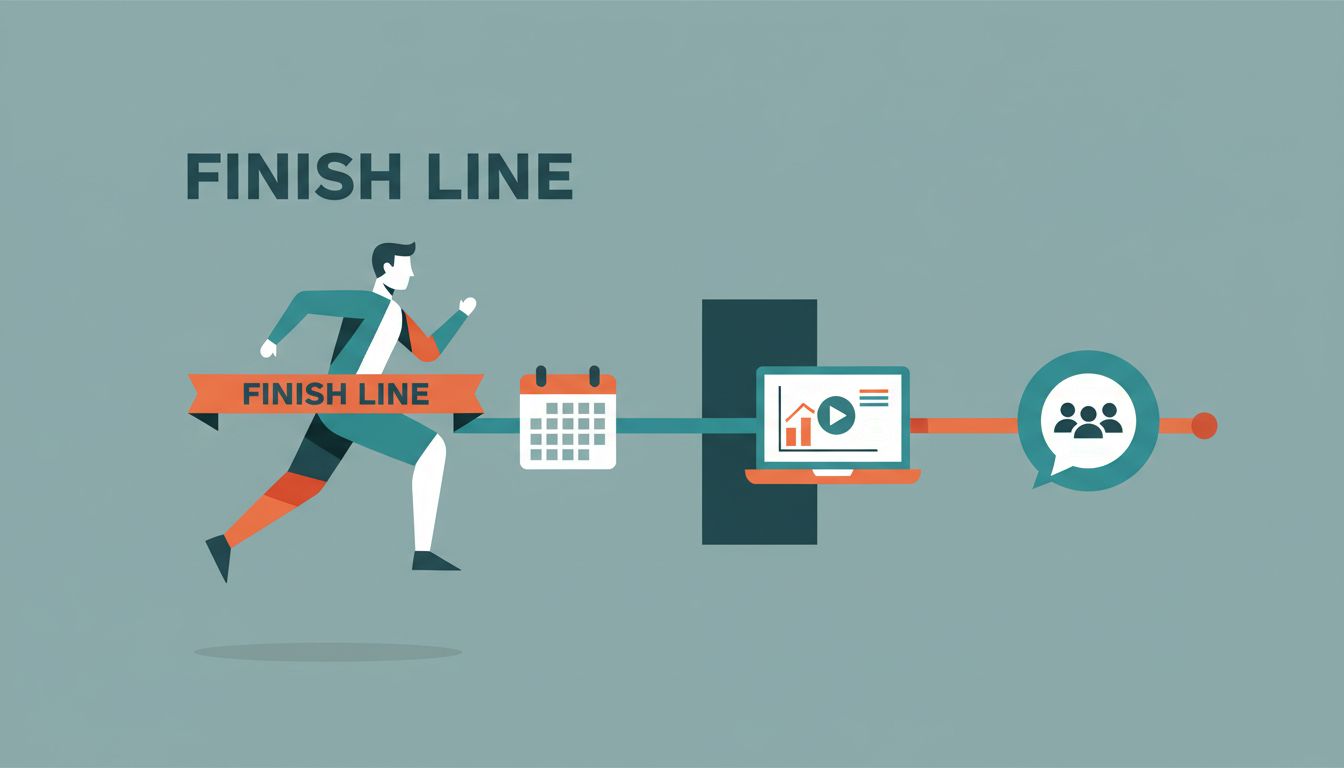
When I build a Skool cohort course, I make it feel like a guided sprint. Skool works best when the course, calendar, and community move as one, so students always know the next step. I start by defining the finish line before I touch the settings.
Start with the outcome and pick the right cohort length
I begin with one promise I can say in a breath. “Launch your client onboarding system in 6 weeks” is clear. “Learn business growth” is fog.
Then I build backward from that promise. Each week needs one milestone, one action, and one place to report progress. If a module doesn’t move the student toward the finish line, I cut it.

I choose length by how much change I expect, not by how many lessons I own. This quick guide keeps me honest.
| Cohort length | When I choose it | Best fit |
|---|---|---|
| 4 weeks | One narrow result | audits, resets, quick wins |
| 6 weeks | Skill plus feedback | coaches, creators, operators |
| 8 weeks | A larger build | launches, systems, team rollouts |
Most of the time, 6 weeks is the sweet spot. It’s long enough for habit change, yet short enough to keep urgency alive.
I also keep the first cohort small. Twenty active students beat 200 silent logins. If I want a wider view before I commit to Skool, this cohort learning platform roundup gives me a clean snapshot of where community-first course tools fit.
Set up your Skool classroom before you open the doors
As of March 2026, Skool lets me upload video directly, organize lessons inside Classroom, and unlock content by time or member level. That matters because a cohort should feel paced, not dumped on students all at once.
I structure modules by week, not by topic. Week 1 gets one core lesson and one action. Week 2 builds on that. The layout feels more like stepping stones than a shelf of files.
A cohort usually breaks the moment students have to guess what to do next.
For pricing, I keep it simple. A time-boxed cohort usually fits a one-time payment. If I want ongoing support after the program, I add a monthly alumni tier. Skool now supports multiple pricing tiers, free trials, and freemium access, so I can keep a free community at the front and reserve the live cohort for paid members. Billing runs through Stripe, which saves setup headaches.
Live sessions need the same clarity. I schedule every call in the calendar before launch, then lock the weekly rhythm. Skool can host live sessions directly, and it also works with Zoom or Google Meet. Students see events in their local time and get reminders, which cuts the usual timing mess.
Use live calls and accountability to keep momentum high
A good cohort isn’t a content drop. It’s a drumbeat.
So I run the same weekly pattern every round. New lesson on Monday. Check-in thread on Wednesday. Live call on Friday. That rhythm gives students fewer choices, and fewer choices often means more action.

For assignments, I keep things public and light. I ask for one screenshot, one short post, or one Loom link that shows the work happened. Skool shines when accountability lives in the open, because other students can react, comment, and learn from the messy middle. I don’t try to turn it into a heavy gradebook. Simple proof beats paperwork.
The built-in points and leaderboard help more than I expected. Students earn momentum from posting, commenting, and finishing lessons, so the course starts to pull them back in. I sometimes lock bonus content behind a level, but I use that sparingly. The goal is motion, not turning the class into an arcade.
Live calls also need a job. One week can be teaching. The next can be hot seats. Another can be review and repair. I post the replay fast inside Skool, then tag students with the next action while the call is still fresh.
Turn the cohort into an ongoing community after graduation
The last week shouldn’t feel like the lights went out. If the course solved a real problem, students still want peers, feedback, and a place to keep going.
That’s why I pitch the next container before the cohort ends. For example, I might move graduates into a lower-priced monthly community with office hours, peer wins, templates, and fresh challenges. That shift lines up with the broader idea of community-led growth on Skool, where the course becomes the doorway, not the whole house.
I also think about how I’ll fill the next cohort. If I’m inviting B2B founders or operators into a niche program, I use focused outreach instead of spraying cold messages everywhere, and my Hunter.io 2026 review for B2B contact finding shows the kind of prospecting workflow I pair with a small cohort launch.
Skool’s strength is its focus. Course, community, calendar, and chat live in one place. The tradeoff is simple too, if I need deep site design, heavy funnel logic, or a large marketing stack, I look elsewhere.
A Skool cohort course works when each week points to one clear win. That simple rule beats a giant lesson library every time.
If you’re building your first cohort, start smaller than you think. Then run one tight group, watch where students stall, and let the next round get sharper.