Skool vs Facebook Groups: Should Creators Make the Switch?
Building a community on Facebook can feel like renting a room inside a crowded mall. People can find you fast, but they can also drift away fast. For coaches, creators, and course sellers, that trade-off gets harder to ignore. I keep coming...
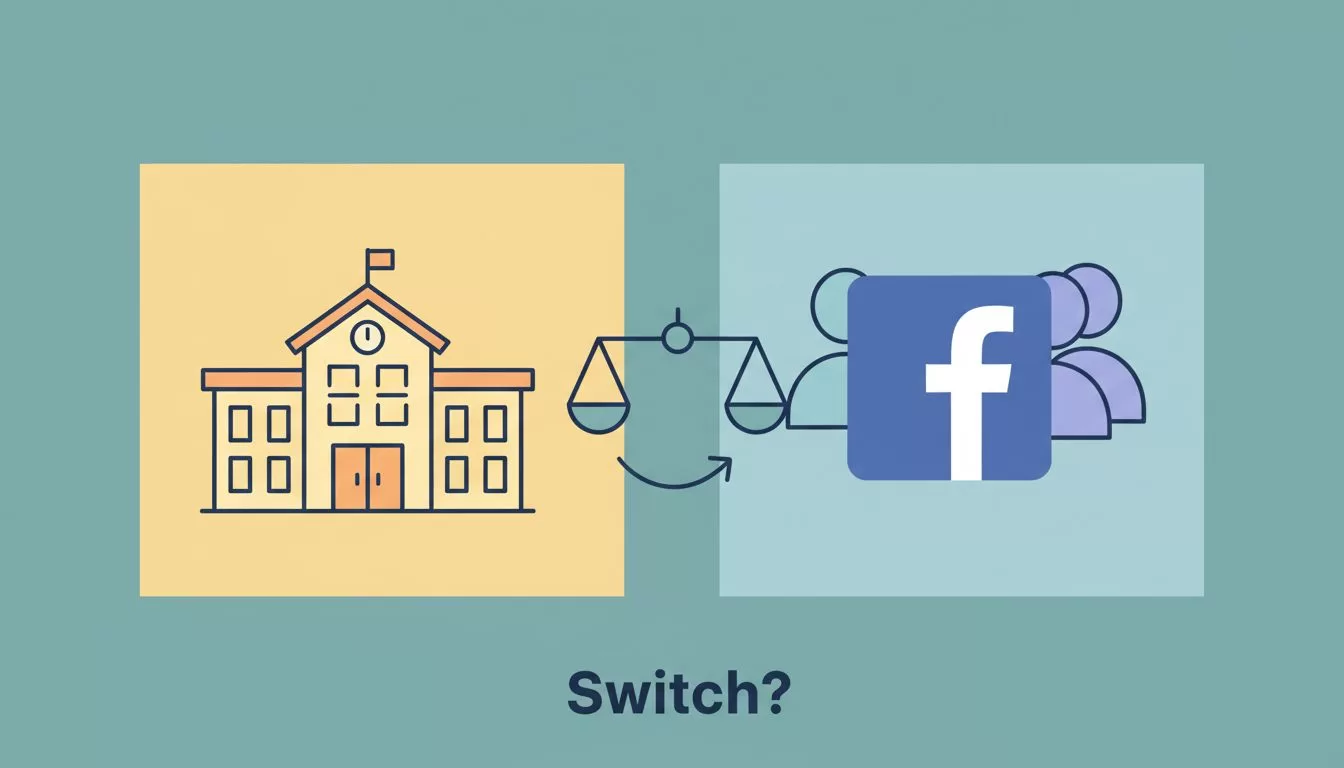
Building a community on Facebook can feel like renting a room inside a crowded mall. People can find you fast, but they can also drift away fast. For coaches, creators, and course sellers, that trade-off gets harder to ignore.
I keep coming back to one question in the Skool vs Facebook Groups debate: do I want reach, or do I want focus? For some businesses, replacing Facebook Groups with Skool makes perfect sense. For others, Facebook is still enough, at least for now.
Why Facebook Groups Start to Break as You Grow
Facebook Groups still has one huge advantage, it’s free. Most people already have an account, so joining takes almost no effort. If I’m testing an idea, growing a local audience, or building a free group from scratch, that low friction matters.
Still, free often comes with noise. Members open Facebook and hit ads, reels, messages, and alerts before they ever reach my group. Good posts sink fast. Useful answers get buried. Spam slips in unless I spend real time moderating.

The bigger problem is structure. Facebook Groups can host discussion, files, events, and live video, but they don’t create a clear member path. New members arrive and see a messy attic, not a guided room. They ask the same questions because the best material is hard to find.
When I compare that with a dedicated community platform, the difference feels like sticky notes on a fridge versus labeled shelves in a workshop. One works for a while. The other helps people find what they came for. That same tension shows up in this 2026 comparison from Scottmax.
Skool vs Facebook Groups, What Actually Changes
As of March 2026, and as always, pricing and features can change. This is the trade-off I see most often:
| Area | Skool | Facebook Groups |
|---|---|---|
| Cost | Paid plans, starting at $9 per month | Free |
| Community setup | Organized feed, classroom, calendar, chat | Basic group feed, files, events, live video |
| Monetization | Built-in payments and paid tiers | No built-in payments |
| Learning tools | Courses, videos, live calls | No true course area |
| Limits | No quizzes, certificates, or drip lessons | Weak structure for paid learning |
Skool now has a Hobby plan at $9 per month, or $7.50 on annual billing, and a Pro plan at $99 per month, or $82 yearly. Both include unlimited members, courses, videos, and live calls, plus a 14-day trial. Hobby adds a 10 percent fee on sales. Pro removes Skool’s own platform fee, although processor fees still apply.
Facebook Groups stays free, which matters when cash is tight. However, it doesn’t give me built-in payments, course hosting, or multiple paid tiers in one place. I can stitch those tools together with outside software, but that starts to feel like taping extensions onto an old house.

What I like most about Skool is the way it puts discussion, lessons, member profiles, and events under one roof. That matters if I sell coaching, a paid community, or a course with ongoing support. A practical SkoolPrep breakdown reaches a similar conclusion.
Still, I wouldn’t call Skool a perfect swap for every use case. If I need quiz-heavy lessons, certificates, or timed drip content, Skool can feel thin. So the better question isn’t “Is Skool better?” It’s “What job does my community need the platform to do?”
When Skool Is the Better Choice, and When Facebook Still Works
I would move to Skool when the community is part of the product, not just the marketing. Paid memberships, group coaching, course access, client support, and cohort-style learning all fit that model. In those cases, a focused home beats a crowded social feed.
If the group helps me teach, sell, and support at the same time, I want the platform to act like a business asset.
Facebook Groups can still be enough in a few cases. I keep it when the goal is broad reach, casual conversation, or early demand testing. It’s also fine for free communities that don’t need payments, lessons, or a strong member journey.
Sometimes the smart move is hybrid. I can use Facebook for discovery, then move paying members into Skool for the real experience. That way, I keep the wide top of the funnel without forcing my best members to learn inside a noisy app.
How I’d Move a Community to Skool Without Losing Momentum
If I have an active group, I don’t flip the switch overnight. I treat the move like changing stores on the same street. The sign matters, but the welcome matters more.
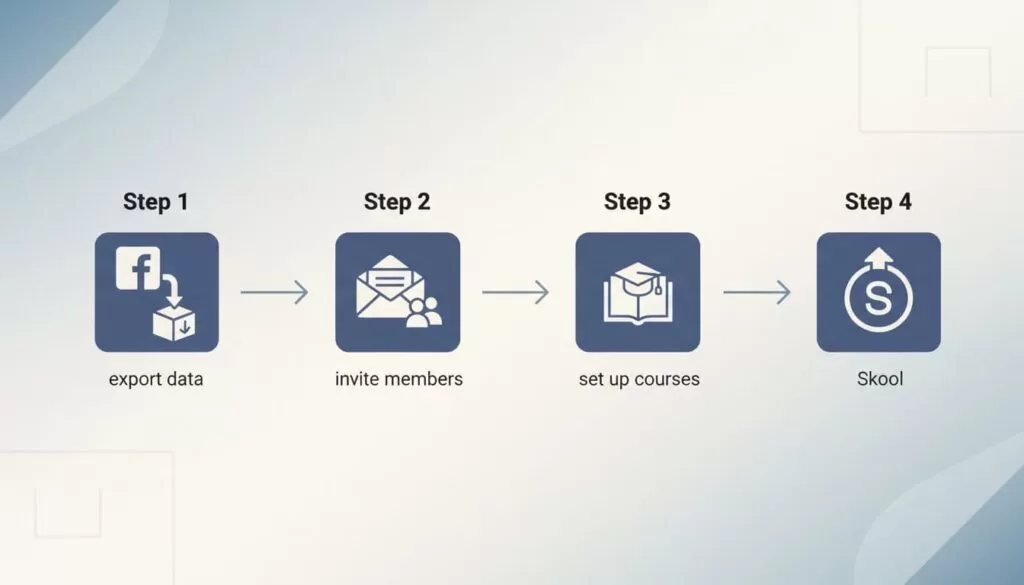
- Pull out the best material first. I save top posts, FAQs, live replay links, and the questions members ask every week. Then I turn that into starter lessons, pinned threads, and a welcome path inside Skool.
- Build the new experience before inviting anyone. I set up clear categories, one quick-win lesson, an intro post, and the first event. People need a reason to stay on day one.
- Announce the move with one simple message. I explain what’s better: less noise, easier access to lessons, and one place for calls and discussion. Since Facebook doesn’t turn a group into a neat customer list, I rely on email, checkout records, and pinned posts to bring people over.
- Run both spaces for a short bridge period. For two to four weeks, I answer deeper questions in Skool first and use the Facebook group for reminders. Early bonuses, founder badges, or a welcome call can help the move feel special instead of forced.
After that, I stop posting new value in the old group. People follow motion. When the best conversation happens in Skool, the center of gravity moves there too.
The heart of Skool vs Facebook Groups is simple. Facebook gives me reach, while Skool gives me focus.
If my group is a free hangout, Facebook may be enough. If it’s tied to revenue, learning, or client success, I’d rather build on space I can shape.
Before you switch, audit one month of activity. Count how many sales, support questions, and lessons live outside Facebook. That number usually tells me whether it’s time to replace Facebook Groups with Skool.
