Specialized Recruitment Trends I Track With Exploding Topics
Specialized hiring rarely moves in a straight line. One month, AI engineers take center stage. The next, healthcare security, executive search, and green jobs pull attention away. I use specialized recruitment trends as a filter, not a head...


Specialized hiring rarely moves in a straight line. One month, AI engineers take center stage. The next, healthcare security, executive search, and green jobs pull attention away.
I use specialized recruitment trends as a filter, not a headline. Exploding Topics helps me spot which niche roles are gaining real search interest, and which ones are only riding a short burst of attention.
That matters in April 2026, because hiring teams are flooded with signals. I want the ones that turn into requisitions, not just chatter. I start by looking at the shape of the trend, then I test the business case.
What Exploding Topics tells me before job boards do
Job boards show demand after it is already active. Exploding Topics helps me see the first bend in the curve. That matters when I need to decide where to build sourcing lists, client pitches, or content.
I look for steady growth, not a single spike. A keyword that climbs for months usually points to a hiring habit. A keyword that jumps for a week often reflects news, a conference, or a viral post.


When I see AI-related hiring rise, I do not stop at “AI”. I look for the skill beneath the label, such as model governance, data quality, MLOps, or AI security. Those are the roles companies pay for when they move from experiments to production.
The same logic applies to cybersecurity. The broad category is crowded. The budget usually sits in cloud security, IAM, DevSecOps, and fraud defense.
The categories I watch most closely in April 2026
I use a simple filter. If a topic grows in search interest, I ask whether it connects to budgets, compliance, or urgent headcount.
| Category | What I watch in Exploding Topics | How I validate demand |
|---|---|---|
| Cybersecurity | AI security, cloud security, IAM, DevSecOps | Open reqs, cert needs, compliance pressure |
| Healthcare tech | Health data security, interoperability, patient software | Hospital hiring pages, retention pressure, regulation |
| AI-related hiring | MLOps, model governance, data science, AI product work | Product budgets, team growth, repeated reqs |
| Executive search | C-suite security, transformation leaders, niche operators | Board changes, M&A, replacement hiring |
| Green jobs | Energy compliance, ESG data, project-based roles | Capex plans, regulation, project announcements |
Cybersecurity is the loudest category right now. That matches Dice’s 2026 cybersecurity hiring guidance, which points to certifications and real-world AI experience as hiring filters.
Healthcare also stays hot, because Incredible Health’s 2026 executive report shows a gap between AI interest and actual deployment capacity. In plain terms, many teams want automation, but they still need people who can protect patient data and keep workflows stable.
Tech hiring is narrowing around specialist skills. That lines up with Computer Weekly’s tech recruitment outlook, which highlights AI, data, enterprise apps, and cyber security as the pressure points.
Green jobs are trickier. I treat them as durable only when I can connect the signal to policy, budgets, or project work. A press release alone does not keep recruiters busy.
How I separate hype from durable hiring demand
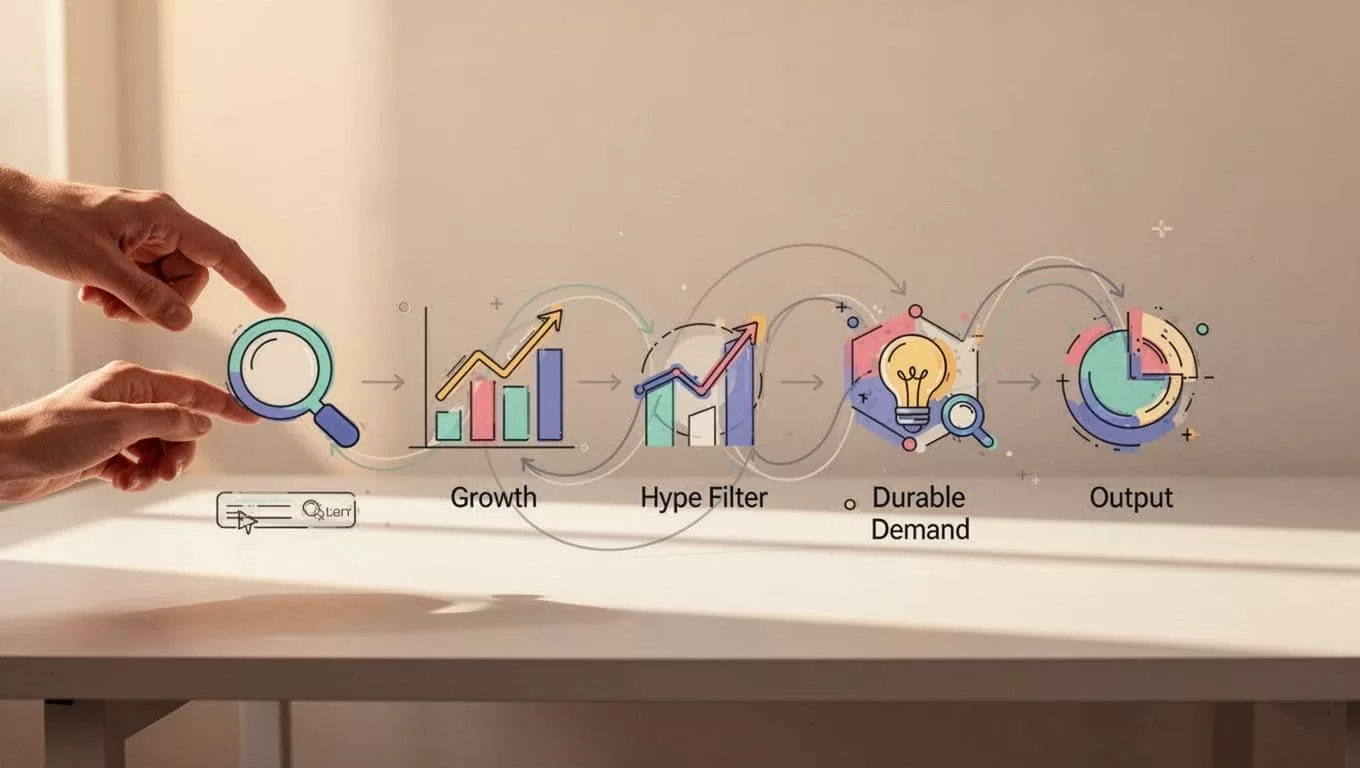
Search interest alone can fool me. A spike can come from a conference, a policy headline, or one loud product launch. Durable demand shows up in hiring plans, repeat briefs, and roles that stay open.
A trend matters only when it changes hiring budgets, not just search volume.
When I test a trend, I want to see four signs:
- The topic keeps rising across several weeks or months.
- Job descriptions name the skill directly.
- Hiring managers ask for proof, not broad experience.
- The role appears in budgeted work, not one-off experiments.
Healthcare tech often passes this test because patient data, compliance, and staffing shortages create lasting pressure. Cybersecurity passes it too, because attack risk does not pause.
Green jobs can fail the test fast. Interest may rise before headcount does. I wait until I see project pipelines, not just public talk.
I also compare trend data with my own hiring tools. If I cannot sort candidates, tag skills, and follow up fast, the signal is wasted. Clean data matters as much as the trend itself.
What agencies and in-house teams should do next
For agencies
Agencies win when they build niche depth fast. A weak response is to say you recruit “tech”. A better one is to map one vertical, one buyer, and one pain point.
If I see cyber demand rise, I split talent pools into cloud security, IAM, and incident response. Then I keep those searches organized with Recruit CRM AI recruitment software. For resume-heavy niches, AI-powered resume parsing saves time and keeps records usable.
For retained search, I also like headhunter software built for recruiters. It helps me keep executives, stakeholders, and search notes in one place.
For in-house teams
In-house teams should use trend signals to decide which roles need priority. If a skill keeps rising in Exploding Topics, I ask whether it needs a backfill, a new headcount, or internal training.
I also tighten candidate follow-up with candidate engagement workflows, because niche candidates ignore generic outreach fast. That matters most in executive search, where timing and trust shape response rates.
Green jobs need a special lens here. I would not build a big pipeline until the business case is real. I would wait for programs, permits, or budget lines.
The signal matters more than the spike
Exploding Topics is useful because it shows movement before most dashboards do. In April 2026, the strongest specialized recruitment trends sit where risk, regulation, and technical skill overlap.
I pay the most attention to cybersecurity, healthcare tech, AI-heavy roles, executive search, and carefully validated green jobs. The trend matters only when it turns into hiring pressure, and that is the line I watch every week.

