How I Find Underserved Markets With Exploding Topics
Crowded markets do not usually feel crowded at the start. They feel quiet, then they get noisy all at once. I use Exploding Topics to catch that quiet phase, but I never confuse a rising chart with a real business. I want proof that people...

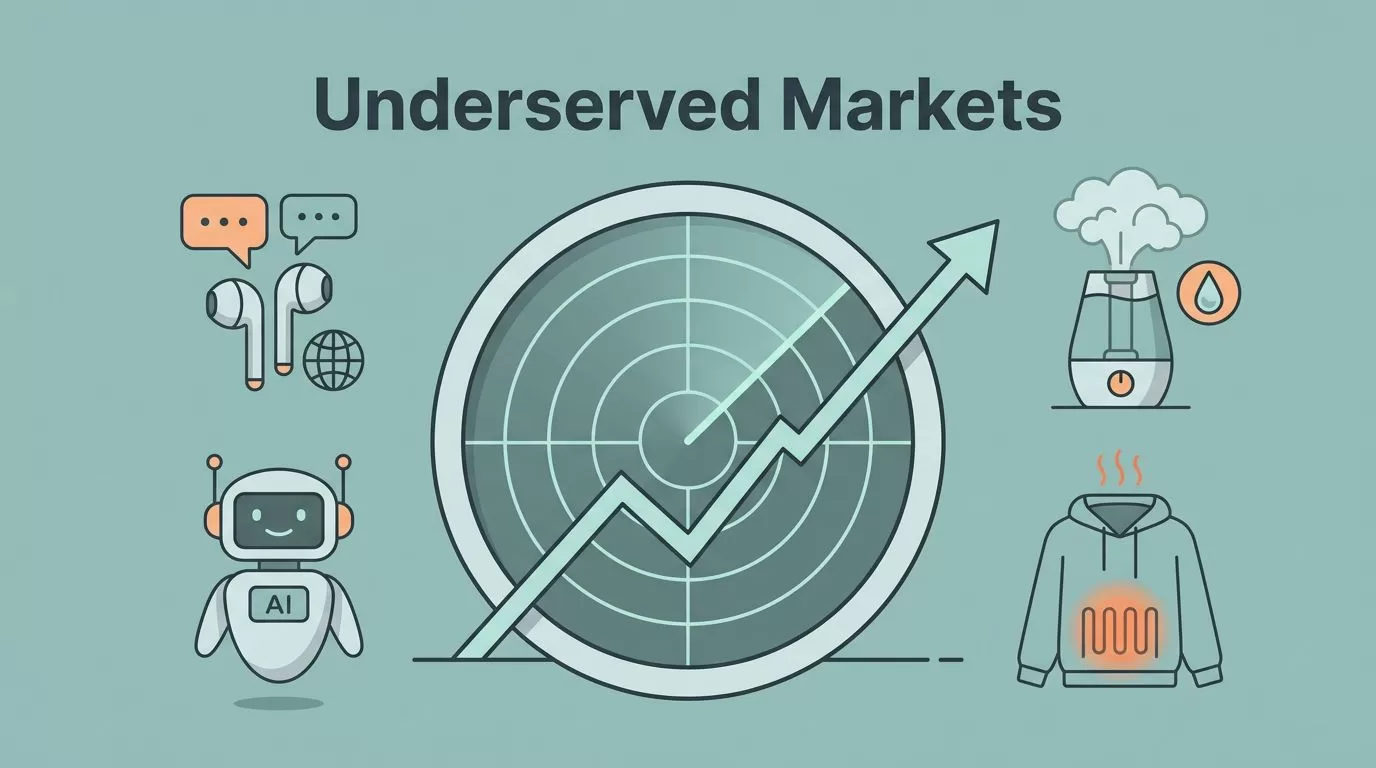
Crowded markets do not usually feel crowded at the start. They feel quiet, then they get noisy all at once.
I use Exploding Topics to catch that quiet phase, but I never confuse a rising chart with a real business. I want proof that people are searching, complaining, and ready to spend.
In April 2026, I pay close attention to signals like translation earbuds, agent AI, smart humidifiers, and heated blanket hoodies. Those ideas only matter if they point to a real need.
Start With a Trend, Not a Hunch
I open Exploding Topics with one job, find search movement that looks young but real. I am not hunting for the biggest number first. I am looking for the earliest useful angle around it.
When a topic starts climbing, I ask whether it is growing from a shallow spike or a deeper shift. In April 2026, that might be a product like translation earbuds, or a software theme like agent AI. The exact label matters less than the pattern behind it.
I also compare the trend with the source’s own research approach. Their methodology page helps me understand how they rank signals. When I want a broader view, I use my own Exploding Topics guide for spotting trends early. That keeps me from chasing noise.


A useful trend also widens. If one term grows into related searches, buyer groups, or use cases, I pay closer attention. That kind of spread can point to an underserved market, not a fad.
Read the Demand Behind the Signal
Search interest alone doesn’t tell me enough. I want to hear how people talk when they’re annoyed, stuck, or short on time.
So I check Reddit threads, YouTube comments, reviews, and niche forums. I look for the same pain showing up in different places. If I keep seeing the same complaint, I know the problem has weight.
Language matters here. Words like “best,” “replace,” “cheap,” “for my team,” or “subscription” often point to buying intent. On the other hand, vague excitement usually means curiosity, not urgency.
That’s why I pair trend checks with finding uncrowded keywords using Exploding Topics. Keyword shape tells me a lot about the stage of demand. A market with real pressure tends to leave clear trails.
A trend is useful only when pain repeats and the money path is obvious.
If I see emotional language, time pressure, or money loss, I slow down and dig deeper. If I see casual chatter, I keep it on my watch list.
Check Whether the Market Still Feels Open
This is where I separate a real opening from a crowded lane. I want to know if I’m early, or if the market already has walls around it.
I usually test four things side by side:
| Signal | I like to see | I treat as a warning |
|---|---|---|
| Search trend | Steady climb | One spike and no follow-through |
| Search results | Mixed small players | Every result is a giant brand |
| Community chatter | Repeated pain | Vague curiosity |
| Offer types | Service, subscription, setup help | Novelty-only products |
When I see weak pages, thin offers, or poor customer support, I keep going. When I see polished copycats everywhere, I back off. A busy market can still have room, but it needs a sharper angle.
I also compare the topic with new ecommerce niches with Exploding Topics data. That helps me think in clusters instead of single terms. One strong theme can support several offers, but only if the field still has gaps.

I also watch for signs that competition is thin for a reason. Sometimes the pain is real, but the market is too narrow, too regulated, or too hard to serve well. That’s still useful. It tells me to stay out or change the offer.
Validate Monetization Before I Chase It
Some trends get attention and never get budgets. I don’t spend much time there.
Instead, I test the money path first. I ask myself a few simple questions in order:
- I ask who pays for the fix.
- I ask why the problem hurts now.
- I check whether the need repeats every week or month.
- I think about whether the best offer is software, service, content, or product.
That process keeps me honest. A consumer trend might work well for affiliate content or a small product line. A B2B trend might fit a service, workflow tool, or setup package. The buyer type changes everything.
For a broader market check, I cross-check with Exploding Topics’ guide to profitable e-commerce niches. It helps me see how early demand can turn into a real offer. I want a path that can make money without needing perfect timing.

If I can connect rising search interest to a clear buyer, a painful problem, and a repeatable offer, I keep going. If I can’t, I move on. That discipline saves me from turning every shiny trend into a bad bet.
The Pattern I Trust Most
The best underserved markets usually look plain at first. They start as small search moves, repeated complaints, and weak competition.
That’s why I use Exploding Topics as a signal tool, not a verdict. I want the trend, the pain, the market gap, and the money path to line up.
When those pieces connect, I know I’m not chasing noise. I’m looking at a market that still has room to grow.

