Can Foreigners Open a Hungarian Bank Account? Wise vs. Local Banks
If I need to get paid in forints, Wise can look like a shortcut. Still, I don’t treat it as a full Hungarian bank account in the usual sense. I treat it as an online money account that can let me hold HUF, receive local HUF payments,...
If I need to get paid in forints, Wise can look like a shortcut. Still, I don’t treat it as a full Hungarian bank account in the usual sense. I treat it as an online money account that can let me hold HUF, receive local HUF payments, and move money across borders without the usual bank maze.
That difference matters. In this guide, I explain what Wise does and does not offer in Hungary, how I set it up, which documents I prepare, how long approval may take, and when I still need a traditional bank instead.
What Wise gives me in Hungary, and where the line stops
Wise lets me open an account online from many supported countries, then add a HUF balance. If my profile is eligible, I can get local HUF account details and receive money in Hungarian forint. I can also hold HUF, convert it to other currencies, send payments, and use a Wise card where card access is available for my country.
Wise may suit expats, freelancers, remote workers, and people who live outside Hungary, if the service is available where they live. Requirements and account features depend on the country and profile. Check Wise’s current eligibility rules and the HUF details shown in your own account before relying on them. A Hungarian residence permit or address is not a universal Wise requirement, but Wise may ask for identity, address, or other verification documents.
But here’s the line I don’t blur:
Wise isn’t a Hungarian retail bank. It gives me HUF account features, not a full local current account with loans, branch service, or local deposit products.
A traditional Hungarian bank may still matter if I need cash deposits, local credit, a branch visit, or an employer-approved domestic salary account. Some landlords, payroll teams, or government offices may also prefer a real Hungarian bank. Wise itself draws that distinction in its guide to opening a bank account in Hungary, and local paperwork can be heavier, as shown in this overview of Hungarian bank requirements.
This quick table makes the split easier to see:
| Option | What I get | Best for |
|---|---|---|
| Wise with HUF details | HUF balance, local receiving details, currency conversion, global transfers | Cross-border income, freelance payments, travel, remote work |
| Traditional Hungarian bank | Full local bank relationship | Local salary mandates, cash handling, loans, branch support |
I think of Wise as a strong border-crossing tool, not a full home-base bank.
How I open Wise and get HUF account details step by step
The setup is fully online, and that’s why many people start here first. For me, the process is simple when I prepare my details before I begin.
- Create a Wise account
I sign up on Wise with my email, phone number, and password. I choose a personal or business profile, based on how I’ll use it. - Enter my legal details
I use the exact name shown on my passport or ID. I also add my home address, date of birth, and tax residency details. - Verify my identity
Wise usually asks for a passport or national ID. Sometimes it also asks for a selfie or a short video check in the app. - Upload proof of address if needed
A recent utility bill, bank statement, or similar document may be required. - Wait for approval
Verification time varies. Wise may request more information, and the official pages reviewed do not give a guaranteed completion time. Check your app for the current status and avoid promising a payment date until your account is approved. - Open a HUF balance and check for local details
Once approved, I add Hungarian forint to my balances. If local HUF receiving details are available for my profile, Wise shows them inside the account.
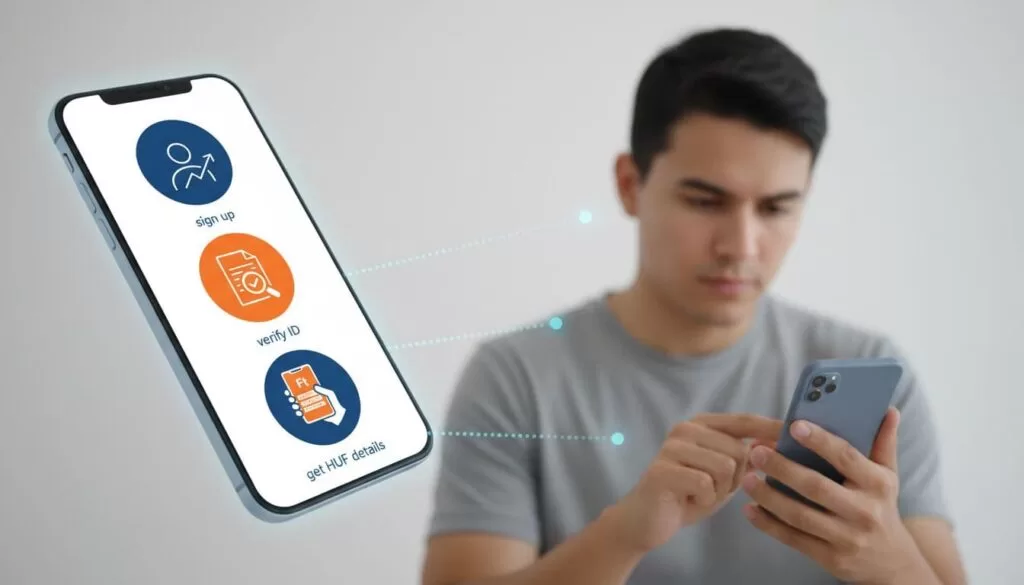
Most people can do all of this without visiting Hungary. No embassy run, no branch appointment, no paper folder under my arm. Still, I always check the app before promising clients new banking details, because feature access can vary by country and account type.
If you’re comparing how Wise handles local details in other markets, the logic is similar to receiving AUD payments with Wise. Local details are useful, but they don’t turn Wise into a local bank.
The documents, fees, timelines, and smart checks I make first
The smoothest applications start with clean documents. I usually prepare these before I click anything:
- Passport or government ID that matches my profile name exactly
- Proof of address, often less than 3 months old
- Tax residency information, and sometimes extra details for compliance checks
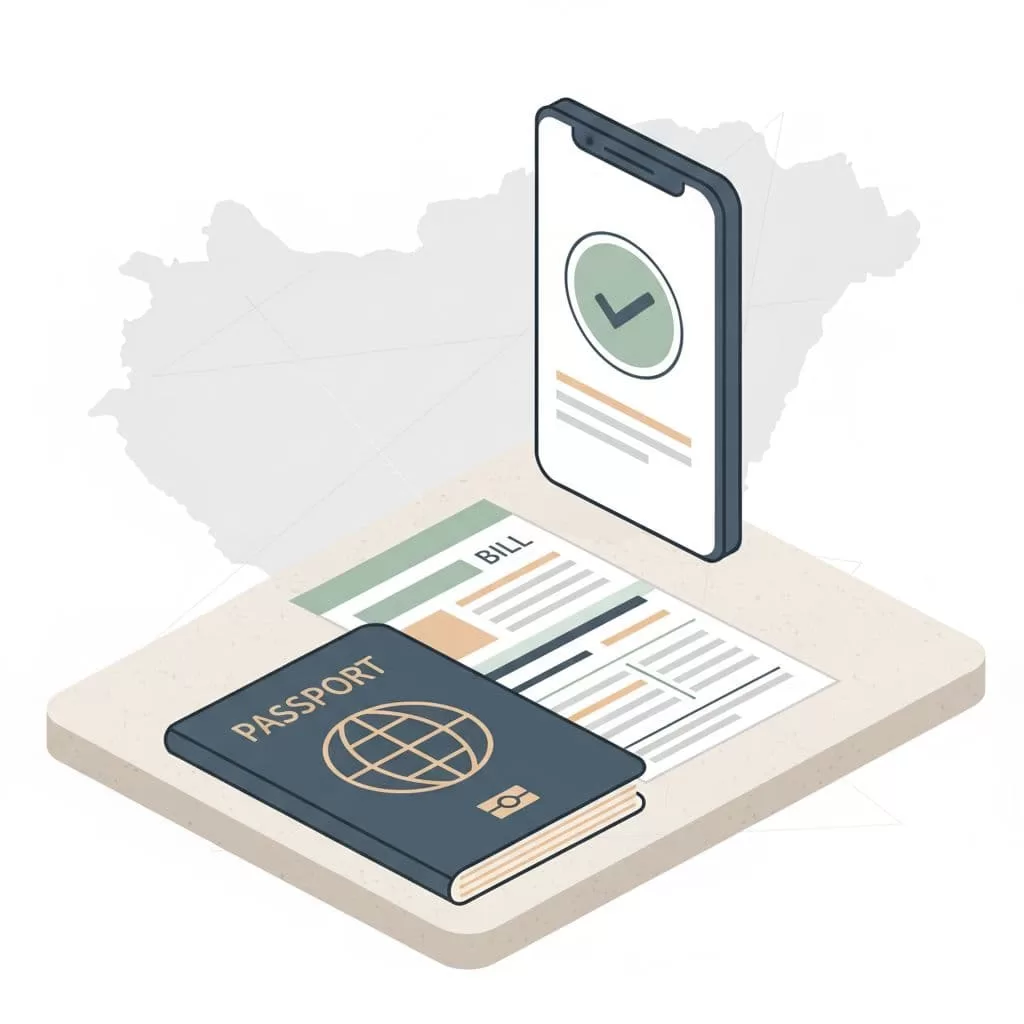
Wise does not publish one guaranteed verification time for every customer in the official pages reviewed for this guide. A review can take longer if more information is needed. Check your account for its current status; after approval, confirm that HUF details are active before sharing them for a payment.
Wise’s published fees are more specific than a single percentage range. Opening a personal account and holding a balance are normally free. For eligible HUF details, domestic non-SWIFT, non-wire payments are listed as free to receive; international HUF payments can carry a Wise receiving fee and correspondent bank charges. Sending and conversion costs depend on the amount, payment method, and route. Check Wise’s HUF receiving-fee guidance and the live quote in your account before you transfer.
A few practical tips save time:
If I freelance, I don’t send invoices with new HUF details until Wise shows them as active.
If I work remotely, I ask my client or platform if they accept Wise details for payouts.
If I’m a non-resident, I keep my expectations clear. Wise may solve the payment problem, but it may not satisfy a “must be a Hungarian bank” rule.
For people who truly need a branch-based account, this local overview of opening a bank account in Hungary gives a useful picture of the extra paperwork and in-person steps that can come with traditional banks.
Can a foreigner open a Hungarian bank account?
Often, yes, but the answer depends on the bank, the account package, and where you live. A foreign citizen who lives in Hungary should not assume the same rules apply to someone applying from another country. A bank may ask for extra proof of identity, a Hungarian address, or documents that explain the reason for the account. A residence permit is not a universal requirement, and a passport alone is not a universal guarantee of approval.
For example, OTP’s English page for retail forint accounts says an individual over 18 can open an account and that foreign customers should bring a valid passport or travel document. K&H lists a separate document route for non-residents. Its list includes travel documents plus extra proof of address or a document from a Hungarian authority, with other combinations depending on the applicant’s documents. Those published requirements show why it is safer to check with the exact bank and branch before travelling.
Opening an account from abroad is a different question. The pages reviewed for this guide do not confirm that every foreign applicant can finish the process remotely. Some products may have digital application routes, but identity checks, residency rules, language support, or the need to sign bank documents can limit who can use them. Before relying on a remote application, ask the bank in writing whether it accepts your country of residence and passport, whether you need to appear in person, and whether it can send the card to your address.
Hungarian bank options for foreign customers
This is a starting point, not a promise that a specific branch will approve an application. I checked the linked bank information on 23 September 2026. Banks can change their packages and onboarding rules, so confirm the latest terms before you apply.
| Bank | What the current official information supports | What to confirm before applying |
|---|---|---|
| OTP Bank | Its English retail page describes forint current-account packages and says foreign customers should present a valid passport or travel document. It also says opening is free and does not require an initial deposit. | Ask whether your non-resident status is accepted for the package you want, if you must visit a branch, which address documents are required, and the current card and account fees. OTP account packages. |
| K&H | The English retail account page lists documents for non-residents, including a travel document plus additional address or Hungarian-authority documentation. The exact acceptable combination depends on your status and documents. | Ask the bank to confirm your document set, the branch or digital application route available to you, English-language help, card delivery, and the latest fees. K&H retail accounts. |
| Erste | Erste’s published World information includes residents and non-residents, but this is a premium customer segment with agreement and financial conditions. It is not evidence that every non-resident qualifies for a standard retail account. | Ask whether you meet the current World criteria and whether a regular retail account is available to you. Review the current Erste World fee information and ask which version applies to a new customer. |
| Raiffeisen | The bank publishes retail account conditions and fee documents, including account-specific online and basic account information. The documents reviewed do not establish a general non-resident eligibility rule. | Contact Raiffeisen directly with your nationality, residence country, and documents. Ask whether it will onboard you, which account you can apply for, and whether you must apply online or in a branch. See its retail account conditions. |
English-language pages are useful, but they do not prove that every branch, phone line, or app provides full English service. If language support matters, confirm it for the branch and account you plan to use. Also ask whether the account is HUF-only or supports other currencies, and whether any foreign-currency balance has separate charges.
Documents to prepare for a local bank
Use the bank’s own checklist as the final word. These are common items to ask about, not a universal list for every applicant:
- Passport or national identity card. Foreign applicants may need a passport or travel document. OTP specifically names a valid passport or travel document for foreign customers.
- Proof of address. A resident may be asked for a Hungarian address card or another accepted address record. A non-resident may need proof of a foreign address or additional paperwork.
- Residence or immigration documents. If you live in Hungary, bring your residence card, permit, or other status document if you have one. Ask whether your specific status document is required.
- Proof of your link to Hungary. Depending on the bank and your case, ask whether it wants a rental agreement, employment contract, student record, income evidence, or a document from a Hungarian authority. Do not assume these are required by every bank.
- Tax and contact details. Be ready to provide tax-residency information, a phone number, an email address, and details about how you expect to use the account.
For K&H, the non-resident document list is particularly useful because it separates several acceptable document combinations. Read it before booking a visit, then contact the bank if your documents do not match one of the examples. Bring originals, and ask whether translations or certified copies are needed. A bank can request extra information during its identity and compliance checks.
How to apply for a Hungarian bank account
- Choose the account for your use. Decide whether you need salary deposits, local bill payments, a debit card, cash access, a foreign-currency balance, or in-person help. Compare the account’s eligibility rules, not only its headline monthly fee.
- Ask the bank to pre-check your case. Tell it your citizenship, country of residence, Hungarian address status, and what documents you hold. Ask if your application can be completed online or if you need a branch appointment.
- Get the complete current fee schedule. Request the retail account and card notices for the exact package. Ask about one-time card charges, monthly fees, transfer limits, ATM costs, and foreign-exchange pricing.
- Apply using the required route. If the bank says to attend in person, bring the original documents and allow time for questions or extra verification. Do not book travel based only on a general web page.
- Complete identity and compliance checks. Answer questions accurately about your address, income, tax residence, and expected account use. The bank may ask for more documents before deciding.
- Set up digital banking and the card. Ask when the account can receive money, when online banking is active, whether a digital card is offered, and how the physical card is delivered or collected.
I could not find one official timeline that applies across these banks for approval or physical-card delivery. The bank may activate an account at a different point from approving the application, and card production or delivery can take longer. Ask the bank for its current estimate for your exact application route. Treat any estimate as variable, not guaranteed.
What a Hungarian account may cost
There is no useful single “Hungarian bank account fee.” Costs depend on the package, card, transaction count, how you receive income, and whether you use cash or foreign-currency services. The figures below are examples from specific published products checked on 23 September 2026, not a like-for-like bank ranking. Check the linked current schedule before opening an account.
| Cost to compare | Wise | Traditional bank |
|---|---|---|
| Opening and monthly account cost | Wise says personal accounts and holding balances are normally free, subject to its terms and the customer’s country. | OTP says opening its listed retail account is free, but monthly charges depend on the package. A Raiffeisen Basic Account fee document lists HUF 1,334 per month for that specific product. This is not the price of every Raiffeisen account. |
| Card | Card availability and any issue or delivery charge depend on country and account. Check the price shown for your own profile. | Check issue, replacement, annual, and delivery charges in the package’s card schedule. |
| Local HUF payments | Wise’s receiving-price page lists domestic HUF payments as free for the supported route shown. Your account must display usable HUF details, and fees can differ by payment type or profile. | Check the number of included transfers, digital versus branch fees, and any monthly transaction limits. |
| Cash and ATM use | Wise is not a branch bank. Its card cash-withdrawal allowance and charges depend on current plan terms and country. | Check your bank’s own ATM fees, other-bank ATM fees, cash deposits, and withdrawal limits. |
| International transfers and exchange | Wise shows a route-specific fee before confirmation. Conversion fees vary by currency and amount; check the live quote. | Check the transfer fee and the exchange rate or markup separately. A low transfer fee does not always mean a low total cost. |
These figures are product-specific examples, not a like-for-like ranking. K&H’s English retail-account page lists a HUF 786 monthly management fee, while its Minimum Plus package lists HUF 1,084 per month without a qualifying discount. OTP says opening its listed account package is free, but monthly charges depend on the chosen package. Raiffeisen’s HUF 1,334 monthly figure applies to its Basic Account only. I could not verify a current general retail fee for Erste from an official fee schedule, so ask Erste for the tariff that applies to your account and eligibility. Check each bank’s current conditions before applying.
Official fee links: OTP account packages; K&H’s current private-customer fee notices, retail account page, and Minimum Plus package; and Raiffeisen Basic Account fee information. For Erste, ask for the current tariff that applies to your account and eligibility rather than relying on a premium-segment example.
Wise vs. a traditional Hungarian bank
| Need | Wise | Traditional Hungarian bank |
|---|---|---|
| Opening | Online signup and identity checks, if the service is available for your country and profile. | Bank-specific. Some applicants may need to visit a branch or provide local documents. |
| HUF details | HUF account details may be available after verification. Check your account; don’t assume every profile has the same details. | Local account details are part of the account package, subject to approval. |
| Local salary and bills | Can work for payments that accept the details Wise provides. Ask the employer, utility, or payment office whether it accepts them. | Often the clearer fit when an organization specifically asks for a Hungarian bank account, but confirm the account’s suitability with that organization. |
| Cash, branches, and deposits | App and card based. Do not expect a Hungarian branch counter or a way to deposit cash into a Wise balance. | May offer branch and cash services, depending on the bank and account. |
| Cards, credit, and savings | Offers a card in supported countries; availability and terms depend on your profile. It is not a traditional local lender. | May offer local cards and other banking products, subject to eligibility and product terms. |
| International transfers | Shows a fee for the route before you confirm; useful for holding and converting several currencies. | Can send international payments too, but compare the transfer charge and exchange rate together. |
Wise’s official help says account details can be available in HUF, while its pricing pages explain that charges depend on the service and route. Available features are not identical for every country. Check Wise’s account-details help page, the HUF account information, and the live prices shown in your own account. A particular employer, landlord, government office, or payment provider may still require an account from a Hungarian bank. Ask that organization before relying on Wise for a mandatory payment.
Can I use the account for salary, bills, and benefits?
A Hungarian bank account can be useful for salary deposits, rent, utility payments, domestic transfers, and cash access. Whether you can use a specific account for a salary or benefit is ultimately up to the payer and the applicable rules. Ask your employer or public office what account details it accepts. A Wise HUF balance may receive eligible local payments, but that does not mean every payroll system or public agency must accept it as a Hungarian bank account.
For utilities and recurring bills, check whether the provider supports direct debit from your chosen account or requires a particular domestic payment method. For rent, ask the landlord which transfer details they accept. For cash needs, check ATM charges and whether you need to deposit cash, since a digital account may not meet that need. These checks can prevent the frustrating surprise of having a working account that does not work for one essential payment.
Questions to ask before you apply
- Do you accept applicants with my citizenship and country of residence?
- Can I open this specific account as a non-resident, and do I have to visit a branch?
- Which original documents do you need from me, and do any need translation?
- Can you provide service in English for the application and ongoing support?
- What is the full monthly cost, including the card and any required package conditions?
- What do local transfers, international transfers, ATM withdrawals, and cash deposits cost?
- When can I receive money, access online banking, and use a digital or physical card?
- Will the employer, landlord, or agency I need to pay accept this account?
Final take
Wise can be a practical way to hold and receive HUF when its account details are available for your profile and the payer accepts them. A traditional Hungarian bank may be the better fit for branch help, cash services, lending, or a payment that specifically requires a local bank account. Foreigners can open accounts with some banks, but requirements differ by bank and account. Check eligibility, documents, fees, timelines, and acceptance with the exact provider before you apply. The official sources linked above were checked on 23 September 2026; confirm current terms before making a decision.
