Rewardful Paddle Integration for Automated Commissions
Affiliate clicks are easy to count. Paid subscriptions matched to the right partner are the records that matter. A Rewardful Paddle integration connects affiliate attribution to Paddle checkout activity and subscription events. When the han...
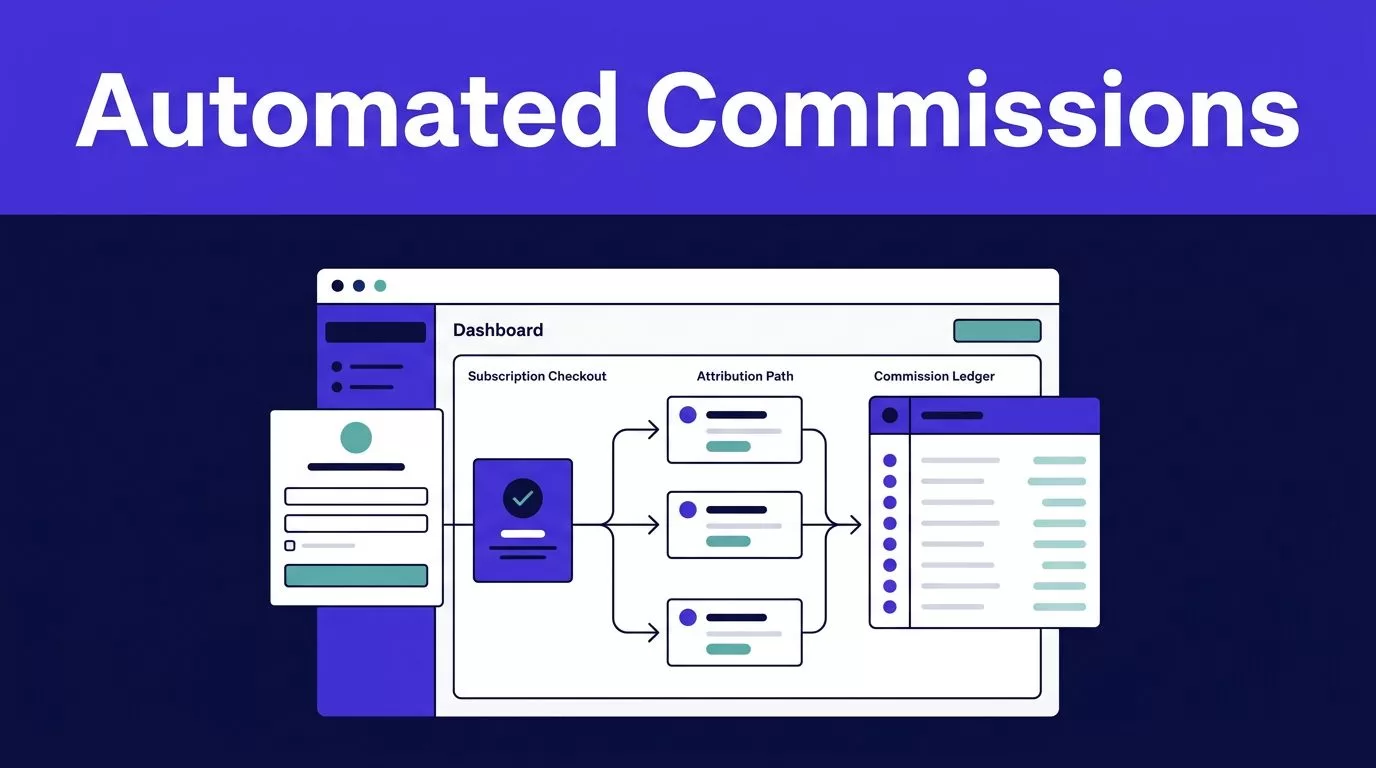
Affiliate clicks are easy to count. Paid subscriptions matched to the right partner are the records that matter.
A Rewardful Paddle integration connects affiliate attribution to Paddle checkout activity and subscription events. When the handoff works, your team can review credited sales and payout-ready commissions without rebuilding every transaction in a spreadsheet.
The setup is not a switch you turn on. You need the right Paddle product, a clean checkout handoff, clear campaign rules, and a test process that catches missing attribution.
Set Up a Rewardful Paddle integration on the Right Stack
Start with compatibility. This integration supports one Paddle product, and mixing setup paths creates commission records you cannot trust.
Confirm that you use Paddle Classic
Rewardful’s current connection supports Paddle Classic. It does not support Paddle Billing. Check the product shown in your Paddle account before you create campaigns or change checkout code.
Rewardful states this limitation on its Paddle integration page. If you use Paddle Billing, do not apply the Classic public-key, webhook, and passthrough instructions to that checkout. Use a tracking option that supports Billing, or maintain a documented manual commission process.
Define the transaction record first
Your Rewardful Paddle integration has two handoffs. Rewardful creates a referral ID after an affiliate link visit. Your checkout sends that ID to Paddle, then Paddle events keep sales and commissions current.
Write the fields down before you connect anything. Include affiliate ID, referral ID, Paddle order or subscription ID, customer ID, product, transaction amount, commission rule, sale status, refund status, and payout status.
Stable IDs matter when an affiliate disputes a sale. They also stop staff from matching records by customer name or memory.
CONNECT REWARDFUL AND PADDLE CLASSIC
Set up the billing connection before you recruit affiliates. You want a working campaign and a verified event path before referral traffic reaches checkout.
Create your Rewardful account and campaign
During Rewardful onboarding, select Paddle as your payment platform. Then set your business details and create the first campaign.
Define the affiliate reward in plain terms. State the percentage or fixed amount, eligible products, recurring duration, minimum payout terms, and any excluded plans. Your campaign settings and affiliate agreement should describe the same rules.
Do not promise lifetime commission if your margins only support a few paid months. A generous program with unclear limits becomes a support queue.
Add the public key and webhook URL
In Paddle Classic, open Developer Tools > Public Key. Copy the full Paddle public key, including the BEGIN and END markers, and paste it into Rewardful.
Next, copy the webhook endpoint URL generated by Rewardful. In Paddle Classic, go to Developer Tools > Events and add that URL under URLs for receiving webhooks. Save the change in Paddle.
The documented connection uses the Paddle public key and Rewardful’s webhook URL. Do not put private Paddle credentials in browser code or share them in affiliate-facing systems. Follow the current Paddle Classic setup guide when account screens differ from your previous setup.
PASS THE REFERRAL ID INTO CHECKOUT
A campaign cannot credit a subscription if checkout never receives the referral ID. This is the point where many installs fail.
Install Rewardful on the full visitor path
Add the Rewardful JavaScript snippet from your Rewardful account to the public pages where affiliate visitors land. It also needs to load before the page starts Paddle checkout.
Test the real path, not only your homepage. A visitor may land on a comparison page, read a blog post, sign in, then upgrade from an app page. Any missing script placement can break attribution.
Review cookie consent and privacy controls with the same care. Affiliate attribution may link a referral ID with a customer transaction. Your notice, consent settings, access rules, and retention policy need to match the markets where you operate.
Send passthrough data with Paddle Checkout
Your checkout code needs to read the Rewardful referral value and pass it to Paddle.Checkout.open() through the passthrough field. The value is JSON shaped with a rewardful object that contains the referral value.
Do not create a new referral ID in your backend. Do not replace the referral value with an affiliate email, coupon code, or internal user ID. Forward the Rewardful value unchanged.
Test every checkout entry point, including pricing pages, logged-in upgrades, modal checkouts, and custom domains. If more than one partner can touch a customer, choose the attribution rule before launch. Rewardful supports first-touch and last-touch attribution, and that choice changes who receives credit.
SET RECURRING COMMISSION RULES THAT MATCH YOUR UNIT ECONOMICS
The first payment is only one part of subscription revenue. Your campaign needs rules for renewals, upgrades, downgrades, and cancellations.
Decide how long recurring commissions run
Choose a commission term before affiliates start promoting. You might pay on the first paid invoice, the first 12 months, or every eligible renewal. The right choice depends on retention, gross margin, support cost, and refund patterns.
Rewardful supports recurring commission structures and campaign terms that can end after a defined period. Check the current commission feature options before publishing your program terms.
Document whether discounts, credits, annual billing, upgrades, and plan changes affect the amount. Do not let each affiliate manager make a different judgment after a payout dispute.
Set eligibility and exception rules
State which customers qualify. Common exclusions include self-referrals, internal team purchases, fraudulent orders, refunded payments, reseller deals, and customers already in an active sales process.
Require affiliates to use approved claims. A coupon code is not proof of referral ownership unless your policy says it is. Store the affiliate rule, the campaign version, and the decision date with each exception.
This protects both sides. Affiliates know what to expect, and finance does not have to reverse payments based on informal promises.
TEST ATTRIBUTION BEFORE YOU OPEN THE PROGRAM
Run controlled purchases before sending the first affiliate link. A completed checkout does not prove that the right partner received credit.
Test the cases that cause disputes
Use a test option available in your Paddle account, or make a controlled internal purchase that follows Paddle’s rules. Start with an affiliate link, complete checkout, and check the referral, Paddle order, customer, campaign, and expected commission.
Then test a direct purchase with no affiliate visit. Test a visitor who clicks Affiliate A and then Affiliate B. Test an upgrade, a renewal, and a cancelled subscription where your plan supports those flows.
Use a private browser window for each path. Existing referral data can hide a broken setup.
Reconcile the record across both systems
For every test, compare the Rewardful commission record with Paddle. Check the order or subscription ID, product, paid amount, affiliate, commission value, and current status.
A paid Paddle order without the referral passthrough value is a billing success, not an affiliate-tracking success.
Paddle events update downstream records, so investigate event delivery when a valid sale does not appear. Paddle’s webhook delivery model is useful when you build separate internal reconciliation or alerting processes.
Measure accepted attributed subscriptions, not affiliate clicks or dashboard activity. Track missing records, duplicate claims, refund reversals, failed event deliveries, and the time needed to resolve a payout dispute.
HANDLE REFUNDS, CHARGEBACKS, AND CANCELLATIONS
Commission automation needs a recovery process. Revenue changes after checkout, and affiliate balances need to reflect those changes.
Reconcile lifecycle changes before payout
Rewardful describes automatic adjustments for refunded sales and customer changes such as upgrades and downgrades in its refund handling documentation. Test that behavior against your Paddle Classic products before relying on it for payout decisions.
A cancellation should stop future recurring commissions when the subscription ends. It should not erase commission already earned on a valid, paid period unless your program terms say otherwise.
Treat chargebacks as an exception workflow. Do not assume every disputed payment reverses in the same way as a standard refund. Hold the affected commission, compare the Paddle transaction with Rewardful, assign an owner, and record the final outcome.
Create a failure and recovery process
Set alerts for a missing tracking script, a sudden drop in attributed subscriptions, duplicate referral claims, and webhook delivery failures. Keep the last trusted commission report available when an update fails.
Store the original Paddle transaction data separately from reviewer notes and payout decisions. If a record is disputed later, your team can see what Paddle reported, what Rewardful recorded, and why the commission was approved, held, or reversed.
If you run several checkout domains, custom upgrade flows, or multiple affiliate programs, Book A Call to map the transaction fields and exception process before scaling traffic.
IMPLEMENTATION AND TESTING CHECKLISTS
Implementation checklist
- Confirm that your Paddle account uses Paddle Classic, not Paddle Billing.
- Create the Rewardful campaign and document its commission and eligibility rules.
- Copy the complete Paddle public key from Developer Tools into Rewardful.
- Add Rewardful’s generated webhook URL under Paddle Classic Developer Tools > Events.
- Install the Rewardful JavaScript on every affiliate landing and checkout-start page.
- Pass the Rewardful referral value into Paddle Checkout through
passthrough. - Restrict access to customer, referral, commission, and payout reports.
Testing checklist
- Complete an affiliate-attributed test purchase and confirm the commission.
- Complete a direct purchase and confirm that no affiliate receives credit.
- Test your selected first-touch or last-touch attribution behavior.
- Compare Paddle order and subscription IDs with Rewardful records.
- Test a refund, cancellation, renewal, or upgrade flow that applies to your plans.
- Keep a written result for every test case before you invite affiliates.
BUILD A COMMISSION SYSTEM YOU CAN RECONCILE
A working integration does more than record clicks. It ties a valid referral to a paid Paddle subscription, applies a documented commission rule, and keeps the record usable when the customer lifecycle changes.
The best Rewardful Paddle integration is one your affiliate manager and finance lead can reconcile without guesswork. Start with a small approved test set, review every exception, and expand only after the records match your Paddle data.
