Drive Churn Reduction Automation Using Twin.so
Unpaid invoices and declining logins drain your recurring revenue while manual follow-ups waste hours of team time. When account engagement drops, you need a reliable process to intervene without damaging customer relationships. Twin.so giv...
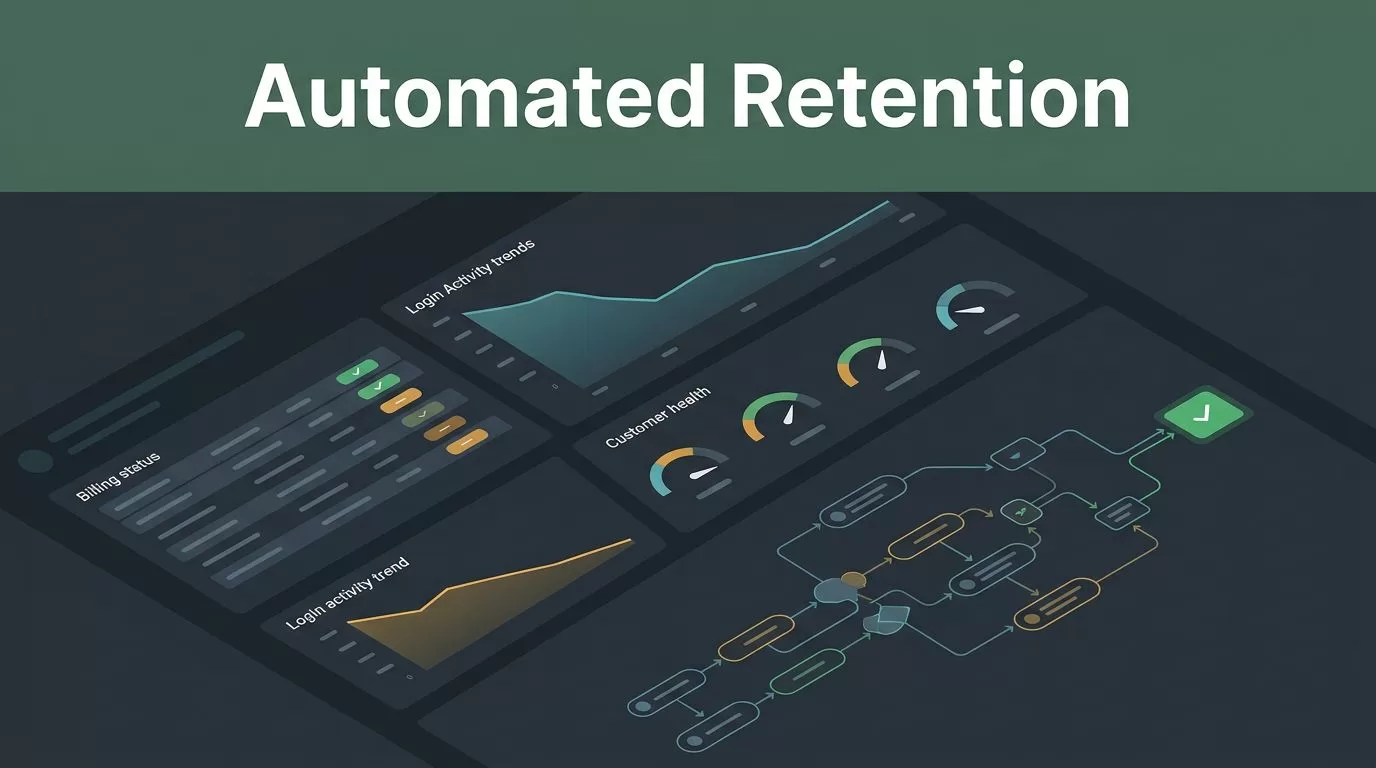
Unpaid invoices and declining logins drain your recurring revenue while manual follow-ups waste hours of team time. When account engagement drops, you need a reliable process to intervene without damaging customer relationships. Twin.so gives you an automated way to manage billing workflows, sync account data, and trigger retention sequences when metrics pass risk thresholds. By establishing a clear protocol, your team stops chasing accounts blindly and starts driving predictable churn reduction automation.
You configure AI agents to monitor billing statuses, track product telemetry across platforms like Mixpanel, and launch outreach before cancellation requests hit your inbox. This operational approach moves retention past generic email templates into structured, event-driven workflows. For a broader look at tools designed to protect your recurring revenue, you can review this guide on which tools help reduce churn rate.
Key Takeaways
- Connect your customer data sources directly to Twin.so to monitor product usage drops and failed payments instantly.
- Distinguish proactive retention workflows from passive email blasts by tying actions to concrete behavioral triggers.
- Configure strict approval boundaries and exception logs so high-value accounts always route to human team members.
- Measure intervention success using specific metrics like logo churn, revenue churn, and time-to-response rates.
Operationalizing Retention Workflows
Retention work fails when it relies on manual spreadsheet reviews and delayed notifications. By the time a customer success manager spots a dropping login count, the renewal window has already closed. You need a centralized automation layer that reacts instantly to warning signs.
Twin.so bridges the gap between your analytics databases and communication channels. When an event signal fires, the agent captures the account identifier and evaluates the required next steps.

You map out the exact risk triggers that matter to your business model. If monthly logins drop below a specific threshold, or if a payment fails twice, the system updates your CRM and opens a task queue.
Proactive Retention Versus Generic Email Automation
Generic email sequences send identical reminders on a fixed calendar schedule regardless of user behavior. Proactive retention automation analyzes real-time product telemetry and payment states before taking action.
| Automation Type | Primary Trigger | Action Taken | Best Used For |
|---|---|---|---|
| Generic Blast | Calendar Date | Sends newsletter or update | General marketing updates |
| Proactive Retention | Usage Drop or Failed Payment | Updates CRM and alerts CSM | Defending active subscriptions |
When an account experiences friction, your automated workflow reaches out with contextual help rather than generic marketing copy. If a team stops using a core feature, the agent pulls documentation and drafts a targeted support check-in for the account owner.
Designing Your Core Churn Triggers
Your automation logic requires precise input parameters to avoid false alarms and unnecessary alert fatigue. Start by defining the exact signals that precede an account cancellation in your platform.
- Usage decline: Monitor active session counts or core feature completions over a rolling thirty-day window.
- Failed billing events: Track invoice payment failures, expired credit cards, and disputed transaction logs.
- Support escalation: Flag accounts that open multiple high-severity support tickets within a single billing cycle.
- Low engagement score: Combine login frequency and user seat utilization into a single health metric.
When any of these conditions are met, Twin.so executes the programmed playbook. The agent updates the account status field, notifies the assigned team member in Slack, and enrolls the contact into a tailored retention sequence.
Alerts alone do not reduce churn because alerts only inform your team of a problem. Real retention requires an automated follow-up process that coordinates tasks, updates records, and triggers outreach immediately.
Establishing Human Approval Boundaries
Full automation works well for repetitive, low-risk tasks, but enterprise accounts require human oversight. You must configure clear boundaries inside your workflows to protect major customer relationships.
Standard accounts can receive automated check-in messages when minor usage drops occur. Accounts generating top-tier annual recurring revenue require a mandatory review step before any automated communication goes out.
Your workflow checks the contract value against a predefined threshold. If the account exceeds that limit, the agent pauses execution and assigns a high-priority task to the head of customer success.
Tracking Key Performance Indicators
You cannot improve retention if you don’t measure the operational impact of your automated workflows. Monitor a balanced set of performance indicators to ensure your retention playbook delivers positive results.
- Logo churn: The percentage of customer accounts lost over a monthly or quarterly measurement period.
- Revenue churn: The total recurring revenue lost from cancellations and downgrades during the same timeframe.
- Intervention effectiveness: The percentage of at-risk accounts that renew successfully after receiving automated outreach.
- Time-to-response: The speed at which your team addresses flagged risk indicators before cancellation.
Review these metrics monthly to refine your trigger thresholds and messaging templates. If an automated retention message generates low engagement, adjust the copy or shorten the follow-up window until your results improve.
Conclusion
Reducing churn requires more than good intentions and sporadic check-in emails. When you connect your billing data and telemetry sources to Twin.so, you build a reliable operational engine that protects your recurring revenue. Start by automating one clear risk trigger like failed billing notifications or sudden usage drops. Test your playbook with a small customer segment before scaling your workflows across the entire user base. Keep your triggers specific, maintain human review gates for major accounts, and track your core retention metrics to sustain long-term SaaS growth.
