Wise GBP Account Abroad: UK Details & Bank Alternatives
Getting paid by a UK client, paying an invoice, or setting up a subscription can be harder when you live abroad and the other party asks for UK bank details. A Wise GBP balance may solve that problem: eligible customers can get UK account d...

Getting paid by a UK client, paying an invoice, or setting up a subscription can be harder when you live abroad and the other party asks for UK bank details. A Wise GBP balance may solve that problem: eligible customers can get UK account details for supported GBP payments without moving to the UK or visiting a branch.
But Wise account details are not the same as opening a UK bank account. Wise is an international money account with safeguarded funds, not a UK bank current account with the same deposit protection, credit, overdraft, branch access, and acceptance. This guide explains what Wise GBP details can do, who may be eligible, and when to compare a UK bank instead. Choose Wise if you mainly need eligible GBP payments while living abroad. Compare bank accounts if you need savings, an overdraft, a full current-account service, or an institution that specifically requires a bank account.
What you actually get with a Wise GBP account (and what you don’t)
A Wise GBP balance comes with UK account details (typically an account number and sort code) that allow you to receive money in GBP like a local. These form part of Wise’s global account details, and for many digital nomads, that is the real win: the money arrives as a UK transfer, not as an expensive international wire.

Still, I treat it like a tool, not a fairy tale. Wise is a regulated multi-currency account provider that uses safeguarded funds to protect user balances. It is not a traditional local bank account found on a high street with branches, overdrafts, and loans. It focuses on holding, receiving, converting, and sending money across borders. That difference matters when a landlord, broker, or platform asks for a “UK bank account” and means something very specific.
Here’s the practical comparison I keep in mind:
| Option | Who may apply and address needs | Applying before arrival | Features, fees, and protection to check |
|---|---|---|---|
| Wise GBP details | Eligibility depends on your country of residence. Wise verifies identity and may ask for address evidence. | Often possible from abroad if your country is supported and you pass checks. | Personal registration is free on Wise’s UK pricing page. Eligible local GBP receipts are generally free. Wise lists a £2.16 fee for eligible GBP SWIFT receipts, but its local GBP account details accept Faster Payments, Bacs, or CHAPS, not SWIFT. Check the exact details shown in your account. Multi-currency payments and card use; no overdraft or branches. Funds are safeguarded, not covered by the UK bank-deposit guarantee. |
| HSBC UK Basic Bank Account | HSBC says applicants must be 16 or older and live in the UK. It asks for ID, proof of address, address history, and employment and income details; a credit check applies. | Designed for people living in the UK. Ask HSBC about your move and documents before relying on an application. | A UK current-account option. Check the current tariff and whether your exact account is an eligible deposit for FSCS protection. |
| HSBC Expat | Residents of eligible countries may qualify. HSBC lists financial criteria such as £75,000 in savings or investments, or HSBC Premier status plus £10,000 to save or invest. | An international account is intended for eligible customers living abroad, but approval and account-opening steps depend on residence and criteria. | HSBC says no monthly fee applies while eligibility criteria are met. Check account-specific fees, features, and the deposit-protection scheme for the legal provider. |
| Barclays International | Available only to residents of qualifying countries. Barclays lists a £100,000 savings or investment relationship as an eligibility threshold for its international account. | It may suit some people arranging banking before or during a move, but country eligibility and the financial threshold matter. | International banking rather than a standard UK resident account. Confirm minimum balance, charges, features, and the applicable protection scheme with Barclays. |
| Monzo | Monzo’s personal current account is for UK residents aged 18 or older. Applicants need a UK address and must complete its identity and account checks. | Generally a route to consider after you become a UK resident, not as a non-resident account. | Monzo says its personal current account has no monthly fee. Overdrafts require a separate credit assessment. Eligible deposits are covered by FSCS within the applicable limit. |
| Monese | Its instant account is available to adults living in the UK or one of 30 EEA countries; the provider says photo ID and a selfie are needed, not proof of address, income, or credit history. | May be an option for eligible UK or EEA residents. Confirm availability in your country and the exact account details offered. | A current-account alternative, not automatically equivalent to a UK bank account. Check plan fees, payment support, and safeguarding or compensation terms. |
Important: These are examples, not guaranteed approvals. Eligibility, documents, monthly charges, and protections depend on the provider, account, residence, and legal entity. Check the linked provider terms before applying. For current details, see Wise pricing, HSBC UK Basic Bank Account, HSBC Expat, Barclays International, Monzo eligibility, and Monese eligibility.
If you want a second perspective on how Wise fits into nomad life, I like this overview: Digital Nomad World’s 2026 Wise review. I don’t follow any single review blindly, but it helps set expectations.
Step-by-step: opening your Wise GBP account from abroad
Opening a Wise account feels more like setting up a secure app than opening a bank account in a suit-and-tie office. That said, identity checks are real, and I plan for them like I plan for airport security: have the documents ready, and don’t rush.
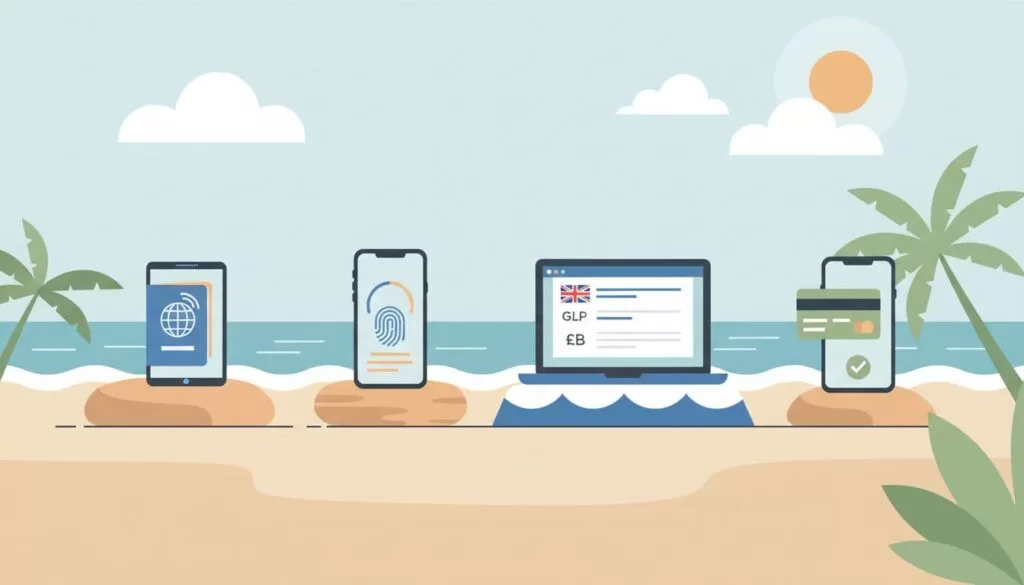
The setup steps I follow
- Create a Wise account using the Wise app (or on Wise.com). I choose Personal unless I truly need a business account.
- Enter my legal name and personal details. I match my ID exactly, including spacing and middle names.
- Add my current address (outside the UK is fine). Wise may ask for proof later, so I use an address I can document.
- Verify my identity, which may include 2-step verification or 2FA for security. This usually means a passport (or another accepted ID) plus a selfie or short video check.
- Upload proof of address if requested. A recent bank statement or utility bill often works, but requirements can vary.
- Open a GBP balance inside Wise. Once GBP is enabled, I look for the option to view account details.
- Check my GBP account details. I confirm I can see the sort code and account number, then I save them in a secure password manager.
Eligibility checked 23 September 2026: Wise account features depend on your registered country. Wise says you need to live in a country where the relevant currency is available, complete identity checks, and provide any documents requested. Its help page says a first set of account details may require a £20 top-up or equivalent; check the current in-app instructions because steps can vary by residence and account. See Wise’s account-details eligibility and setup guide.
Documents a UK bank may ask you for
A traditional bank checks more than whether you have a passport. Requirements vary, but prepare to provide some or all of the following:
- Proof of identity: a passport, photocard driving licence, or another document the bank accepts.
- Proof of your current address: for example, a recent utility bill, council tax notice, tenancy document, or bank statement. The bank may require a UK address.
- Address history: HSBC’s Basic Bank Account application, for example, asks for UK address history for the past three years.
- Work and financial details: employment status, income, regular outgoings, and sometimes the source of funds.
- Immigration or right-to-reside evidence: a bank may ask for it if relevant to your application.
- Credit check and eligibility checks: these may form part of the application even when you are applying for a basic account.
Accepted documents are provider-specific. HSBC’s guidance, for example, lists items such as utility bills, council tax documents, mortgage statements, and certain government or education letters, with many address documents expected to be recent. A new arrival may not have a UK bill yet. Students, people in temporary housing, and applicants without standard documents should ask the bank which alternatives it accepts before applying. A university letter may help with some applications, but do not assume every bank will accept it.
Can you apply before moving to the UK?
Sometimes, but do not treat every international account as an easy workaround. HSBC UK says its Basic Bank Account is for people who live in the UK, so a person who has not arrived may need to wait or ask HSBC about their specific situation. International accounts can be opened by some customers from abroad, but eligibility may depend on your country and assets. For example, HSBC Expat lists a £75,000 savings or investment threshold, or HSBC Premier status plus £10,000 to save or invest. Barclays International lists a £100,000 relationship threshold in savings or investments, as well as residence in an eligible country. These are provider-specific examples, not general requirements for all UK banks.
Before applying from abroad, ask the provider in writing: Can I apply from my current country? Must I already have a UK address? Which identity and address documents will you accept? Are there minimum balances or monthly fees? Will the account provide UK sort code and account number details, and which payment types can it receive? Confirm the answers on the provider’s current application and fee pages, since terms change.
For another walkthrough (and screenshots that can help if menus change), see Exiap’s step-by-step Wise guide.
Important: Even with UK details, I never promise a client, employer, or landlord that they’ll accept them. I ask what they require, then test with a small transfer first.
Using your UK account details for salary, rent, and client payments
Once my GBP details are live, I treat them like a set of keys. They can open doors, but only if the lock matches.

Getting paid in GBP (without the usual friction)
When a UK client asks for bank details, I share:
- Account holder name (mine, exactly as shown)
- Sort code
- Account number
- Sometimes a payment reference (especially for invoices)
This setup allows them to make bank transfers directly, so I can receive money in GBP seamlessly, without the usual friction.
If I’m dealing with payroll, I ask in advance whether they accept e-money account details. Some payroll providers are picky, even when the details look “normal.”
Paying UK bills and subscriptions
For rent, utilities, or online services, I usually have two options:
- Pay from the GBP balance using bank transfer
- Pay by debit card or digital card (if the merchant accepts cards and the Wise card is available to me)
I like keeping a small GBP buffer for recurring bills. It’s the money version of carrying a spare charger. When moving funds out of the GBP balance to other currencies or countries, I use international money transfer. The multi-currency card also shines as the physical tool for spending abroad.
Simple habits that prevent headaches
I’ve learned a few small habits that save time later:
- I keep my Wise profile updated (name, address, and phone number), because mismatches can slow verification.
- I avoid mixing personal and business flows. If I’m invoicing clients as a company, I consider a business account, but requirements differ.
- I don’t use Wise as my only lifeboat. I keep a backup way to get paid, because payment platforms can change rules fast.
If you want a nomad-focused checklist of what to expect during setup, this is a helpful companion read: Nomad Gate’s Wise account walkthrough.
Fees, limits, and gotchas I check before I rely on it
Compare the cost of the payment you will actually make, not just the monthly account fee. Fees can apply to currency conversion, international transfers, card spending, cash withdrawals, or a particular incoming payment method. Account charges and exchange rates change, so use each provider’s live calculator or tariff before moving a large amount.
Current fee checks before you choose
Fee snapshot checked 23 September 2026: These are examples of UK personal-account pricing, not a promise that every reader can open the listed product. Residence, account type, and payment route affect fees. A minimum balance or required top-up is not necessarily a fee. Use the linked provider tariff for your exact account before applying or sending money.
| Example account | Monthly cost and entry conditions | Costs to compare |
|---|---|---|
| Wise personal account with GBP details | Wise’s UK pricing page lists free registration. Wise may ask for a £20 top-up or equivalent to open the first set of account details. This is money added to your balance, not a monthly fee. | Local GBP receipts are generally free. Wise lists £2.16 for an eligible GBP SWIFT receipt, but its local GBP details accept Faster Payments, Bacs, or CHAPS, not SWIFT. Card cash withdrawals are free up to £250 per month, then 2.69% on the amount above that allowance; an ATM operator may add its own fee. Conversion and transfer charges depend on the transaction. |
| HSBC UK Bank Account | HSBC lists no monthly fee for its standard Bank Account. It is a UK resident account, so check address and eligibility rules before applying. | Check the current tariff for overdraft use, overseas card spending, cash withdrawals, and international transfers. Do not assume a fee-free monthly account means every service is free. |
| Barclays Bank Account | Barclays lists its standard Bank Account as free of a monthly account fee. Confirm that you meet the current UK address and application requirements. | Check the current service-charges page for overdraft interest, cash, foreign-currency card spending, and international payments. |
| Monzo personal current account | Monzo lists its personal account as free; optional paid plans start at £3 a month. It is intended for UK residents with a UK address. | If Monzo is not your main bank and you are on the free plan, its current UK/EEA cash-withdrawal allowance is £400 per 30 days, then 3%. Main-bank customers and some paid-plan customers have different allowances. Check Monzo’s live fee terms. |
| HSBC Expat | No monthly fee while you meet the product’s eligibility criteria. Those criteria can include £75,000 in savings or investments, or HSBC Premier status plus £10,000 to save or invest, and residence in an eligible country. | HSBC lists a 2.75% fee for card use outside the UK. Overseas cash withdrawals also have a 2% fee, with a £1.75 minimum and £5 maximum, in addition to the 2.75% fee. Check the current account-specific tariff and protection scheme. |
Official pricing pages: Wise UK pricing, Wise receiving fees, Wise ATM fees, HSBC UK Bank Account, Barclays current-account charges, Monzo plans, Monzo cash limits, and HSBC international account fees and eligibility. Wise’s fee can vary by residence and receiving details; follow the fee shown in your own account.
These Wise figures are from its UK pricing pages checked on 23 September 2026. Pricing can differ by country and payment route. See Wise’s personal pricing and Wise’s receiving-money prices; for a bank, use that bank’s current tariff and international-payment fees. Do not reuse an old comparison table without checking the effective date.
Country and compliance limits matter more than most people think
Wise availability depends on my country or state of residence. Also, some countries can face pauses or extra limits at different times. That’s not personal, it’s compliance.
Here are the limitations I keep on my radar:
- Not a full bank: no overdrafts or credit products.
- ATM withdrawals: free up to a monthly limit, with transaction fees applying afterward.
- Acceptance varies: some institutions won’t accept e-money accounts for certain uses.
- Interest feature: available for holding balances in select currencies, but with eligibility rules.
- Verification isn’t optional: Wise may request more documents for higher activity.
- Business accounts differ: business setup and eligibility can require extra paperwork.
If I’m comparing options beyond Wise, I use guides like this as a starting point: UK bank account options for non-residents. Then I verify everything directly with the provider.
My rule: if the payment is important (salary, rent deposit, tax payment), I test the process early and keep a backup route.
Choose an account based on what you need it to do
A UK sort code and account number can look familiar, but the service behind them may be different. Before you decide, list the tasks the account must handle. That is more reliable than choosing a provider because it is popular or because a form accepts the details.
- Receiving a UK client payment: Wise may work for supported domestic GBP transfers. Confirm that the client accepts the account type and that the payer uses a supported payment route.
- Salary or pension: ask payroll which account types it accepts and whether it pays by Bacs Direct Credit or another method. Wise’s local GBP details accept Faster Payments, Bacs, or CHAPS, but that does not guarantee every employer or pension provider will accept them. Confirm first and make sure the account name matches your payroll record. See Wise’s current GBP account-detail payment methods.
- Direct Debits and household bills: Wise supports Direct Debits from eligible GBP details. The company you pay sets up the instruction, and it must accept the details. Ask whether it will set up the instruction online or by post, and keep enough money in the balance before collection. See Wise’s Direct Debit instructions.
- Savings and interest: compare a bank savings account and its terms. A payment account is not automatically a savings account, and any interest or investment feature may have different eligibility and protections.
- Overdrafts, loans, or credit history: Wise does not offer a UK overdraft or ordinary bank lending. A bank may offer credit only after its own application and affordability checks.
- Branch service or strict institutional checks: ask the organisation exactly what it accepts. Some lenders, landlords, government services, or payment platforms may require an account from a particular type of regulated bank.
Safeguarding is not the same as FSCS deposit protection
This is an important difference when deciding where to keep a large balance. Eligible deposits with a UK-authorised bank, building society, or credit union can be protected by the Financial Services Compensation Scheme (FSCS), up to £120,000 per eligible person, per authorised firm under the limit in force from 1 December 2025. Check that the institution and specific deposit are covered, especially if several brands share one banking licence. See the FSCS deposit limit and protection checker.
Wise says its UK e-money and payment services are not covered by FSCS deposit protection. Instead, it safeguards customer funds by keeping them separate from its operating money and holding them in permitted assets or with regulated institutions. Safeguarding is designed to help keep customer funds available if the firm fails, but it is not the same guarantee as an eligible bank deposit under FSCS. Read Wise’s explanation of FSCS and safeguarding and check the legal provider and protection scheme for any other international account. Do not assume that every account sold by a bank-branded group falls under the same scheme.
Can you switch a UK current account to Wise?
The Current Account Switch Service (CASS) is for eligible current accounts at participating banks and building societies. It does not cover every payment account, savings account, ISA, or non-sterling account. Check that both the old and new providers take part and that the new account is eligible before starting. Wise account details should not be assumed to qualify as a CASS destination. The official CASS guide explains the scope, joint-account rules, and how overdrafts are handled.
A practical checklist before you apply
Ask each provider the same questions so you can compare like with like:
- Can I open this exact account while resident in my current country, or must I live in the UK?
- Which identity, address, address-history, immigration, income, and employment documents do you need? Will you accept a university letter or temporary address?
- Can I finish the application before I arrive? Is there a minimum balance, opening deposit, eligibility threshold, or monthly fee?
- Will the account provide a sort code and account number in my own name? Can it receive Faster Payments, Bacs, CHAPS, salary payments, and Direct Debits?
- What will I pay for account maintenance, international transfers, currency exchange, card purchases abroad, and ATM withdrawals?
- Is the account a bank deposit, e-money account, or another type of product? Which compensation or safeguarding rules apply to the legal provider?
- Can I use the account for the specific payer, bill, platform, or application I have in mind? Get confirmation before moving essential payments.
Save the provider’s replies and test a small, non-urgent payment first. Keep a backup account until salary, bills, and recurring payments have worked at least once. Provider availability, fees, and rules change; details in this guide were checked on 23 September 2026. Recheck the linked official terms before you apply or transfer a large sum.
Conclusion
A Wise GBP account is one of the easiest ways I’ve found to get UK-ready GBP details while living abroad. This reliable international account suits those using online banking to manage their finances globally. The setup is usually quick, but the smart move is planning for verification, country rules, and occasional acceptance issues. Before I depend on it for something time-sensitive, I confirm requirements in the Wise app and with the payer. Once fully verified and funded, it’s easy to send money abroad. If you’re nomading long-term, a calm, tested money setup beats a last-minute scramble every time.
