Google Workspace Business Standard vs Enterprise Starter in 2026
You run a growing team, but picking the right productivity suite feels like choosing between a compact car and a truck. Google Workspace offers solid options. Google Workspace Business Standard suits most small outfits, while Enterprise Sta...
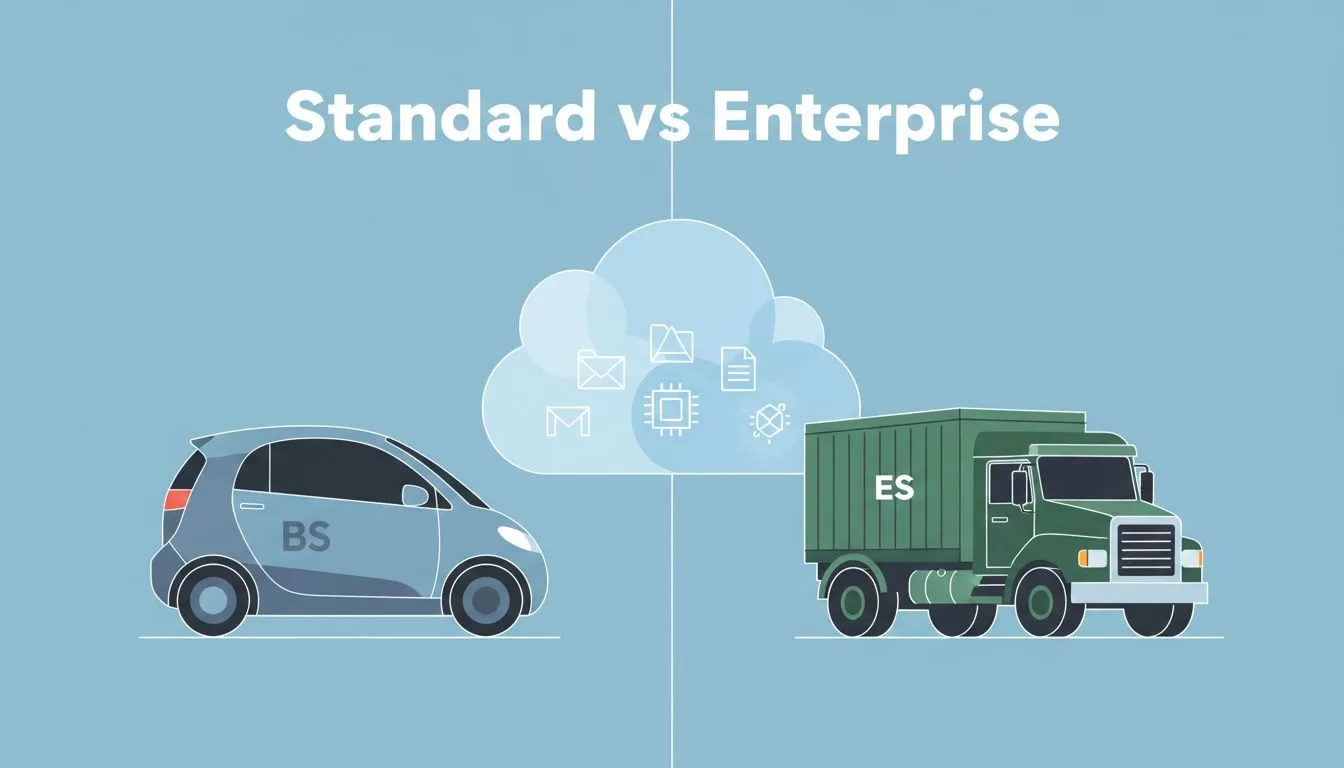
You run a growing team, but picking the right productivity suite feels like choosing between a compact car and a truck. Google Workspace offers solid options. Google Workspace Business Standard suits most small outfits, while Enterprise Starter targets bigger operations with strict needs. Both deliver Gmail, Drive, Docs, Meet, and AI boosts from Gemini. Yet differences in storage, security, and scale matter a lot. I break it down here so you pick without regret.
Pricing: Fixed Costs vs Custom Quotes
Costs shape your choice fast. Business Standard runs $14 per user each month on flexible billing. Annual commits drop it to $9.80 per user. That’s straightforward for budgets. Enterprise Starter skips public prices. You contact sales for a quote. Factors like user count, region, and extras influence the final number.
Prices shift by sales channel or country. For example, some resellers offer deals. Check Google Workspace pricing details for 2026 to see team-size math. Business Standard caps at 300 users. Enterprise Starter handles unlimited. Small teams save with fixed rates. Larger ones negotiate volume discounts.
In short, start with Business Standard if cash flow rules. Switch to Enterprise only when sales talks make sense.
Core Features Head-to-Head
Both plans share basics like custom email and Gemini in Gmail. Business Standard adds polish for daily work. Enterprise Starter scales for crowds and data.
Here’s how they stack up. This table pulls from current specs as of April 2026.
| Feature | Business Standard | Enterprise Starter |
|---|---|---|
| Storage | 2 TB pooled per user | 5 TB pooled per user (more possible) |
| Meet Participants | Up to 150; recordings, polls | Up to 1,000 with live streaming |
| AI Tools | Gemini in Gmail, Docs, Meet | All plus Drive AI classification |
| Email Extras | Layouts, mail merge | Plus S/MIME encryption |
| User Limit | Up to 300 | Unlimited |
| Other | eSignature, Google Vids | Endpoint management, premium support |

Business Standard fits collaboration without waste. Think shared drives and outsider access. Enterprise amps video for company-wide events. AI feels similar at first. However, Enterprise’s Drive tools spot sensitive files better. For deeper setup tips, see my Google Workspace file storage strategies.
Security and Admin Controls
Security basics cover both plans. They block spam and encrypt data. Business Standard offers solid controls for teams under 300. Enterprise Starter steps up for compliance-heavy work.
Enterprise brings data loss prevention. It scans for leaks in emails or chats. Context-aware access checks devices and locations before granting entry. You get enterprise data regions too. That keeps info close to home for rules like GDPR.
Business Standard lacks those. It relies on standard sharing limits. That’s fine for most. But if audits loom, Enterprise prevents headaches. I handle secure document sharing in Google Workspace this way in smaller setups. Larger ones need Enterprise’s edge.
Admin differs too. Business Standard gives basic user management. Enterprise adds Cloud Identity Premium. Endpoint tools lock down laptops. Support escalates faster on Enterprise. Prices reflect that gap.
Who Picks Business Standard or Enterprise Starter
Small teams grab Business Standard. Picture five sales reps plus support. They need 2 TB total, Meet for clients, and Gemini to draft emails. Costs stay predictable at $14 monthly. Growth to 200 users works smooth. No sales calls needed.

Enterprise Starter fits 500-plus staff with rules. Finance firms or chains use it for unlimited users and 5 TB pools. Sales quotes tailor to needs. If security audits hit yearly, this plan shines.
I deploy Google Workspace collaboration for remote teams on Business Standard often. It handles email and files well. See my business email hosting guide for basics.
Upgrading or Migrating Between Plans
Switching stays simple. Google offers tools like Workspace Migrate. Move from Business Standard to Enterprise without data loss. Shared drives transfer clean.
Upgrades need admin checks first. Match storage to new pools. Test Meet limits in pilots. Enterprise requires sales approval. Downgrades reverse easy within Business tiers. Enterprise to Standard loses advanced security, so plan ahead.
Region rules apply. Some features lock to plans or locations. Trial both if unsure. I start pilots small. That spots gaps before full commit.
Business Standard wins for most under 300. Enterprise Starter serves scale and safety. Your team size and rules decide. Contact sales for Enterprise quotes today. What holds your productivity back now?
