How I Track Trending Software Categories With Exploding Topics in 2026
Trends rarely arrive with a siren. They start as small, steady lifts in search, then turn into budgets, roadmaps, and buying decisions. I watch trending software categories for that exact reason. If I catch a category early, I can decide wh...

Trends rarely arrive with a siren. They start as small, steady lifts in search, then turn into budgets, roadmaps, and buying decisions.
I watch trending software categories for that exact reason. If I catch a category early, I can decide whether it deserves research, content, or product bets before the crowd piles in.
Exploding Topics gives me the first signal, but I never stop there. I pair it with search data, funding news, and real buyer pain, so I know whether a trend is noise or a real market opening.
My first pass starts with the shape of the curve
I usually begin on the Exploding Topics software topics page, because it shows me where attention is building before most dashboards catch up. In April 2026, the strongest movement sits around AI agents, AI creation tools, no-code software, and security infrastructure.
That pattern matters. Tools like AI video generators, quiz generators, browser agents, and secrets management software are not random flashes. They map to work people already pay for, like content production, workflow automation, and risk control.
I also keep the software development trends report open when I want broader context. It helps me separate a true category shift from a one-product spike.


I pay special attention to names that rise fast, like Google AI Mode, Heyday AI, Browserbase, n8n, Retell AI, and Synthflow. Their rise tells me the market is rewarding software that saves time or replaces manual work.
I use a simple workflow so I do not chase every spike
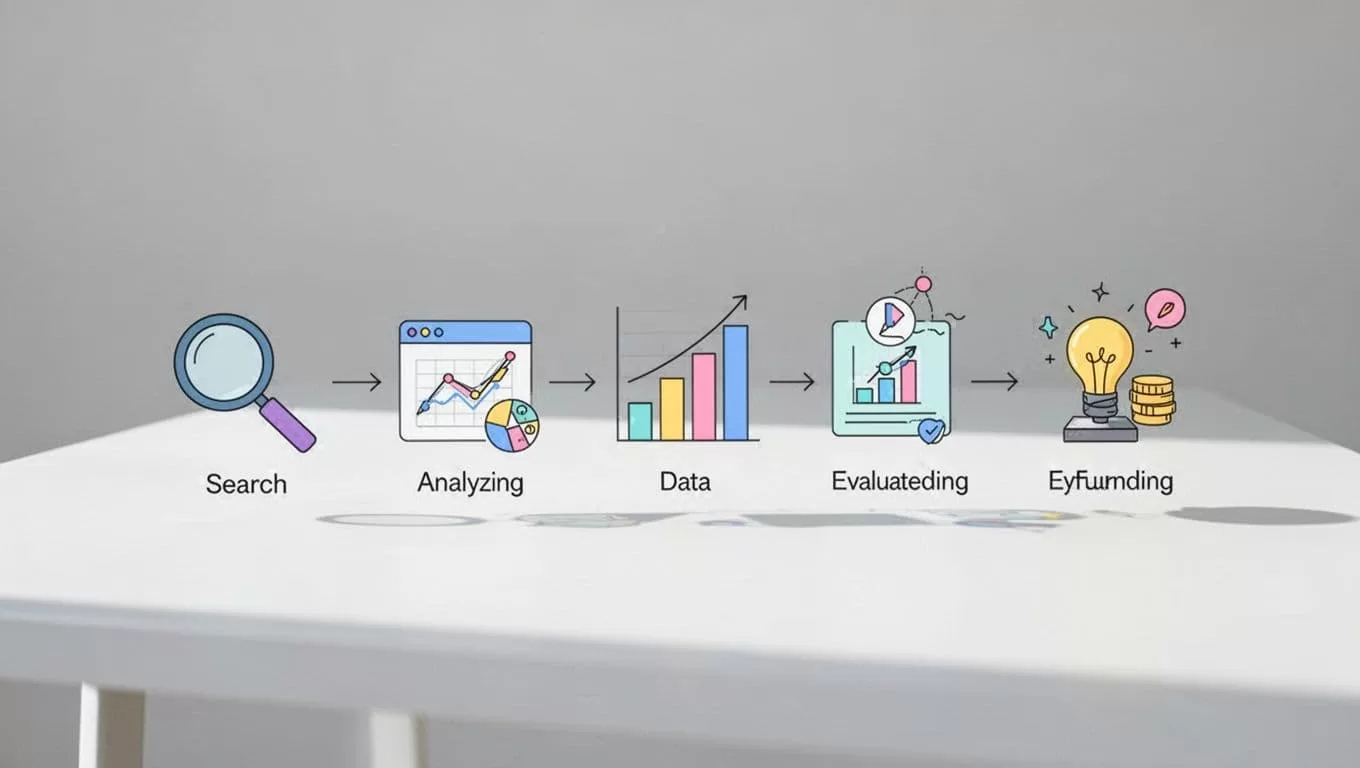
A hot chart can fool anyone. That is why I use the same four-step workflow every time.
- I note the category and the buyer it serves.
- I check whether search interest rises for more than a short burst.
- I compare the trend with funding, launch activity, and review volume.
- I write a short memo with the pain point, pricing shape, and competition.
The memo is the part I care about most. It forces me to explain the opportunity in plain language. If I cannot do that, I probably do not understand the category well enough.
A rising chart is a starting point. A paying buyer is the real test.
For extra context, I scan the current top trending topics on Exploding Topics and look for overlap with what people are launching on Product Hunt or discussing in industry reports. One signal can be a fluke. Two signals get my attention. Three signals make me slow down and study the space.
When I want to see how a category fits a real workflow, I also compare it with hands-on software reviews on my own site, like Hunter.io review 2026 for contact discovery and Recruit CRM for faster hiring for recruiting software. That helps me keep the trend tied to actual business use.
I score each category before I call it worth tracking
Not every rising topic deserves my time. I score categories on the same four filters so I can compare them side by side.
| Criterion | What I want to see | What makes me stop |
|---|---|---|
| Search growth | Steady growth over months | One sharp spike that fades |
| Business relevance | Clear use in a paid workflow | A nice idea with no buyer pain |
| Competition | Room for a strong angle | A packed market with thin differentiation |
| Monetization potential | SaaS, usage fees, or services attached | No clear way to charge |
The biggest mistake I see is falling in love with attention. Attention is useful, but revenue pays the bills. If a category cannot lead to subscriptions, usage pricing, or a services layer, I move on.
That is also why I keep an eye on monetization-heavy categories. A tool like Baremetrics revenue analytics helps me think about whether a software niche can support recurring revenue, churn tracking, and clean billing logic. If the money model is messy, the trend may look bigger than it really is.
I also ask a simple question: does this category sit close to a painful job? Security, hiring, prospecting, billing, and automation usually win because the buyer already has a budget line.
I validate with real-world signals, not hype
Exploding Topics gives me direction, but I still cross-check before I treat a category as real. I look at search demand, funding activity, review volume, and how often the topic appears in industry reports.
For example, AI agents and automation keep showing up because they save time in visible ways. Security tools keep rising because teams fear credential loss and data leaks. Creation tools keep growing because teams want output without hiring more people.
That mix matters. A category with strong search growth and weak business use usually stalls. A category with strong search growth, clear pain, and obvious pricing can turn into a serious market.
I also watch how crowded the space feels. If every new tool looks the same, I am cautious. If I see a fresh angle, a narrow niche, or a better workflow, I keep digging.
When I review a category for my own research calendar, I write one sentence on each of these points:
- who buys it
- what pain it removes
- how it gets priced
- which competitors already own the space
That keeps my work fast and repeatable. It also keeps me from turning trend tracking into a pile of random bookmarks.
The signal is only useful when it changes what I do next
Once I trust a category, I use it differently depending on the job. As a marketer, I turn it into topic ideas and landing page angles. As a founder, I use it to test feature demand and positioning. As an investor, I use it to spot market clusters before they feel crowded.
The real value of tracking trending software categories is not prediction theater. It is knowing where attention, pain, and money are starting to line up.
When those three pieces move together, I pay attention. That is how I use Exploding Topics in 2026, and it keeps my research grounded in signals that can still be acted on.

