Deploy Rewardful Affiliate Software for SaaS
Affiliate programs break when a valid referral reaches checkout and no one can prove who sent the customer. That becomes a payout dispute, not a marketing problem. Rewardful affiliate software gives Stripe-based SaaS teams a way to connect...
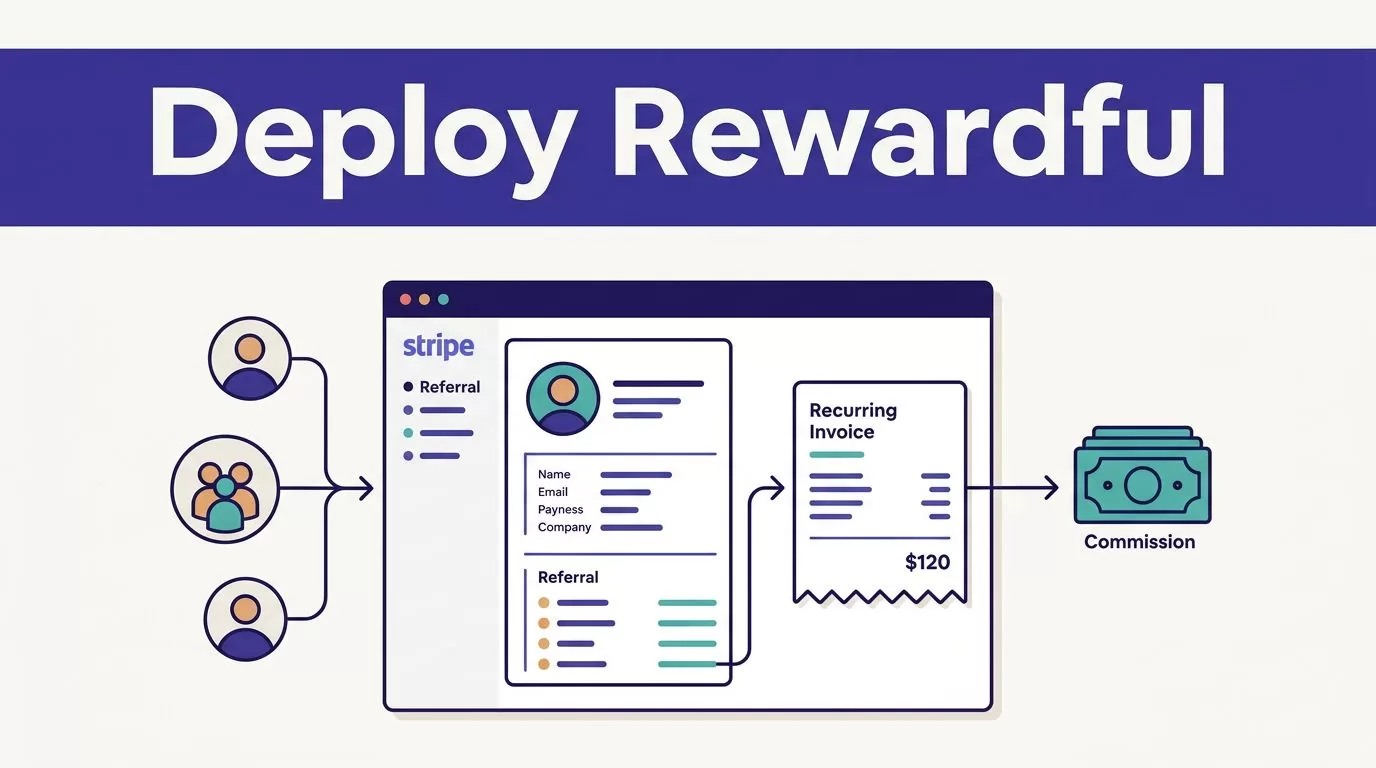
Affiliate programs break when a valid referral reaches checkout and no one can prove who sent the customer. That becomes a payout dispute, not a marketing problem.
Rewardful affiliate software gives Stripe-based SaaS teams a way to connect referral attribution to subscriptions and invoices. You still need clear commission rules, a correct checkout integration, and a weekly billing review. Build those controls before you invite a single partner.
Deploy Rewardful affiliate software around paid Stripe events
Rewardful is built for subscription businesses that use Stripe. Its job is to track a referral, connect it to Stripe billing activity, calculate the commission, and keep a record for payout. The Rewardful product overview confirms this Stripe-first model.
Rewardful does not replace Stripe. Stripe remains your billing source of truth. Your program should work only when the customer, subscription, invoice, refund, and commission records agree.

Map the referral record before you connect anything
Write down the full path a referred customer takes. Do this before adding a tracking script or creating a campaign.
- An affiliate shares a unique referral link.
- A prospect visits your landing page or pricing page.
- The prospect starts checkout or creates an account.
- Stripe creates the customer, subscription, and paid invoice.
- Rewardful records the referral and calculates the commission.
- Your team reviews approved commissions before payout.
Decide which event creates a commission. For most SaaS businesses, that event is a successful paid invoice. A free-trial signup is useful for reporting, but it should not trigger an irreversible payout.
At the time of writing, Rewardful offers a 14-day trial. Its Starter plan begins at $49 per month, with limits tied to affiliate-generated revenue. Check the live plan details before you commit, especially if you expect high-volume partner sales.
Set commission rules before recruiting affiliates
Your commission rule needs to survive refunds, upgrades, cancellations, and discount codes. A generous-looking offer can become expensive when it ignores your gross margin and retention rate.
Build a commission model you can explain
Start with one simple rule. A percentage of collected subscription revenue is easy for affiliates to understand and easy for finance to reconcile.
| Offer | Commission rule | Maximum payout per customer |
|---|---|---|
| $79 monthly plan | 25% recurring for 12 months | $237 |
| $299 annual plan | 20% on the first paid invoice | $59.80 |
| $1,200 annual agency plan | 15% after the refund period | $180 |
These are operating examples, not fixed benchmarks. Rewardful’s first campaign guidance describes recurring commissions as the default model and suggests 30% as a starting point. Your actual rate should fit your retention, support cost, payment fees, and sales margin.
Define what counts before disputes begin
Put the core rules in a short affiliate agreement. State which plans qualify, whether trials qualify, how long recurring payouts continue, and what happens after a refund or chargeback.
Also state that self-referrals, internal company purchases, fraudulent signups, and duplicate claims do not qualify. Decide whether affiliates may bid on your brand name in paid search. Decide whether coupon sites need approval.
Use separate campaigns when the commercial terms differ. A public creator program, a private agency program, and a customer referral offer should not share one vague rule set. Rewardful supports multiple campaign structures, which helps you keep those terms separate.
Connect Stripe to the checkout path you actually use
Do not connect a Stripe account and assume tracking is finished. Your referral data must survive the journey from the affiliate link to the billing event.
Select the right integration method
Connect the Stripe account that will process real customer payments. Do not build the program around a test account and then forget to repeat the setup for production.
Next, match the implementation to your checkout path. If your SaaS uses a custom client-side Stripe checkout flow, follow Rewardful’s current custom Stripe integration method. If you sell through Stripe Payment Links, use the separate Payment Links integration instructions.
Pricing Tables, Buy Buttons, hosted checkout, and server-created Checkout Sessions can use different steps. Do not copy an implementation meant for a different payment flow. Check the current Rewardful documentation before you publish code.
Keep referral identity through signup and checkout
The affiliate link must reach a page where Rewardful can recognize it. Your tracking setup must load before the visitor begins checkout.
This gets harder when your marketing site lives on one domain and your app lives on another. Test both domains. Check the path from landing page to signup, then from signup to Stripe.
For server-created Stripe Checkout Sessions, use the referral mapping approach in the current integration instructions. Do not invent your own customer matching rule after launch. An email address, a session ID, and a Stripe customer record can change at different points in the customer journey.
A custom checkout spread across several apps needs a defined owner. If your team needs help mapping the billing and attribution flow, Book A Call before you open the program to partners.
Create campaigns partners can understand
Your campaign is the offer affiliates see. It should answer four questions fast: what they earn, when they earn it, which product qualifies, and when they get paid.
Give every campaign one job
Create a default campaign for approved public affiliates. Use another campaign for agencies or strategic partners if they receive different rates, longer payout windows, or private resources.
Do not use one campaign to handle every exception. A customer referral incentive is not the same as a content creator commission. A partner who resells implementation services is not the same as a newsletter publisher.
Give affiliates a short program page with their referral link, product positioning, approved logos, claim rules, and support contact. Avoid promises such as “earn forever” unless your commission terms really support that language.
Set a clear approval process. A small SaaS team can begin with manual approval. Review the applicant’s website, audience, traffic source, and promotion plan before issuing access to a high-value campaign.
Test referral tracking before the public launch
A referral link that redirects correctly has not passed the test. It must produce the correct Stripe and Rewardful records after the customer pays.

Run one controlled end-to-end test
Use a test affiliate account and a new browser profile. Where your setup supports Stripe test data, use it. Avoid creating production test purchases without recording the reason and expected outcome.
- Open a new browser profile with no existing site data.
- Visit through the test affiliate’s referral link.
- Start checkout with a unique test email address.
- Complete the selected subscription path.
- Compare the affiliate, customer, invoice, subscription, and commission records.
- Cancel or refund the test purchase and review the commission status.
The expected result is not “a record appeared.” The expected result is a correct, traceable record that matches the billing event.
Check paths that usually fail
Repeat the test after a visitor lands without an affiliate link and later returns through one. Test a free trial that converts to a paid plan. Test a coupon code if your partners use them. Test a plan upgrade, an annual purchase, and a customer who leaves the site before checkout.
Before launch, confirm the following:
- Your affiliate terms match the commission campaign.
- A paid Stripe invoice creates the expected referral record.
- Refunds and cancellations do not remain payable commissions.
- A named team member owns affiliate support and payout approval.
- Your team knows where to check missing or disputed referrals.
Reconcile payouts, fix exceptions, and require disclosure
An affiliate program is an operating process. It needs a regular review cycle, a clear exception path, and records your finance team can trust.
Reconcile paid referrals, not clicks
Review a small sample every week. Compare the affiliate record with the Stripe customer, paid invoice, commission amount, and refund status.
Track confirmed paid customers, missing attributions, duplicate claims, self-referral exceptions, reversed commissions, and time spent resolving disputes. Keep the last trusted commission report. If a checkout change creates bad attribution, you need a known-good report to compare against.
A referral program that creates more correction work than it saves is not working.
Route uncertain items to an exception queue. Give each item an owner, source evidence, and written outcome. Do not pay a disputed commission twice because two systems show similar records.
Fix attribution problems before they become payout errors
A missing referral often starts with a broken link, a tracking script that does not load, a new landing page, or the wrong checkout method. Check those items first.
If the Stripe customer is correctly linked to a partner but the record needs correction, use Rewardful’s documented manual attribution process. Keep evidence with the change. Do not overwrite the original reason for the correction.
Freeze duplicate or suspicious payouts until your team confirms the customer and billing history. A fast payout is not worth a preventable recovery request.
Make affiliate disclosure part of program terms
Affiliates must disclose that they may earn a commission. The FTC requires material connections to be clear and conspicuous. Review the FTC’s endorsement disclosure guidance before you publish program terms.
Require a plain disclosure near the recommendation, not hidden in a profile page or footer. A simple statement such as “I may earn a commission if you sign up through my link” is easier for readers to understand.
Your agreement should also cover prohibited claims, email rules, use of trademarks, taxes, contractor status, and local legal requirements. Get legal and tax advice for rules that apply to your company and affiliate locations.
Build the program around verified revenue
Rewardful affiliate software works when your affiliate record and Stripe billing record tell the same story. Set the commercial rules first. Connect the exact checkout flow you use. Then prove the full referral path with controlled tests.
Start with a small group of approved partners. Track paid customers, valid attribution, reversals, and payout exceptions. Expand only after the records match your billing data.
